Elon Musk laid out an ambitious energy vision during a recent appearance, describing plans to launch satellites into Earth orbit specifically to capture solar power — bypassing the need for massive ground-based power plants and sidestepping one of engineering's most persistent headaches: thermal management. The statement connects directly to active SpaceX programs already in motion, not just theoretical ambition.

What Musk Actually Said
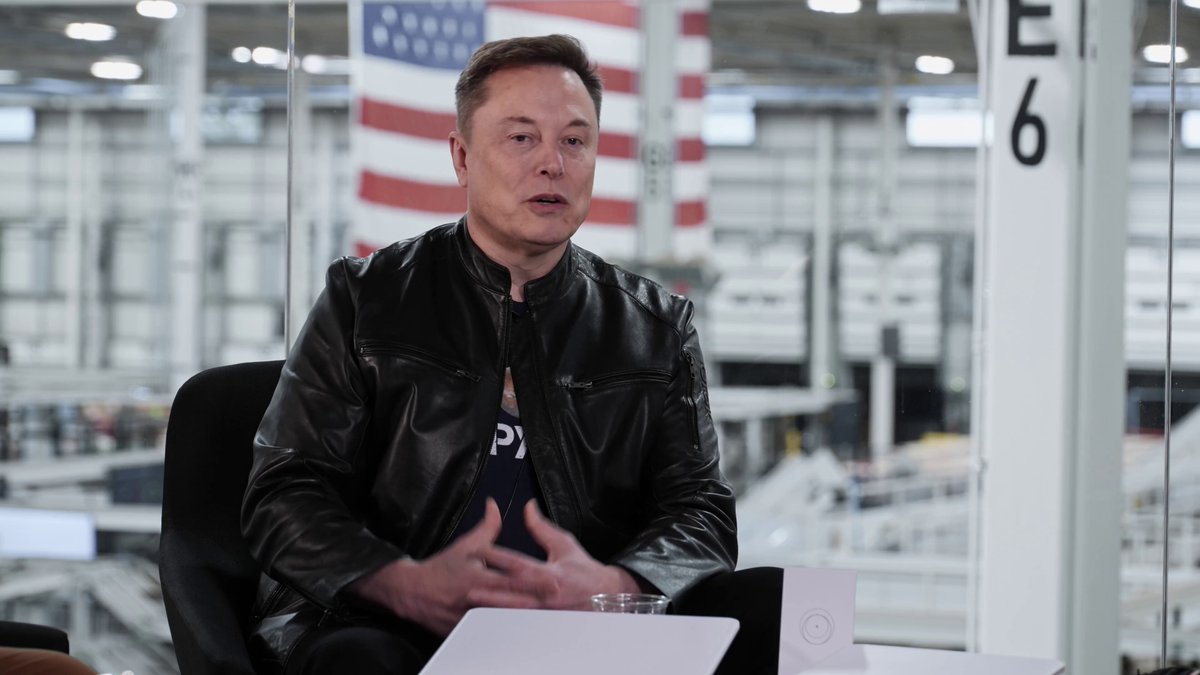
Musk's quote, captured by @SawyerMerritt, cuts straight to the logic: "In order to make some progress on the Kardashev scale, we need to launch satellites to orbit Earth and capture solar power, and that avoids the need to build massive power plants on Earth and deal with cooling. Cooling is much easier in space."
The Kardashev scale, for those unfamiliar, is a framework for measuring a civilization's technological advancement based on how much energy it can harness. A Type I civilization controls all energy available on its home planet. Type II harnesses the full output of its star. Musk has repeatedly framed his companies' work — SpaceX, Tesla Energy, xAI — as steps toward that Type II threshold.
The cooling point is more practical than it sounds. Data centers and power generation facilities on Earth burn enormous resources managing heat. In the vacuum of space, radiative cooling is passive and highly efficient — a genuine engineering advantage, not a talking point.
The Numbers Already on the Table
This isn't purely philosophical. SpaceX has filed to launch a constellation of up to one million solar-powered satellites into low-Earth orbit, explicitly described in FCC filings as "a first step towards becoming a Kardashev II-level civilization." The trajectory of solar capacity across Starlink generations gives a sense of the scale being pursued:
| Starlink Generation | Satellites (approx.) | Orbital Solar Capacity |
|---|---|---|
| Gen 1 | ~3,000 | ~10 MW |
| Gen 2 | ~7,000 | ~100 MW |
| Gen 3 (projected) | TBD | ~1,000 MW (1 GW) |
That's a 10x jump per generation — a trend Musk has said he expects to continue for many years. The FCC recently approved an additional 7,500 Starlink satellites, though authorization for a further 14,988 proposed satellites was deferred.
Where Tesla and xAI Fit In
In March 2026, Musk announced the "Terafab factory" project — a collaboration between Tesla, xAI, and SpaceX. The initiative ties together the energy generation ambitions of SpaceX's orbital constellation with the AI compute demands of xAI and the manufacturing scale Tesla has built over the past decade. Space-based solar, in this framing, isn't just about powering Earth — it's about powering the next generation of orbital AI infrastructure without the land, permitting, and cooling constraints that throttle terrestrial data centers.
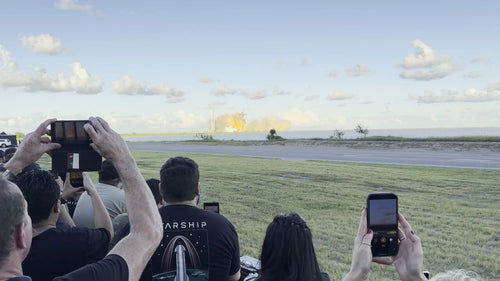
The vision is coherent even if the timeline remains open-ended. Satellites already in orbit are generating real megawatts of solar power. Each generation multiplies that capacity by roughly 10x. At some point, the question shifts from "is this feasible" to "how fast can the launch cadence scale" — and that's precisely where SpaceX's Starship program becomes the critical variable. Cheap, frequent access to orbit is the bottleneck, and it's the one piece of the puzzle Musk controls most directly.

Sarah focuses on Tesla Energy, SpaceX missions, and the broader Musk AI portfolio. Former data analyst in clean energy. Based in San Francisco.
Sources verified at publish time. Spotted an inaccuracy? Email editorial@basenor.com.