The News: SpaceX has completed cryoproof testing for Ship 39 — the first Starship V3 prototype — including new "squeeze tests" designed to simulate the forces of a Mechazilla tower catch.
Why It Matters: This is the final major ground test milestone before Ship 39 moves toward its debut flight (Flight 12), and it validates the redesigned propellant system and structural upgrades that define the V3 generation.
Source: @SpaceX on X
SpaceX Clears Critical Cryoproof Milestone for Starship V3 — Ship 39 Passes All Tests
SpaceX has officially wrapped cryoproof operations for Ship 39, the inaugural prototype of the next-generation Starship V3. The multi-day test campaign at Massey's Outpost near Starbase, Texas pushed the vehicle through three consecutive cryogenic pressure-proof tests and introduced a brand-new evaluation: the "squeeze test" — a structural stress simulation designed to replicate the grip of the Mechazilla catch arms during a tower landing. Ship 39 passed.

📊 Key Figures
| Metric | Value | Context |
|---|---|---|
| Cryo Tests Completed | 3 consecutive | Feb 28 – Mar 5, 2026 |
| Raptor V3 Thrust | ~280 tons | vs ~230 tons (Raptor 2) |
| Raptor V3 Chamber Pressure | ~350 bar | vs ~300 bar (Raptor 2) |
| Specific Impulse | ~350 seconds | Improved efficiency vs V2 |
| Starlink Capacity Increase | 20x per launch | V3 Starlink sats vs V2 |
| Designated Flight | Flight 12 | V3 debut launch |
What Is a Cryoproof Test — and Why Does It Matter?
Cryoproof testing is how SpaceX verifies a vehicle before it ever sees a launchpad. Engineers flood the propellant tanks with cryogenic fluids (liquid nitrogen is typically used as a safe stand-in) and pressurize the system to levels beyond what it will experience in flight. If the structure holds — welds, seals, and all — the vehicle passes. If anything fails, it fails on the ground, not at altitude.
For Ship 39, this was especially significant because the V3 design features a redesigned propellant system and increased tank capacity compared to its V2 predecessors. Three consecutive passes across a week-long campaign (February 28 through March 5) confirm the new architecture is flight-worthy.
The "Squeeze Test": A First for Starship
The most novel element of this campaign wasn't the cryo pressure test itself — it was the squeeze test. SpaceX constructed a dedicated testing truss at Massey's Outpost fitted with chopstick simulators: mechanical arms that replicate the grip of the Mechazilla catch system on the launch tower. Engineers used these to apply lateral compressive forces to Ship 39's hull, evaluating how the vehicle responds to the mechanical loads of a tower catch.
This is a genuinely new test type for Starship. Prior ships were never evaluated this way on the ground because the catch system itself was new. With V3 designed from the outset for full reusability — including routine booster and ship catches — SpaceX needed to validate that the airframe can survive repeated mechanical contact with the tower arms. Ship 39 passed.

What Makes Starship V3 Different
Ship 39 isn't just the next vehicle in the sequence — it's the first of an entirely new generation. The V3 design represents a ground-up optimization for two goals: higher performance and faster reuse. Key upgrades include:
- Raptor V3 engines delivering approximately 280 tons of thrust each — a ~22% increase over Raptor 2 — at chamber pressures around 350 bar
- Increased propellant capacity via a slightly taller structure and redesigned tank architecture
- Structural reinforcements specifically engineered for Mechazilla catches — now validated by the squeeze test
- Redesigned thermal protection system and improved aerodynamic flap placement for safer, more controlled reentry
- Overhauled quick-disconnect systems for propellant, power, and data — targeting faster pad turnaround
- Docking ports and on-orbit propellant transfer connections enabling tanker configurations for deep-space missions
- V3 Starlink satellite deployment capability, increasing constellation capacity by more than 20x per launch versus V2 satellites
🔭 The BASENOR Take
Timeline: Cryo testing began February 28, concluded March 5. SpaceX confirmed completion publicly on March 8. Super Heavy Booster 19 — the V3 booster paired with Ship 39 for Flight 12 — completed its own cryo testing in early February and is currently being transported to Pad 2 at Starbase.
Impact Level: 🔴 High — This is the last major structural validation before Flight 12 static fire and launch preparations begin.
Confidence: ✅ Confirmed — Announced directly by SpaceX's official account.
What's Next: With both Ship 39 and Booster 19 through cryo testing, the path to a Flight 12 static fire is now open. A successful static fire would clear the way for the first-ever V3 Starship orbital attempt — and the first demonstration of full booster and ship reuse at the V3 performance level.
📰 Deep Dive
The completion of Ship 39's cryoproof campaign is a quiet but consequential milestone. SpaceX has been methodical about V3 ground testing in a way that signals confidence in the design — three consecutive cryo passes without a reported anomaly is not a given for a first-of-generation vehicle. The fact that engineers also introduced and passed the squeeze test in the same campaign suggests the structural reinforcements built into V3 for catch operations are performing as designed.
The squeeze test itself deserves attention beyond the headline. Catching a Starship — a vehicle roughly the size of a 16-story building — with mechanical arms requires the airframe to absorb significant point-load forces that don't exist during normal flight. SpaceX is now testing for those loads explicitly on the ground, which is exactly the kind of rigorous pre-flight validation that separates a mature reusable program from an experimental one. This is the program maturing in real time.
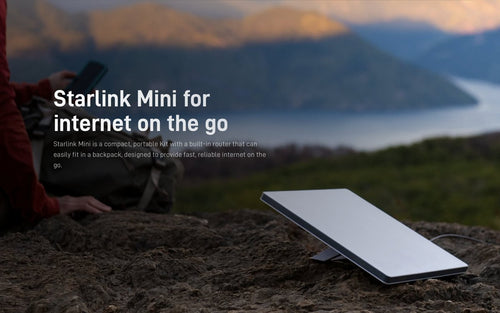
For the broader Starlink constellation, the V3 upgrade has implications that extend well beyond rocketry. Each V3 Starship is designed to carry V3-generation Starlink satellites that increase per-launch capacity by more than 20 times compared to V2 hardware. Flight 12 won't just be a test flight — it will be a demonstration of the delivery mechanism for a fundamentally more capable internet constellation. The ground test program for Ship 39 is, in that sense, the opening act for a much larger infrastructure story. Check out our SpaceX coverage for the full Flight 12 buildup.
🚀 Following the Starship program? See every test flight, official outcome and the next launch window in our SpaceX Starship Tracker.
Sources & reporting notes
The links below identify the material source records used for this report.
- @SpaceX on X (2026-03-08T02:49:43.000Z) — Direct source
- @NASASpaceflight on X (2026-03-08T02:50:18.000Z) — Direct source
Source links are preserved as published or accessed. See our editorial standards and corrections policy.
The BASENOR Editorial Desk covers Tesla, SpaceX, and related technology, curating reporting from primary sources — official accounts, regulatory filings, and software release data. Every article passes source-record and fact-checking review before publication. About the newsroom.
This report was curated by the BASENOR Editorial Desk from the sources listed above. Read our editorial standards or email editorial@basenor.com to report an error.