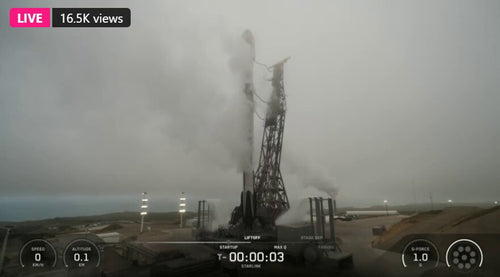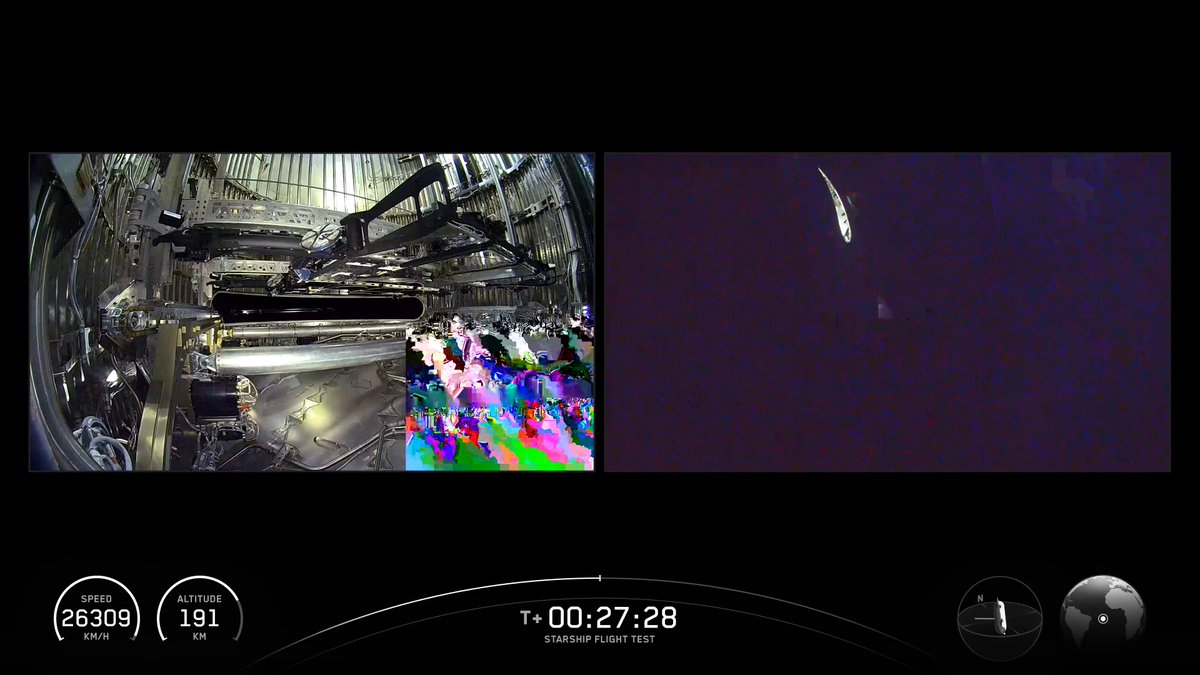
Starlink confirmed this week that it is actively testing next-generation V3 satellite hardware on modified spacecraft ahead of a full constellation deployment. The announcement, made via the official Starlink account on May 22, 2026, came the same day Starship V3 made its debut flight — carrying 20 dummy Starlink satellites and two specially modified observation satellites nicknamed 'Dodger Dogs' that are evaluating V3 components in real orbital conditions.

What V3 Actually Means in Numbers
The performance gap between the current V2 Mini satellites and the incoming V3 generation is not incremental — it is a structural rearchitecting of the network's capacity. According to SpaceX's published specifications and regulatory filings, each V3 satellite is designed to deliver 1 Terabit per second of downlink throughput, compared to roughly 80 Gbps on a V2 Mini. That is more than a 10-fold increase in downlink capacity per satellite.
Uplink capacity sees an even larger jump. V3 satellites are spec'd for 160–200 Gbps of uplink, representing approximately a 24-fold improvement over V2 Mini. Combined RF and laser backhaul capacity is projected at nearly 4 Tbps per satellite. The practical implication: each Starship V3 launch carrying a full batch of V3 satellites is expected to add 60 Tbps of capacity to the overall Starlink network — more than 20 times what a single Falcon 9 V2 Mini launch contributes today.
| Metric | V2 Mini | V3 (Planned) |
|---|---|---|
| Downlink per satellite | ~80 Gbps | 1 Tbps |
| Uplink per satellite | ~7 Gbps | 160–200 Gbps |
| Capacity added per launch | ~3 Tbps | 60 Tbps |
| Satellite mass | ~575 kg | ~2,000 kg |
| Target orbital altitude | ~550 km | ~350 km (VLEO) |
Hardware Built for a Different Scale
V3 satellites are not simply larger V2 Minis. According to SpaceX, they incorporate next-generation onboard computers, modems, beamforming arrays, and switching fabrics — a full silicon refresh. Propulsion shifts to argon Hall thrusters for station-keeping, and larger deployable solar arrays handle the increased power demands of the more capable payload. At approximately 2,000 kg each, they are more than three times the mass of a V2 Mini, which is precisely why Starship — not Falcon 9 — is the only vehicle capable of deploying them economically.
The planned deployment orbit is also lower: roughly 350 km, compared to the current ~550 km shell. That drop into very low Earth orbit is intended to push latency below 20 milliseconds, which would make Starlink competitive with terrestrial fiber for latency-sensitive applications.
What Still Needs to Happen
Two significant gates remain before V3 satellites begin serving customers. First, SpaceX still requires Federal Communications Commission approval to operate the expanded V3 constellation — a regulatory process that is ongoing. Second, SpaceX has confirmed that existing Starlink user terminals will need a hardware upgrade to access the gigabit speeds V3 satellites will offer. The current dish hardware is not capable of exploiting the full V3 downlink capacity.
SpaceX has stated publicly that Starship will begin delivering operational V3 satellites to orbit in 2026, but the timeline between initial deployment and broad customer availability will depend on both FCC clearance and the pace of Starship's launch cadence. The 'Dodger Dog' test satellites now in orbit are the first real data points on how V3 hardware performs in the actual thermal and radiation environment of low Earth orbit — information that will directly shape the final production design. The next few months of telemetry from those two modified satellites may quietly determine when the rest of the constellation follows.

Sarah focuses on Tesla Energy, SpaceX missions, and the broader Musk AI portfolio. Former data analyst in clean energy. Based in San Francisco.
Sources verified at publish time. Spotted an inaccuracy? Email editorial@basenor.com.