30-Second Brief
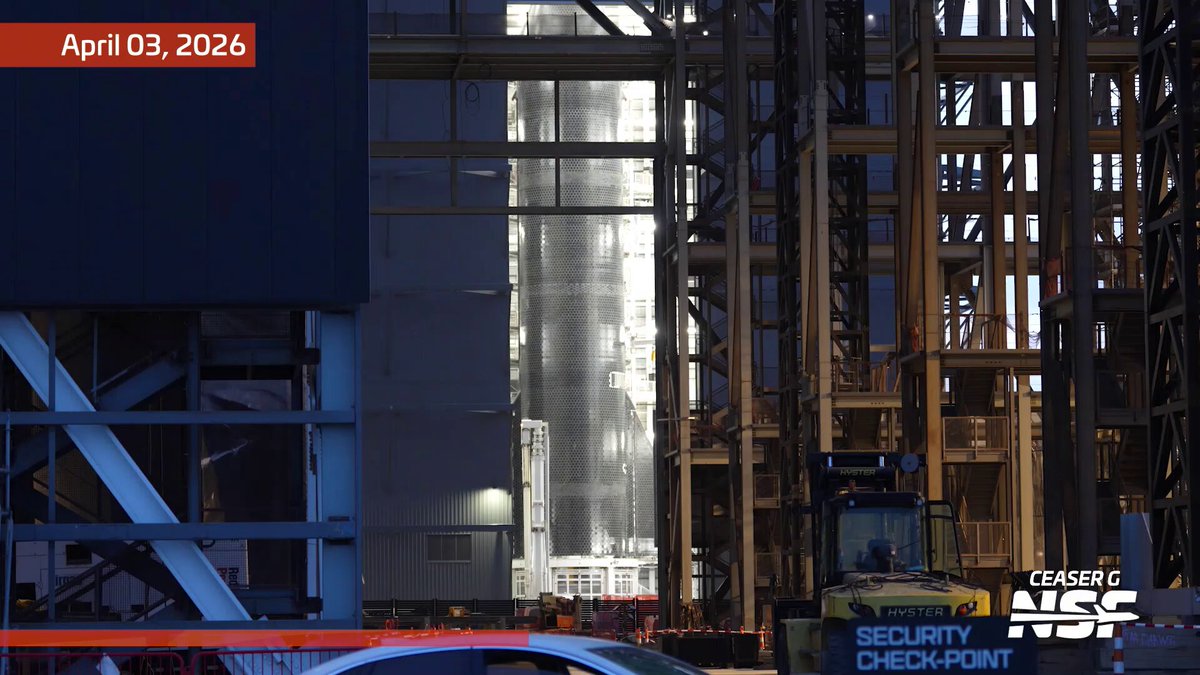
The News: Starship Ship 40 is now fully tiled with its Thermal Protection System and is prepped for testing inside Starbase Mega Bay 2, with a confirmed assignment to Flight 13.
Why It Matters: Flight 13 is shaping up to be one of Starship's most ambitious missions yet — potentially the first truly orbital flight and the first attempt to catch the upper stage with Mechazilla. The pipeline is accelerating.
Source: @NASASpaceflight on X
Starship Ship 40 Is Fully Tiled and Ready for Testing — Flight 13 Is Taking Shape
SpaceX's Starship pipeline just got a significant update. Ship 40 (S40) — the vehicle designated for Flight Test 13 — is now fully tiled with its Thermal Protection System (TPS) and is actively being prepped for testing inside Starbase's Mega Bay 2. According to NASASpaceflight, the vehicle is targeting a launch shortly after Flight 12, which is expected to fly in May.
That's two Starship missions on the near-term horizon, and the pace of hardware preparation suggests SpaceX is serious about maintaining momentum after the program's recent milestones.

📊 Key Figures
| Metric | Detail | Context |
|---|---|---|
| Vehicle | Ship 40 (S40) | Second Block 3 Starship upper stage |
| Booster Pairing | Booster 20 (B20) | Confirmed for Flight 13 |
| Flight Assignment | Flight Test 13 | Second flight of Starship V3 configuration |
| Stacking Completed | March 2, 2026 | Inside Mega Bay 2 at Starbase |
| Preceding Mission (Flt 12) | Early–Mid May 2026 | Per Elon Musk statement, April 3, 2026 |
| Launch Pad (Flt 12) | Orbital Launch Pad 2 (OLP-2) | First launch from OLP-2 |
Where Ship 40 Stands Right Now
S40's road to Flight 13 has been methodical. Nosecone TPS tile installation wrapped up in November 2025. Both aft flaps were installed in Mega Bay 2 in mid-March 2026 — left flap on March 11, right flap on March 12. Full stacking was completed March 2, 2026. The vehicle is now in the checkout and final inspection phase.
The TPS tile coverage is the most visible milestone. The thermal protection system is what allows Starship to survive reentry — the same category of challenge that has historically defined success or failure in upper-stage recovery. Having S40 fully tiled while still in the bay means SpaceX is well ahead of schedule for a post-Flight 12 launch cadence.
Flight 12 First — Then Flight 13
Before S40 flies, Ship 39 (paired with Booster 19) needs to complete Flight 12. That mission is targeted for early to mid-May 2026, per Elon Musk's April 3 statement. Flight 12 carries its own historic weight: it will be the debut of the Starship V3 configuration and the first launch from Orbital Launch Pad 2 (OLP-2) at Starbase.
Flight 13 then follows with S40 and B20 — and the stakes escalate further. According to background research, Flight 13 is expected to be the second V3 configuration flight and could potentially be the first truly orbital Starship mission. It may also include the first attempt to catch the Starship upper stage using the Mechazilla catch arms at the launch tower — a feat that would represent a step-change in Starship's operational reusability.
🔭 The BASENOR Take
Timeline: Flight 12 → Early/Mid-May 2026 | Flight 13 → Shortly after
Impact Level: 🔴 High — potential first orbital Starship mission + first upper-stage catch attempt
Confidence: Medium-High — hardware is real and confirmed; launch timing always subject to regulatory and technical variables
The fact that S40 is fully tiled and in checkout while Flight 12 hasn't launched yet tells you something important about SpaceX's operational tempo. This is not a program that waits for one mission to land before building the next vehicle. The parallel processing — two ships in active preparation simultaneously — is the industrial machine SpaceX has been building toward.
What makes Flight 13 particularly significant is the convergence of milestones it could represent. A truly orbital trajectory would mean Starship completes a full loop around Earth rather than a suborbital arc — a critical step for any future crewed or cargo mission. Layering a Mechazilla upper-stage catch attempt on top of that would make Flight 13 one of the most technically ambitious single rocket missions ever attempted.
The caveat, as always with Starship: timelines are aspirational. Flight 12 still needs FAA licensing for OLP-2, and any anomaly during that mission could push Flight 13's window. But the hardware being ready ahead of time is the right problem to have. For our full SpaceX coverage, including Flight 12 developments, check the tag page.
📰 Deep Dive
Ship 40 being the second Block 3 vehicle matters more than it might appear. The Block 3 architecture incorporates lessons from earlier flights — structural refinements, updated TPS application methods, and hardware changes informed by the dramatic reentries seen in Flights 7 and 8. Having two Block 3 ships (S39 and S40) flying in close succession gives SpaceX back-to-back data points on whether those changes hold up under real flight conditions.
The Mechazilla upper-stage catch concept, if attempted on Flight 13, would close the loop on full Starship reusability. SpaceX has already demonstrated booster catch with the Super Heavy first stage. Catching the Ship would mean the entire stack — both stages — could theoretically be turned around without ocean recovery infrastructure. That's the economic premise the entire Starship program is built on.
For context on cadence: Flights 1 through 6 spanned roughly two years. Flights 7 through 13 are now being compressed into what could be a single calendar year. That acceleration is a direct function of the Starbase production and testing infrastructure maturing — Mega Bay 2 being a central piece of that. Watching S40 move through checkout while S39 awaits its launch window is the clearest evidence yet that SpaceX has shifted from development mode into something closer to operational tempo.

Sarah focuses on Tesla Energy, SpaceX missions, and the broader Musk AI portfolio. Former data analyst in clean energy. Based in San Francisco.
Sources verified at publish time. Spotted an inaccuracy? Email editorial@basenor.com.