30-Second Brief
The News: Tesla has launched a 'Supercharger for Business' program, allowing companies to host custom-branded Supercharger stalls on their premises — with Tesla handling all operations and maintenance.
Why It Matters: More charging locations will appear in your Tesla's in-car navigation, and these stalls are open to all EVs — expanding the Supercharger footprint beyond Tesla-owned sites.
Source: @SawyerMerritt on X
Tesla's 'Supercharger for Business' Program Is Live — And It Changes How You Find Charging
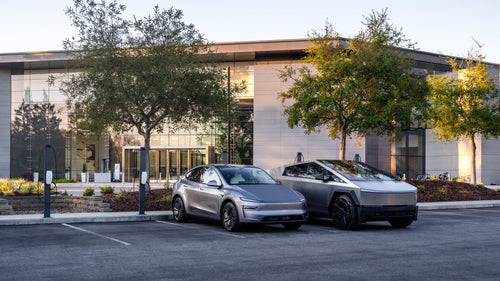
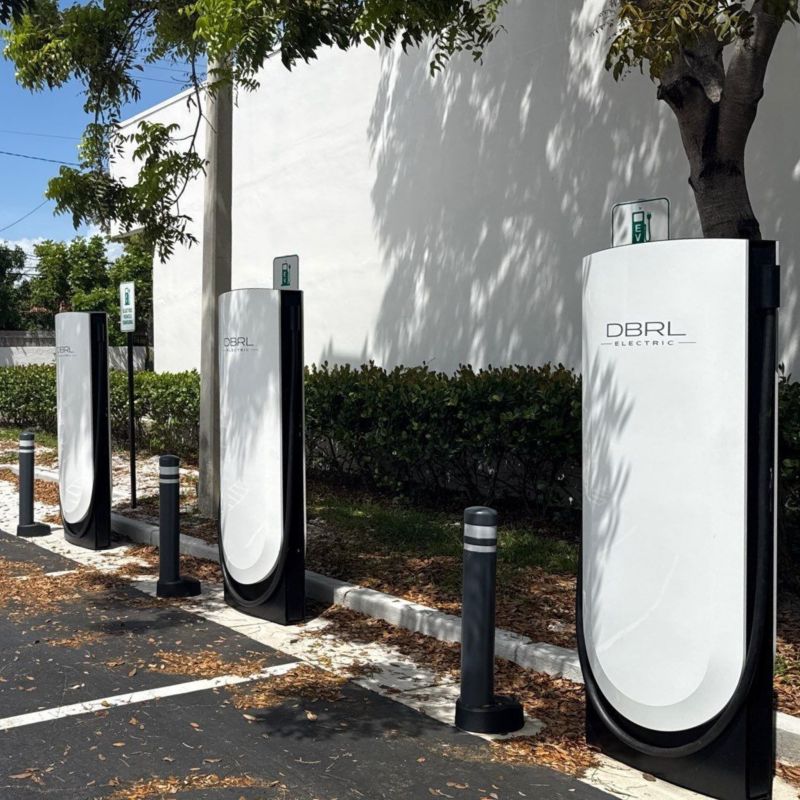
A diamond shop in Boca Raton, Florida, just became one of the most interesting charging stops in the Southeast. DBRL, a local jeweler, has installed custom-branded Tesla Superchargers on its property as part of Tesla's newly confirmed Supercharger for Business program — and the implications for every Tesla owner go well beyond one boutique retail location.

📊 Key Figures
| Metric | Detail | Context |
|---|---|---|
| Program Launch (US) | September 2025 | First US business installations |
| International Markets | France, Italy, Spain, Saudi Arabia, UAE, Qatar, Jordan | Expanded November 2025 |
| Minimum Stalls per Site | 4 charging posts | Required minimum purchase |
| Guaranteed Uptime | 97% | Tesla-managed SLA |
| Max Power (V4, Passenger) | Up to 500 kW | ~200 miles added in 15 min |
| Est. Infrastructure Cost (4x V3) | $160,000+ before installation | Businesses fund electrical upgrades |
| EV Compatibility | All EVs | Not limited to Tesla vehicles |
How the Program Actually Works
The mechanics are straightforward but the model is genuinely novel. A business — a retailer, hotel, restaurant, office park — purchases and hosts the Supercharger hardware. Tesla then takes over everything else: operations, preventative maintenance, and 24/7 driver support. The host business controls session pricing and can monitor utilization through a dedicated portal.
Critically, these sites integrate directly into Tesla's in-car navigation and the Tesla app, so they surface automatically when you're routing a trip. You don't need to know DBRL exists to find their chargers — your car will suggest them. And because the program requires universal EV compatibility, non-Tesla drivers using NACS adapters or CCS can charge there too.
Businesses also get a branding option. The DBRL installation in Boca Raton is a clear example: the stalls carry the shop's logo, turning a utility into a marketing asset. Alternatively, businesses can keep the hardware white-labeled if they prefer a cleaner look.

What This Means for Your Charging Experience
From an owner's perspective, the most immediate impact is simple: more charging locations showing up in your nav. Unlike third-party networks that require separate apps or accounts, these business-hosted Superchargers behave exactly like standard Tesla Superchargers from the driver's seat. You plug in, you charge, you pay — same flow you already know.
The 97% uptime guarantee Tesla builds into the program is also worth noting. One of the persistent frustrations with third-party charging networks has been reliability. By keeping maintenance in-house, Tesla is extending its reliability reputation to business-hosted sites rather than outsourcing that risk to the host.
🔭 The BASENOR Take
Timeline: Program launched September 2025 (US) → International expansion November 2025 → DBRL Boca Raton installation confirmed April 2026
Impact Level: 🟡 Medium-term significant — gradual network expansion, not an overnight change
Confidence: High — confirmed by @SawyerMerritt with photographic evidence; program details corroborated by Tesla's official program page
This program is Tesla executing a classic platform playbook: let third parties fund the infrastructure while Tesla controls the software layer, the brand experience, and the maintenance standard. Businesses absorb the capital cost (a minimum four-stall V3 installation runs $160,000+ before electrical work), and in return they get foot traffic, dwell time, and a marketing hook. Tesla gets network density without deploying its own capital.
The universal EV compatibility angle is also strategically smart. As the broader EV market grows, business-hosted Superchargers become relevant to a larger pool of potential customers — which makes the pitch to businesses stronger, which accelerates adoption, which puts more Supercharger stalls in Tesla's navigation database. It's a self-reinforcing loop.
For owners, the practical upshot is that the Supercharger network is about to get denser in commercial areas — shopping centers, hotels, luxury retail, office parks — without Tesla spending a dollar on real estate. Whether you're in Boca Raton or eventually in Paris or Dubai, expect to see more of these branded installations appearing in your routing suggestions. The charging news to watch now is how quickly this scales beyond early adopters like DBRL and into major retail chains or hospitality groups.

Marcus covers Tesla's software releases, FSD rollouts, and OTA changes. Background in automotive engineering. Based in Austin.
Sources verified at publish time. Spotted an inaccuracy? Email editorial@basenor.com.