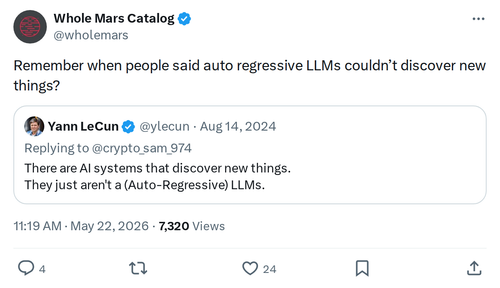
xAI may not have dethroned OpenAI or Google in the race for the best AI model — but it doesn't need to. According to analysis from Whole Mars Catalog, the company has quietly reached financial break-even, and the reason is surprisingly straightforward: instead of renting compute from cloud providers, xAI built its own.

The Infrastructure Bet That Paid Off
The AI industry's default playbook is to train models on rented cloud compute — AWS, Google Cloud, Azure. It's fast to spin up and requires no upfront capital commitment. The downside is that the costs are enormous and ongoing, with no residual asset value. Every dollar spent on cloud training is gone the moment the job finishes.
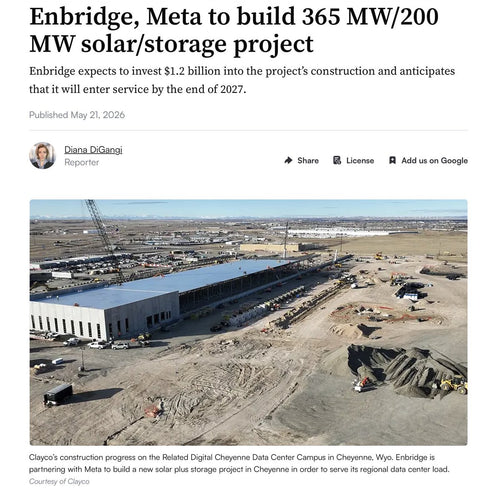
xAI took a different path. The company invested heavily in building Colossus, now recognized as one of the world's largest AI supercomputers. Construction began in Memphis, Tennessee in 2024, with the facility becoming operational in July 2024. A subsequent expansion followed in Southaven, Mississippi in 2025. According to verified reports, Colossus 1 features over 220,000 NVIDIA GPUs — a staggering concentration of raw compute that xAI owns outright.

The logic is straightforward once you see it: owned infrastructure is a capital asset that can be monetized beyond internal model training. Spare GPU cycles can be sold to third parties, the facility can serve as a revenue-generating cloud alternative, and the marginal cost of additional training runs drops dramatically compared to paying cloud rates. Cloud spending, by contrast, generates nothing once the invoice is paid.
Why Break-Even Matters More Than Model Rankings
The AI model leaderboards shift constantly. A model that tops benchmarks today is often eclipsed within months. Competing purely on model quality is an expensive, never-ending treadmill — and the companies with the deepest cloud bills are most exposed when rankings flip.
Financial sustainability changes the strategic calculus entirely. A company that can cover its costs without needing to dominate every benchmark is insulated from the volatility of the model wars. It can afford to take longer bets, invest in research that doesn't pay off immediately, and stay in the game through multiple competitive cycles.
For xAI, whose stated mission is the development of Artificial General Intelligence, that runway is existential. AGI — if it's achievable — is almost certainly a long-horizon project measured in years or decades, not product cycles. A company that burns through capital chasing quarterly model rankings may not survive long enough to reach the finish line. One that breaks even on infrastructure can.
The Broader Lesson for AI Startups
xAI's approach runs counter to the conventional startup wisdom of staying asset-light and outsourcing infrastructure. That wisdom made sense when compute was a commodity and differentiation came purely from software. In the current AI landscape, where GPU access is constrained and training costs can run into hundreds of millions of dollars, owning the hardware is increasingly a competitive moat rather than a liability.
It's a lesson that echoes decisions made at Tesla years earlier — vertical integration of battery production, chip design, and manufacturing processes that looked expensive upfront but created durable cost advantages over time. The parallel isn't coincidental given the shared leadership, and it suggests a consistent strategic philosophy: control the critical infrastructure, and the economics eventually work in your favor.
Whether Grok ultimately wins the model wars remains an open question. But xAI has structured itself so that the answer doesn't determine its survival — and in a field where many well-funded competitors have already stumbled, that kind of financial durability may prove to be the most important advantage of all.

Sarah focuses on Tesla Energy, SpaceX missions, and the broader Musk AI portfolio. Former data analyst in clean energy. Based in San Francisco.
Sources verified at publish time. Spotted an inaccuracy? Email editorial@basenor.com.