Tesla Guides · Updated April 2026 · By BASENOR Product Testing Lab
Tesla 3-Month Accessory Checkpoint: What Actually Earned Its Price
The first week tells you what looks exciting. The third month tells you what survived groceries, pollen, road spray, passengers, charging routines, and real cleaning.
Bottom Line Up Front
Best early buy: screen and floor/cargo protection earn their space fastest because they protect surfaces touched every day.
Best month-three surprise: jack pads and tire-service prep feel boring until the first rotation, inspection, or shop visit.
Skip or delay: cabin filters are inspection items at three months, not automatic day-one replacements unless odor, pollen, dust, or HVAC use justifies it.
Three months is the first honest Tesla accessory audit
We use the three-month point as the first serious ownership checkpoint because the car has moved past delivery-day excitement. By then, the owner has loaded groceries, cleaned the screen, carried passengers, parked in bad weather, used climate control in more than one season, and discovered which storage areas become messy. That is when accessory value becomes visible.
The Department of Energy notes that electric vehicles generally have fewer fluids and moving parts than gasoline vehicles, but that does not remove recurring ownership checks. Tires, cabin air, washer fluid, wipers, brakes, software habits, charging gear, and visible condition still need attention. A Tesla can be lower-maintenance without being no-maintenance.
NHTSA tire-safety guidance is also a useful reminder at this milestone: tire pressure, tread condition, loading habits, and inspection discipline still matter. EV torque and weight make tire neglect expensive. This is why a jack pad set can move from “nice to have” to “glad we bought it” when the first rotation or service appointment arrives.
Our accessory rule at month three is simple: keep what reduced cleaning time, prevented visible wear, or made maintenance safer. Remove or skip anything that only looked good in photos but did not solve a real owner problem.
The 3-month scorecard: keep, inspect, or skip
We score accessories by actual use, not catalog appeal. A product earns a keep recommendation when it protects a high-touch surface, reduces cleanup labor, or supports maintenance. It gets an inspect recommendation when timing depends on local pollen, dust, heat, children, pets, or road conditions. It gets a skip-for-now recommendation when the owner has not yet created the problem it solves.
| Accessory | 3-month verdict | Why | Real tradeoff |
|---|---|---|---|
| Screen protector | Keep | The display is touched and cleaned constantly. | Bad installation can trap dust, so align slowly. |
| Jack pads | Keep | Useful for rotations, inspections, and third-party shops. | They sit unused until service day. |
| Cabin filter | Inspect | Dust, pollen, and HVAC odor vary by region. | New cars usually do not need immediate replacement. |
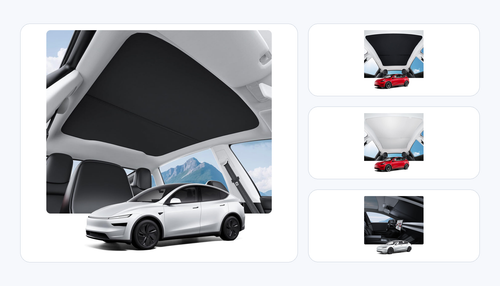
| Sunshade | Keep in hot climates | Our lab measured 99.2% UV block on the BASENOR UV model. | A removable shade still needs storage space. |
| Mud flaps | Inspect by route | Wet roads, gravel, and salt belts justify them earlier. | They add a visible exterior part and need fitment checks. |
| Rear organizer | Keep if used weekly | Passengers create clutter faster than owners expect. | If nobody sits in back, it becomes dead weight. |
This table is deliberately conservative. Accessories should prove themselves by month three. If the product is not protecting a surface, reducing mess, supporting service, or improving daily use, it probably does not belong in the first ownership stack.
The BASENOR products that actually earned space
These are the products we would still keep after three months of normal Tesla ownership. They are not decorative picks. Each one solves a specific recurring problem: service lifting, display wear, air inspection, heat control, road spray, or rear-cabin clutter.
2013-2026 Tesla Jack Pad Set
Makes tire rotation or service lifting safer by keeping the lift point centered on the Tesla jack pad location.
BASENOR price: $29.99
View productHighland / Juniper 9H Matte Screen Protector
Protects the display from cleaning haze, keys, rings, and passenger fingerprints during daily use.
BASENOR price: $29.99
View productModel 3 / Model Y Activated Carbon Cabin Air Filter
Worth checking after real pollen, dust, and HVAC use; not something a brand-new Tesla needs on day one.
BASENOR price: $27.99
View productModel 3 / Model Y Windshield Sunshade — Nano Ice Crystal UV Block
Our lab measurement is 99.2% UV block; the tradeoff is a removable shade that still needs storage.
BASENOR price: $24.99
View product2025-2026 Model Y Juniper TPE Mud Flaps
Reduces splash and grit on lower paint for rain, gravel, and salt-belt routes.
BASENOR price: $32.99
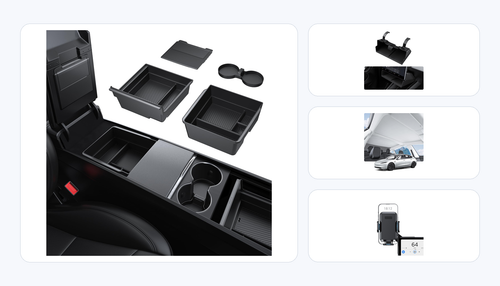
View product2025-2026 Model Y Juniper Rear Console Organizer
A clutter-control piece that earns space only if passengers actually use the rear cabin.
BASENOR price: $29.99
View productProduct examples from the checkpoint


What we check on the car before buying more accessories
Tires first. FuelEconomy.gov maintenance guidance still emphasizes tire pressure, load, and vehicle condition as efficiency factors. At month three, we check cold pressure, inspect shoulders, look for uneven wear, and confirm rotation planning. A jack pad set is not glamorous, but it prevents confusion at shops that do not lift Teslas every day.
Cabin air second. We do not tell a new Tesla owner to replace filters immediately. A new vehicle starts with a new filter. At month three, the right move is inspection: smell after rain, fan noise, dusty parking areas, pollen load, and whether the glass fogs unusually fast. Replace when evidence appears, not because a checklist says every owner must do it on day one.
Screen and touchpoints third. The center display is a daily-contact surface. Three months of fingerprints, keys, rings, dust, and cleaning cloths will show whether protection was worth it. For Highland and Juniper owners, the larger 15.4-inch front display and rear screen option make exact-size fitment important.
Heat and UV by climate. A sunshade earns space quickly in Phoenix, Dallas, Las Vegas, and other high-heat regions. It may sit unused in mild climates. Our 99.2% UV block lab claim applies to the BASENOR Nano Ice Crystal UV model; we keep that number consistent because owner trust depends on one metric, one number.
Road spray by route. Mud flaps are not universal. They make sense when the car sees wet commutes, gravel shoulders, construction zones, winter slush, or salt. They are less urgent for a garage-kept commuter on clean pavement. The real tradeoff is that exterior protection must fit cleanly and remain visually acceptable.
Model 3 Highland and Model Y Juniper need separate notes
Model 3 Highland owners should remember that the 2024+ car removed the turn-signal stalk and uses steering-wheel buttons. That matters because owners interact with the display and steering controls differently from Legacy Model 3. Interior accessory fitment should be labeled Highland-specific when the part touches console, display, floor, or rear-cabin geometry.
Model Y Juniper owners should not copy Highland control language. The 2025+ Juniper retains a physical turn-signal stalk while moving to touchscreen shifting. This difference matters in customer-facing fitment and ownership advice. It also means accessories should be described by actual Juniper compatibility, not vague Model Y assumptions.
Legacy Model 3 and 2020-2024 Model Y owners still have strong accessory support, but the checkpoint should separate generations clearly. A wrong-fit organizer or mud flap wastes money and creates the exact problem an accessory guide is supposed to prevent: buying twice.
Three owner scenarios after 90 days
The garage-kept commuter: keep the screen protector, jack pads, and exact-fit floor protection. Inspect cabin air only if odor or dust appears. Sunshades and mud flaps depend on heat and weather. Rear organizers are optional unless passengers use the car weekly.
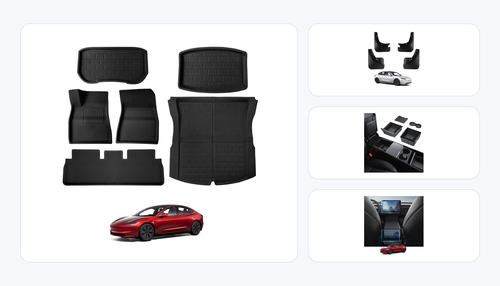
The family Model Y: prioritize removable protection. Floor, cargo, rear-console, seat-back, and sunshade choices can save cleanup time every week. Mud flaps are more likely to earn space because family crossovers see wet parking lots, school runs, sports gear, and road-trip debris.
The road-trip Tesla: prioritize tire inspection, jack pads, screen protection, cabin-air checks, and charging organization. Road-trip owners notice small convenience failures faster because a messy cabin, hot windshield, or unorganized cable becomes annoying over hundreds of miles.
These scenarios prevent overbuying. A product should match the car’s use pattern. The right three-month stack for a family Model Y is not the same as the right stack for a solo Model 3 commuter.
Common mistakes we would correct at month three
Mistake 1: replacing filters too early. Cabin filters should be inspected at this stage, not treated as a universal replacement. Replace when odor, dust load, airflow symptoms, or local pollen pressure justify it.
Mistake 2: buying universal fitment for refreshed cars. Highland and Juniper are current-generation vehicles with specific interior and exterior details. A part that “mostly fits” is not good enough when exact-fit options exist.
Mistake 3: skipping tire and lift prep. Tesla ownership still includes tire work. A jack pad kit is cheap insurance against a rushed shop lift, and tire inspection belongs in every 90-day check.
Mistake 4: treating accessories as resale magic. Accessories preserve condition; they do not guarantee a resale premium. The honest claim is that protected surfaces are easier to clean, photograph, and explain later.
Mistake 5: keeping clutter-control products nobody uses. An organizer only earns space if it changes behavior. If passengers ignore it, remove it and keep the cabin simpler.
The 90-day calendar we would actually follow
Day 0-7: install protection that is easiest before the car gets dirty: screen protector, floor/cargo liners if you bought them, and any removable sunshade you know your climate demands. Do not tear into maintenance items just because the car is new. The goal in week one is to prevent first scratches and set the cabin up for normal use.
Day 30: audit dirt patterns. Lift mats, check cargo corners, look behind the rear console, inspect the lower doors, and note where passengers leave fingerprints or trash. This is the first time the car tells you which accessories are actually solving a problem. If an organizer is empty every week, it is not earning its space. If the driver floor is already collecting grit, floor protection is doing real work.
Day 60: check tire pressure, visible tread, wheel edges, and lower paint. NHTSA tire guidance matters here because pressure and tread are not gasoline-car-only concerns. If you live near construction, gravel shoulders, winter slush, or heavy rain, this is when splash protection becomes easier to justify. If the car stays on clean suburban pavement, mud flaps can remain optional.
Day 90: make the buy-again list. We would keep products that saved cleanup time, protected a visible surface, or made service safer. We would delay anything that has not been used yet. That discipline keeps the Tesla clean without turning the cabin into an accessory showroom.
What we would buy again after three months
We would buy the screen protector again. It is a low-cost, high-contact product. The display is where navigation, charging, climate, entertainment, and settings all meet. Cleaning a protector feels safer than repeatedly wiping bare display glass, especially when passengers use the screen with rings, keys, dusty fingers, or sunscreen residue.
We would buy jack pads again. They are not exciting, and that is exactly the point. The value appears when tire rotation, roadside inspection, or a third-party shop lift enters the picture. A small set stored in the trunk or garage can prevent confusion about lift points and battery-adjacent underbody protection.
We would buy the sunshade again in high-heat regions. A removable shade is not elegant; it takes a few seconds to fold and store. But in real heat, the cabin comfort gain and UV-control benefit justify the habit. BASENOR's Nano Ice Crystal UV model is the one where we use the 99.2% UV block lab number, and we do not apply that metric to unrelated shades.
We would buy mud flaps only when the route proves it. This is not a universal command. Mud flaps are rational when road spray is visible on lower paint after normal driving. They are less urgent for mild-weather owners who park indoors and drive on clean roads. The correct answer is route-based, not ego-based.
We would buy organizers only when behavior changes. A rear console organizer or trash-can insert is useful when passengers actually put tissues, wrappers, charging cables, or small items there. If it becomes a plastic box nobody uses, remove it. Good organization should reduce mess; it should not become another object to clean.
What is not worth buying yet
Do not replace a clean cabin filter just to feel proactive. New vehicles start with new filters. At three months, the responsible move is inspection. A dusty rural commute, wildfire smoke, pollen season, heavy HVAC use, or a mildew smell can justify replacement. A clean, odor-free commuter in mild weather probably can wait.
Do not buy generation-vague parts for refreshed vehicles. Model 3 Highland and Model Y Juniper deserve exact fitment language. Highland removed stalks and uses steering-wheel buttons. Juniper retains the physical turn-signal stalk and uses touchscreen shifting. That distinction may sound small, but it prevents sloppy accessory assumptions and sloppy owner advice.
Do not buy products because they promise resale value. A clean protected cabin can help buyer confidence later, but it is not a guaranteed dollar return. We prefer honest phrasing: these products protect surfaces, reduce cleanup, and keep wear easier to document. That is enough. Overclaiming makes the advice less trustworthy.
Do not keep decorative pieces that create cleaning work. If a trim piece catches dust, squeaks, scratches easily, or makes the interior harder to wipe down, it fails the three-month test. BASENOR's owner advice is intentionally practical: protect first, organize second, decorate last or not at all.
How to shop from evidence instead of impulse
Before buying the next accessory, take five photos: driver footwell, passenger footwell, cargo area, center screen, and lower exterior behind the wheels. Those photos tell the truth. If a surface still looks new, you may not need protection there yet. If a surface is already dirty or scratched, buy a product that addresses that exact wear pattern.
Then ask three questions. First, will this product prevent damage or just hide it? Second, can it be removed and cleaned without damaging the car? Third, is it built for my exact Tesla generation? A product that fails any of those questions should not be part of a disciplined three-month stack.
This approach also keeps BASENOR recommendations more useful. We would rather sell one product that solves a real owner problem than push five products that become clutter. A clean, precise, generation-aware recommendation is better for the owner and better for long-term brand trust.
Our month-three decision rule
At the 90-day mark, we would not ask “is this accessory popular?” We would ask whether the car has already shown the problem. If the screen needs frequent wiping, protect it. If lower paint is collecting grit, consider mud flaps. If passengers create rear-cabin mess, organize that space. If none of those problems appear, keep the cabin simple and save the money for tires, charging habits, and maintenance discipline.
The best Tesla accessory stack is the one that disappears into ownership: it prevents avoidable wear, shortens cleanup, or makes service less risky without creating another thing to manage.
The final three-month filter
If a product cannot explain its job in one sentence, delay it. “Protects the display,” “keeps lift points safer,” “blocks heat while parked,” and “reduces lower-paint spray” are clear jobs. “Makes the car feel complete” is not. That standard keeps the checkpoint useful for owners who want a cleaner, easier-to-maintain Tesla without buying parts they remove later.
We also check removability. The best early accessories can be lifted out, washed, replaced, or inspected without changing the car. That matters because month three is still early. Your use pattern may change after the first winter, first road trip, first child seat, first pet ride, or first tire rotation.
FAQ
What Tesla accessories are worth buying in the first three months?
Start with screen protection, floor or cargo protection, jack pads for service prep, and climate-specific protection such as a sunshade or mud flaps when your route justifies them.
Should I replace a Tesla cabin air filter at three months?
Usually no. Inspect it if you notice odor, dust, pollen, weak airflow, or fogging. New cars do not need automatic filter replacement on day one.
Are Tesla jack pads necessary?
They are not used every day, but they are useful for tire rotation, inspection, and shops that may not lift Teslas routinely.
Do Model Y Juniper accessories fit older Model Y vehicles?
Do not assume that. Buy by exact generation: 2020-2024 Model Y Standard and 2025+ Model Y Juniper should be checked separately.
Does a sunshade really matter in a Tesla?
In hot, high-sun regions, yes. The BASENOR Nano Ice Crystal UV model measured 99.2% UV block in our lab, but the tradeoff is that a removable shade must be stored when not in use.
What should I skip at month three?
Skip products that do not match your real wear pattern. If nobody uses the rear seat, a rear organizer can wait. If your route is clean and dry, mud flaps are less urgent.
Sources
Build your 3-month Tesla stack around real wear
Keep the products that protect daily-touch surfaces, make maintenance safer, or reduce cleanup — and skip the rest until the car proves you need them.
Shop BASENOR Tesla accessoriesAuthor: BASENOR Product Testing Lab — our team evaluates generation-aware Tesla accessory fitment and long-term owner usefulness.
Last updated: April 2026, with verified neutral maintenance and tire-safety references.