Tesla Guides · Updated April 2026 · By BASENOR Product Testing Lab
Tesla 5-Year TCO: The Real Number Most Calculators Miss
Most Tesla cost calculators get the big math roughly right, then miss the ownership details that decide whether the car still feels clean, protected, and easy to sell at year five. We separate unavoidable costs from preventable wear so the budget is useful instead of theoretical.
Bottom Line Up Front
Largest cost: depreciation is usually bigger than charging and maintenance combined, so do not let low fuel cost hide the real 5-year number.
Most under-budgeted cost: tires and insurance surprise more owners than cabin filters or wiper blades.
Where accessories belong: BASENOR products do not magically change market depreciation. They protect the visible surfaces buyers inspect: carpet, cargo lips, wheels, paint splash zones, and display glass.
The real 5-year Tesla cost is not just purchase price minus fuel savings
When we build a 5-year Tesla budget for Model 3 and Model Y owners, we start with six buckets: depreciation, insurance, charging, tires, maintenance, and condition protection. Charging is the easiest bucket to over-celebrate because the number is visible every month. Depreciation and insurance are quieter, but they usually decide the final cost.
The Department of Energy notes that electric vehicles generally have fewer moving parts than gasoline vehicles, which can reduce routine maintenance. That is real, but it does not erase tire wear, insurance premiums, registration costs, charging hardware, cleaning supplies, or resale-condition issues. A Tesla still needs a practical ownership plan.
Our lab view is simple: do not buy accessories to pretend the car becomes an investment. Buy the few protection pieces that keep high-touch and high-wear areas from looking abused by year three, four, and five. A clean cabin, unscuffed cargo lip, protected screen, and intact wheel finish are easier to defend during private sale or trade-in inspection than a long list of decorative add-ons.
The cost buckets that actually move the math
Depreciation is market-driven. Incentives, used-EV supply, mileage, software generation, battery confidence, and model-year refreshes all matter. You cannot accessory your way around a bad used-car market. Insurance is personal and local, so every owner should quote before buying, especially on performance trims or high-repair-cost areas.
Charging depends on your home rate and Supercharger share. FuelEconomy.gov gives a standardized efficiency reference for Model 3 and Model Y, but your bill depends on climate, speed, preconditioning, utility plan, and whether you can charge at home. Maintenance is lighter than an ICE service schedule in many cases, but tires are a real recurring cost because EV torque and weight punish poor rotation habits.
| Cost bucket | Why it matters | What moves it | Owner action |
|---|---|---|---|
| Depreciation | Usually the largest 5-year line item | Market forces, incentives, model year, mileage | Keep mileage/condition honest; accessories cannot override market depreciation |
| Insurance | Often larger than maintenance on newer Teslas | Driver profile, location, repair cost, coverage level | Quote before purchase; do not rely on national averages |
| Charging / energy | Lower than fuel for many owners, but home rate matters | Home electricity rate, Supercharger share, miles driven | Track kWh, not only dollars, so seasonal range changes are visible |
| Tires | The maintenance item owners under-budget | EV weight, acceleration habits, alignment, wheel size | Rotate and inspect; protect wheels from curb rash |
| Cabin / paint condition | Small individually, visible at trade-in | Floor mess, cargo scratches, road spray, screen wear | Use protection where real wear happens, not random decoration |
The practical point: a good Tesla TCO sheet includes both money and condition. If the car is mechanically fine but the interior looks neglected, buyers negotiate as if the owner neglected everything.
Protection choices that make sense before year five
We group accessories into three categories. First are daily-contact protectors: floor mats, screen protectors, cargo liners, and seat-back protection. Second are exterior-wear protectors: mud flaps, rim guards, bumper guards, and car covers where parking conditions justify them. Third are convenience products: organizers, cable holders, and small storage pieces that reduce mess but do not directly affect inspection condition.
The best TCO accessories are boring. They protect a surface that is expensive or irritating to restore, they install without damaging the car, and they do not create new fitment problems. We would prioritize exact-generation fitment for Model 3 Highland and Model Y Juniper over universal claims because current-generation interiors and exterior details are not identical to older cars.
2024-2026 Model 3 Highland Floor Mats
Protects carpet and cargo-area surfaces from salt, coffee, and daily grit.
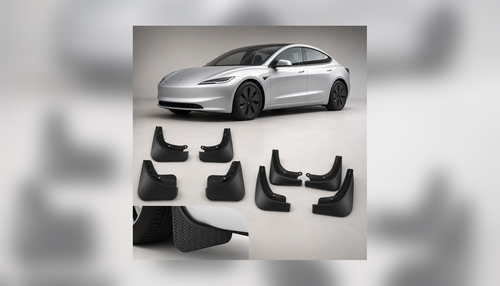
View productModel Y Juniper Mud Flaps
Reduces road-spray and rocker-panel debris on wet or gravel-heavy routes.
View productHighland / Juniper Matte Screen Protector
Protects high-touch display glass from keys, dust, and cleaning mistakes.
View productModel Y Juniper Rear Bumper Guard
Prevents cargo-loading scratches where strollers, luggage, and gear slide across the lip.
View productModel Y Juniper 20-inch Rim Protector
Helps hide and prevent visible curb-rash damage on common urban parking routes.
View productTesla Wall Connector Cable Organizer
Keeps charging cables off the garage floor and reduces trip / abrasion wear.
View productWe do not recommend buying every accessory in the catalog. A garage-kept commuter does not need the same setup as a family Model Y carrying strollers, pets, sports gear, and road-trip luggage. Choose based on real wear: floor and cargo protection first, then screen protection, then paint/wheel protection if your parking or weather makes damage likely.
Our 5-year owner checklist
At delivery: protect the screen and floor before the first week of daily use. This prevents the most common early scratches and carpet stains.
At 6-12 months: review cabin air quality, wiper condition, tire wear, and whether your actual use justifies cargo protection. New cars do not need cabin filters immediately, but they do need inspection once real dust and pollen accumulate.
At year three: inspect wheels, paint splash areas, seat backs, cargo lips, and interior plastics. This is when small wear starts to become visible in photos.
At year five: clean like a buyer, not like an owner. Remove mats, deep-clean channels, touch up minor wheel rash if appropriate, and photograph the car in a way that proves it was cared for.
Real product protection examples


Three owner scenarios we use in the lab
Scenario 1: the garage-kept commuter. This owner charges at home, drives predictable miles, and rarely carries messy cargo. Their 5-year plan should be simple: quote insurance before purchase, track tire wear every rotation, install exact-fit floor protection, protect the center screen, and skip heavy exterior protection unless the route includes gravel, snow, or tight urban parking. The goal is not to accessorize the car; it is to prevent the few visible wear marks that make a clean commuter look careless.
Scenario 2: the family Model Y. This car collects school bags, snack crumbs, soccer gear, pets, strollers, beach towels, and grocery leaks. The TCO spreadsheet should include more cleaning time, more cargo protection, faster cabin-filter inspection, and a higher chance of rear-seat or cargo-surface wear. For this owner, protection is not cosmetic. It reduces weekly cleanup time and keeps the cabin from smelling like five years of small spills.
Scenario 3: the road-trip Tesla. This owner cares about charging efficiency, tire condition, cargo organization, and long highway miles. Their biggest hidden cost is usually not a cabin accessory; it is tire wear, windshield chips, charging mix, and the amount of paid fast charging. Protection still matters, but the rational order is tire maintenance, floor/cargo liners, screen protection, and then weather-specific items such as mud flaps or sunshades if the route makes them useful.
These scenarios prevent the classic mistake: buying a generic bundle because it looks complete. A 5-year ownership plan should match the real car. If your Model 3 Highland carries only one laptop bag, you need a different setup than a Model Y Juniper that hauls two kids, a dog, sports gear, and Costco runs. The right accessory saves cleaning time or prevents visible damage; the wrong one becomes clutter.
A practical five-year calendar
Month 0-1: set up home charging, record your baseline efficiency, install screen and floor protection, and photograph the car while it is new. The photos help you see future wear honestly.
Month 3-6: inspect tires, check alignment symptoms, clean under mats, and decide if cargo protection is necessary based on actual use. Do not buy a full protection stack until the car has told you where it gets dirty.
Year 1: review insurance renewal, tire rotation history, cabin air quality, and whether your home charging schedule is still cost-effective. If your car lives outdoors, inspect lower paint and rubber seals after winter or peak heat.
Year 2-3: this is where small neglect compounds. Coffee residue hardens in mat channels, cargo scratches become permanent, and wheel-edge damage becomes obvious in photos. A deep clean once a year costs far less effort than trying to rescue a neglected cabin before sale.
Year 4-5: prepare like a future buyer is already watching. Keep records, document tire age, refresh worn consumables, clean protection pieces, and remove anything that looks too personalized. A Tesla that presents as maintained earns more trust, even when the market sets the broad depreciation curve.
FAQ
Is a Tesla cheaper to maintain for five years?
Often yes for routine drivetrain maintenance, but tires, insurance, registration, charging setup, and depreciation still matter.
Do accessories improve resale value?
We would not claim a fixed resale increase. Good protection helps preserve visible condition, which can support buyer confidence.
What should new owners buy first?
Floor mats, screen protection, and cargo/bumper protection if the car will carry pets, kids, luggage, or sports gear.
Should I include Supercharging in my TCO?
Yes. Home charging and Supercharging can produce very different cost profiles.
Which is more important: Model 3 or Model Y fitment?
Both. Always buy by exact generation: Legacy vs Highland for Model 3, Standard vs Juniper for Model Y.
How we build a useful Tesla TCO model
We do not start with a single national average. We start with owner inputs, because the same Model Y can have a very different five-year cost in Seattle, Phoenix, Chicago, or Dallas. Home electricity rate, insurance profile, winter tire need, garage access, commute length, and fast-charging share all change the real number. A useful model should be boring, transparent, and adjustable.
Line one is acquisition cost. Include purchase price, destination, taxes, fees, registration, financing cost, and any charging hardware you actually need. If you already have a safe charging setup, do not count it twice. If you need electrical work, count it once and keep the receipt because future buyers may appreciate a properly installed home charging solution.
Line two is energy. Use your real utility rate when possible. Tesla owners often quote a low monthly charging number, but the true comparison depends on miles driven, climate, tire size, highway speed, preconditioning, and how often paid fast charging replaces home charging. FuelEconomy.gov is useful as a standardized baseline; your bill is still local.
Line three is insurance. Insurance can move more than maintenance, especially for owners with high coverage, young drivers, dense urban parking, or performance trims. We recommend getting quotes for the exact VIN or trim before purchase. If the insurance difference is larger than expected, it belongs in the ownership decision, not as a surprise after delivery.
Line four is tires and alignment. Tires are the EV maintenance item owners under-budget most often. Torque, vehicle weight, road surface, and driving style all matter. Record rotations, inspect shoulders, and do not ignore vibration or uneven wear. A car that eats tires early is not “low maintenance” just because it skips oil changes.
Line five is condition protection. This is where BASENOR products fit. They are not depreciation shields. They are small, practical controls against stains, scratches, road spray, loading damage, and cleaning mistakes. The best protection is installed before damage happens and removed cleanly when it is time to deep-clean or sell.
Line six is resale assumption. Be conservative. Used EV markets can change faster than accessory plans. Incentives, model refreshes, interest rates, and inventory levels can all move values. The owner-controlled part is presentation: accurate records, honest photos, clean high-touch surfaces, and exact-generation fitment.
Common TCO mistakes we see Tesla owners make
Mistake 1: counting fuel savings but ignoring depreciation. Charging can be cheaper than gasoline, but depreciation is usually the larger five-year line item. A realistic spreadsheet should show both so the owner does not overstate savings.
Mistake 2: treating all Model 3 and Model Y accessories as interchangeable. Model 3 Highland and Model Y Juniper changed enough details that exact fitment matters. A part that looks close online can still leave gaps, interfere with coverage, or fit the wrong trim. We use generation-specific language because a five-year ownership plan should not start with a bad-fit accessory.
Mistake 3: buying protection after damage is visible. A screen protector cannot undo scratches. Floor mats cannot remove old salt stains. A bumper guard is most valuable before strollers, luggage, and storage bins mark the cargo lip. The first month is when basic protection is easiest and cleanest.
Mistake 4: underestimating cleanup labor. A washable mat or liner is not only about resale. It can turn a messy cleanup from a carpet-shampoo job into a rinse-and-dry task. Over five years, time matters too, especially for family cars and road-trip vehicles.
Mistake 5: assuming every accessory is rational. We do not recommend buying by bundle size. If a product does not solve a surface-wear problem, fitment problem, storage problem, or charging setup problem, it may not belong in a cost-conscious plan. TCO discipline means saying no to accessories that only add clutter.
Model 3 vs Model Y: what changes the 5-year plan
Model 3 owners usually prioritize driver-area protection, screen care, trunk organization, and tire discipline. The sedan shape encourages commuting and road-trip use, so the cabin often stays cleaner than a family crossover but still suffers from footwell wear and display handling. Highland owners should also be precise about stalkless controls when explaining the car to future buyers.
Model Y owners usually need a more cargo-heavy plan. The crossover layout invites pets, strollers, sports gear, home-improvement loads, and more passenger traffic. Juniper owners should buy products designed for the refreshed vehicle rather than assuming older Model Y parts fit. Juniper retains the physical turn-signal stalk, so accessory and buyer education should not copy Highland language.
Legacy owners still deserve correct support. A 2017-2023 Model 3 or 2020-2024 Model Y should not be ignored just because new deliveries moved to refreshed generations. The key is to separate fitment clearly: current-gen recommendations first for new buyers, legacy support clearly labeled for existing owners.
That separation protects both cost and trust. A wrong-fit mat, cargo piece, or exterior protector wastes money and can create the impression that the owner bought blindly. A correct-fit product keeps the car easier to clean and makes resale documentation more credible.
The final rule: budget for use, not showroom fantasy
A Tesla is still a daily-use vehicle. Five years of shoes, coffee, rain, dust, road trips, charging cables, groceries, and passengers will leave evidence somewhere. The smartest owners do not try to keep the car untouched; they choose which surfaces absorb the wear. A removable mat can take abuse that would otherwise sit in carpet. A screen protector can take cleaning marks that would otherwise sit on display glass. A cargo guard can take loading scuffs that would otherwise sit on painted or plastic trim.
That is the ownership logic we trust: put protection where removal, washing, or replacement is easier than restoration. Skip products that do not reduce cleaning labor, prevent visible wear, or solve a real fitment problem. This keeps the five-year number honest and keeps the car easier to live with.
Editor note from our testing bench
We evaluate Tesla ownership advice by asking one practical question: would this help the owner make a better decision before money is spent or damage happens? If the answer is no, it does not belong in the guide. That is why we separate market forces from owner-controlled care, exact-generation fitment from vague compatibility, and useful protection from decoration.
For BASENOR, the best recommendation is not the longest product list. It is the smallest set of exact-fit pieces that protect the surfaces a real owner will touch, load, clean, and show later. That keeps the advice useful for new buyers, current owners, and anyone preparing a car for the next stage of ownership.
Sources
Build a Tesla ownership plan around real wear
Start with the surfaces you touch, load, clean, and show at resale — then choose exact-fit BASENOR protection for your generation.
Shop BASENOR Tesla accessoriesAuthor: BASENOR Product Testing Lab — our team evaluates Tesla accessory fitment by generation and focuses on measurable protection, not decoration.
Last updated: April 2026, with verified ownership-cost and resale sources.