Model Y Juniper Spec Guide
Tesla Model Y Juniper Dimensions & Cargo Space: A Deep-Dive Spec Guide
We pulled the 2025–2026 Model Y Juniper dimensions into one owner-friendly guide: garage fit, parking width, cargo volume, seat-folding use cases, and the cargo-area accessories that actually make sense.
By Daniel Zhang, BASENOR Product Testing Lab
Quick answer
The 2025–2026 Tesla Model Y Juniper is roughly 188.6 inches long, 75.6 inches wide without mirrors, 63.9 inches tall, and rides on a 113.8-inch wheelbase. Cargo figures vary slightly by measurement method: published sources place maximum cargo space around 71–75 cu ft with the second row folded and about 29–30 cu ft behind the second row.
For owners, the practical takeaway is simple: Juniper still behaves like a compact crossover outside, but the hatch opening and fold-flat second row make it more useful than the numbers suggest. It also keeps the traditional turn-signal stalk, so do not apply Model 3 Highland stalkless assumptions here.
Exterior dimensions: what changed for daily use?
The Juniper refresh is not a size-class jump. It is still Model Y-sized, not Model X-sized. The published post-refresh length is about 188.6 inches, which is long enough that tight garages deserve a real tape-measure check, but short enough for normal U.S. parking spaces.
| Dimension | 2025–2026 Model Y Juniper | Owner meaning |
|---|---|---|
| Length | 188.6 in / 4,790 mm | Measure garage depth with charger cable clearance, not bumper-to-wall only. |
| Width without mirrors | 75.6 in / 1,920 mm | The body fits most spaces; mirror clearance and door swing are the real constraints. |
| Height | 63.9 in / 1,624 mm | Roof racks, roof boxes, and low garages matter more than the bare vehicle height. |
| Wheelbase | 113.8 in / 2,890 mm | Stable highway footprint; still easy enough for normal suburban turns. |
Our fitment team treats these numbers as the starting point, not the finish line. Accessory fit depends on real contact points: trunk sill shape, rear seat-back surface, console geometry, and wheel-arch splash zones. That is why a product can be “Model Y compatible” in a broad listing and still need Juniper-specific checking.
Cargo space: why sources do not all show the same number
If you have seen different cargo numbers for Juniper, you are not imagining it. Car and Driver lists 71.4 cu ft behind the front row and 29.0 cu ft behind the second row. MotorTrend’s 2026 spec feed lists 74.0 cu ft behind the front row and 30.2 cu ft behind the second row. Wikipedia’s standard-version reference cites 2,130 liters / 75.2 cu ft.
The difference usually comes from measurement method: whether underfloor storage is included, how the cargo area is boxed, and whether the number is rounded from liters to cubic feet. For shopping and trip planning, we recommend using the range instead of treating one number as the only truth.
| Cargo setup | Published range | Use it for |
|---|---|---|
| Second row upright | About 29–30 cu ft | Strollers, groceries, carry-ons, Costco runs, pet gear. |
| Second row folded | About 71–75 cu ft | Flat-pack furniture, camping bins, large suitcases, moving boxes. |
| Underfloor + side pockets | Not always counted the same way | Charging adapters, emergency kit, cleaning towels, muddy-item separation. |
Will it fit in your garage?
Use 188.6 inches as the vehicle length, then add your real-world buffer. We like at least 18–24 inches of combined working room so the hatch, wall connector cable, front walkway, and bumper do not fight each other every night.
- Single-car garage: measure from the closed garage door to the wall, then subtract shelving depth.
- Home charging: leave space for the cable loop and for walking around the rear corner.
- Hatch loading: check overhead cabinets before opening the liftgate indoors.
- Door swing: body width is not the full story; child seats and narrow garage walls make door clearance more important.
If your parking routine includes tight garage walls or frequent cargo loading, the first accessory we would consider is not a storage bin. It is a rear sill protection piece, because the painted loading edge gets contacted by suitcases, coolers, stroller frames, and pet crates.
BASENOR lab note: where accessories actually matter
For a dimension guide, we avoid forcing products into places where the numbers do not prove fit. Cargo volume alone does not tell you whether a cargo liner, trunk organizer, or third-party box fits the Juniper hatch. The safer accessory matches are the high-contact surfaces we can verify directly.
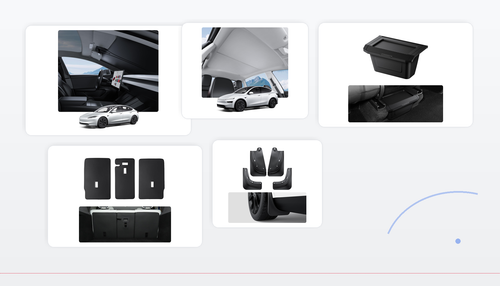
- Model Y Juniper Rear Bumper Guard — protects the loading lip when using the hatch for luggage, tools, coolers, and pet crates.
- Model Y Juniper Rear Seat Back Cover — useful when the second row is folded and cargo slides against the seat backs.
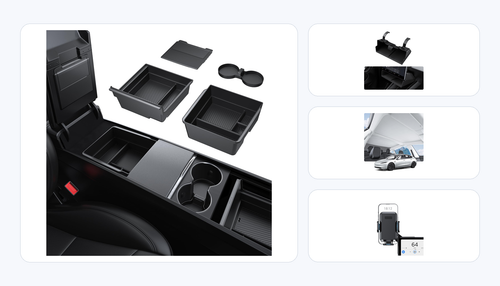
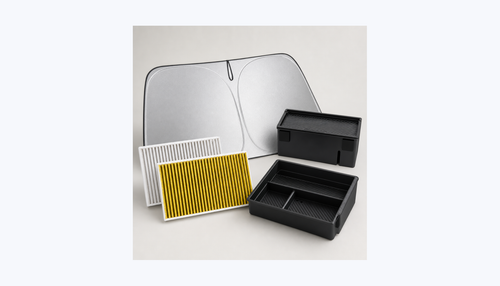
- Rear Console Organizer — keeps small cabin items out of the cargo area without changing cargo measurements.
Juniper vs older Model Y: what owners should not assume
The most common mistake is treating every 2020–2026 Model Y accessory as identical. Some parts still carry over, but anything that touches the revised bumper, rear cabin trim, dashboard area, or roof glass should be checked by generation.
The second mistake is mixing Model 3 Highland facts into Juniper. Highland removed stalks; Model Y Juniper keeps the traditional turn-signal stalk. That matters for phone-mount placement, driver controls, and owner expectations during delivery.
For generation separation, keep four buckets distinct: Legacy Model 3, Model 3 Highland, standard Model Y, and Model Y Juniper. Legacy Model 3 and standard Model Y share some older accessory logic; Highland and Juniper share some refreshed cabin ideas; but Juniper is not simply a tall Highland, and Highland control assumptions should not be copied into a Model Y guide.
For owners comparing Juniper with an older Model Y in the same household, label accessories by generation before storing them together. Floor and console items can look similar in photos, but small trim changes are enough to create rattles, uneven edges, or pressure marks. If a product touches the bumper, seat-back surface, dashboard, or roof glass, we treat it as generation-sensitive until verified on the actual vehicle.
For a wider generation-by-generation accessory map, use our Tesla accessory fitment guide and our Model Y vs Juniper fitment guide.
Real-world packing examples
| Use case | Seats upright? | Best practice |
|---|---|---|
| Airport run | Usually yes | Keep heavy bags flat and use underfloor space for smaller soft items. |
| Camping weekend | Often folded | Put hard bins low; protect rear seat backs from sharp bin corners. |
| Pet transport | Depends on crate | Measure crate length and hatch height; protect the sill before repeated loading. |
| Home improvement run | Usually folded | Bring a blanket; cargo length is good, but trim scratches faster than owners expect. |
How we translate spec-sheet dimensions into owner decisions
Spec sheets are useful, but they are not how owners experience the vehicle. A tape measure tells you whether the body fits in a garage; daily use tells you whether you can still open the hatch with a bike rack nearby, pull a suitcase over the rear sill without scraping paint, and fold the second row without unloading every small item first.
For this guide, we separate the numbers into three decisions. First is parking envelope: length, body width, mirror clearance, door swing, and overhead hatch movement. Second is cargo envelope: the flat load floor, the angle of the second-row seat backs, underfloor storage, and the height of objects that can pass through the hatch. Third is contact protection: which surfaces actually take impact when the Juniper is used like a family crossover.
Parking envelope
Use the 188.6-inch length as the baseline, then add charger cable space, walking room, and the real thickness of shelves or storage bins.
Cargo envelope
Use 29–30 cu ft seats-up for normal trips and 71–75 cu ft folded as the planning range for large loads.
Contact points
Watch the rear bumper lip, seat backs, hatch-side trim, and lower door openings. These are where repeated cargo use leaves marks.
That contact-point approach is why we are conservative with product recommendations. A roof sunshade, phone mount, or console organizer can be excellent for Juniper ownership, but it does not become part of a cargo-space guide unless it solves a dimension-driven problem. For this page, rear loading protection and folded-seat protection are the cleanest fit.
Garage-fit worksheet for Model Y Juniper owners
Before delivery day, measure your garage as if the car is already there. The number owners forget is not the car length; it is the remaining usable space after the garage door, charging cable, trash bins, storage shelves, and wall-mounted tools are counted.
- Measure closed-door depth. Measure from the inside face of the closed garage door to the wall or deepest shelf. Do not measure from the open door track.
- Subtract 188.6 inches. The remaining number is your total working buffer before accessories, cable loops, or wall storage.
- Reserve rear working space. If you load groceries or strollers indoors, keep more space at the hatch end than the nose end.
- Check overhead liftgate clearance. Low cabinets, bikes, and storage racks can sit above the bumper line but still conflict with the hatch arc.
- Test door swing. Body width is 75.6 inches without mirrors, but opening doors in a narrow garage requires extra inches on at least one side.
For a tight garage, the best habit is backing in consistently and setting a physical parking marker. Camera views help, but a floor stop or hanging marker removes guesswork when someone else in the household parks the car.
Cargo planning: what fits better than expected, and what still needs measuring
The Model Y shape is efficient because the hatch is large and the second row folds into a broad loading area. Long, low items usually fit better than tall, boxy items. A flat-pack desk, folding chairs, duffel bags, and camping bins are easier than a tall rigid crate that hits the hatch glass or slopes into the liftgate opening.
We recommend treating cargo as three zones. The main trunk floor handles the everyday load. The underfloor area is best for dense, smaller items that should not roll around. The folded second row creates the long-load area, but it also exposes the rear seat backs to abrasion from bins, furniture edges, and pet crates.
When an item is close to the limit, measure the item at its widest and tallest points, not just the product-box dimensions. Soft luggage compresses; hard coolers and crates do not. If the item has wheels or handles, include them. Those small protrusions are exactly what scrape the sill or catch the seat-back material.
For messy cargo, put the heaviest items low and forward. This reduces sliding under braking and keeps the liftgate area easier to close. If you fold only one side of the second row, load long items through that side and keep a passenger seat usable. The Juniper still feels like a family vehicle when you use the split-folding row intelligently instead of treating the whole cabin as one open van.
One more practical note: cargo volume is not the same as cargo shape. A 30-cubic-foot space can still reject a tall box if the hatch glass slopes into the load path, while a smaller soft bag may fit easily because it compresses around the wheel wells. Before buying a rigid organizer, dog crate, or camping drawer, measure length, width, and height at the points that cannot flex. Then compare those measurements with the actual vehicle opening after the second row is positioned the way you drive most often.
For delivery-day prep, bring a tape measure and check three owner-specific items: your largest stroller or crate, the tallest cooler you use, and the longest flat-pack item you realistically expect to carry. These three objects reveal more about daily fit than a single cargo-volume headline.
Fitment notes for 2025–2026 Juniper accessories
“Model Y” is no longer enough detail for every accessory. The exterior refresh changed enough surfaces that rear-end, front-end, lighting-adjacent, and cabin-trim accessories deserve generation-specific verification. Products that simply sit in open space may carry across more easily; products that clip, wrap, or align to trim need tighter checking.
For cargo-area ownership, we put accessories into three groups:
- High-confidence Juniper-specific protection: rear bumper guard and rear seat-back cover, because they are built around the revised contact surfaces.
- Useful but not cargo-dimension dependent: rear console organizer, phone mount, sunshade, and cabin storage pieces. These improve daily use but do not prove trunk volume.
- Measure before buying: universal cargo bins, rigid pet crates, roof boxes, and large sleeping platforms. These depend on your exact use case and the item’s real dimensions.
That is the difference between honest fitment advice and keyword stuffing. We would rather recommend fewer products with a clear reason than attach every Juniper accessory to a cargo guide.
FAQ: Model Y Juniper dimensions and cargo space
Is the Model Y Juniper longer than the previous Model Y?
Published references list the 2025-present Model Y at about 188.6 inches long, compared with about 187.0 inches for earlier Model Y references. In daily use, that is not a class-changing difference, but it is enough that tight garages should be measured again.
How much cargo space does the 2026 Model Y have?
Use a practical range: about 29–30 cu ft behind the second row and about 71–75 cu ft with the second row folded, depending on the source and measurement method. The exact number can vary because underfloor storage and rounding are not always handled the same way.
Does Juniper remove the turn-signal stalk like Model 3 Highland?
No. The Model Y Juniper refresh keeps the traditional turn-signal stalk. This is one of the easiest Highland-vs-Juniper details to mix up, so verify generation-specific facts before buying driver-area accessories.
Do older Model Y cargo accessories fit Juniper?
Some may, but do not assume it for parts that touch the rear bumper, cargo trim, seat backs, or hatch-area surfaces. Broad compatibility claims should be checked against Juniper-specific product pages or a fitment guide.
Bottom line
The Model Y Juniper remains easy to live with because the exterior footprint stays compact-crossover friendly while the cargo bay is still one of the strongest parts of the vehicle. Plan around 188.6 inches of length, 75.6 inches of body width, and a practical cargo range of about 29–30 cu ft seats-up or about 71–75 cu ft seats-folded.
If you are buying accessories, match the product to the contact surface, not just the vehicle name. For cargo-heavy owners, that usually means protecting the rear bumper lip and rear seat backs before adding more organizers.