Tesla Guides · Updated April 2026 · By BASENOR Product Testing Lab
Why Your Tesla Accessory Feels Cheap — Owner-Tested Fixes
A Tesla accessory that feels cheap in your hand is not always a bad part. In our lab checks, the real quality test is installed behavior: edge stability, surface finish, clip tension, adhesive contact, and whether the material matches the load it has to carry.
Bottom Line Up Front
Cheap feel is a symptom, not a verdict: judge the accessory after it is installed on the exact Tesla generation it was designed for.
Replace it when quality affects retention: loose clips, paint contact, sliding mats, edge lift, rattles, or adhesive gaps are real failures.
Our rule: a good accessory can be lightweight, flexible, or thin — but it cannot move, buzz, rub, peel, or require improvisation to stay fitted.
The 90-second quality test we use before calling a part cheap
Do not judge only by weight. Tesla accessories often need low profile clearance around pedals, touchscreens, trunk panels, seat rails, wheel arches, and door seals. A heavier part can still be worse if it interferes with those areas.
Edge stability
Install the part and check every corner. A good mat, screen protector, or mud flap should sit flat without curled edges, raised glass corners, or wheel-arch gaps.
Retention under load
Push where the part will actually be loaded. Foot pressure, cargo movement, airflow, and road spray should not make it slide, chatter, or pop loose.
Surface finish
Look for rough flashing, sharp trim edges, uneven texture, cloudy glass, or tape that does not contact the Tesla surface evenly.
Generation fit
A part made for Legacy Model 3 can feel wrong on Highland. A Standard Model Y part can miss Juniper contours. Fitment mismatch often feels like cheap material.
Material feel: what is normal and what is not
ABS trim: ABS can feel light because it is a rigid thermoplastic, not metal. Light is acceptable when the overlay sits flush and does not oil-can or buzz. It is not acceptable when the edge is sharp, the texture looks blotchy, or the clip/tape landings float above the panel.
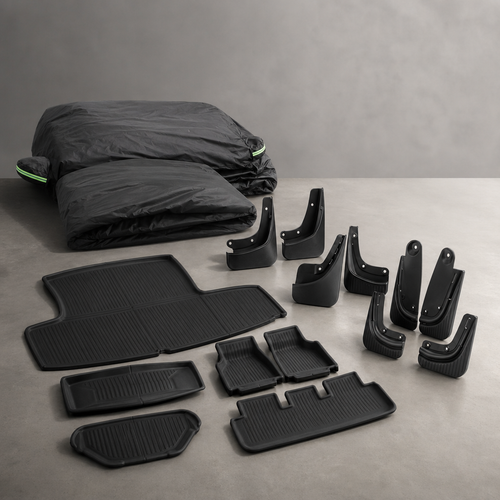
TPE liners and mud flaps: TPE is supposed to flex. That helps a mat lip, splash guard, or cargo liner absorb bending instead of cracking. The failure signal is not flexibility; the failure signal is permanent curl, weak molded edges, or fasteners that cannot hold the part in place.
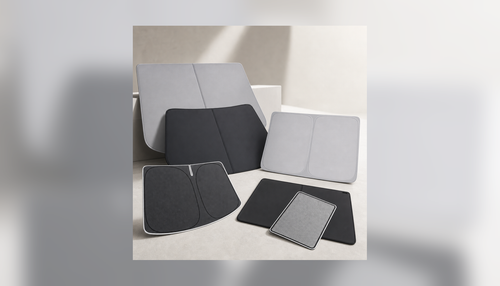
Tempered glass screen protectors: a protector can feel thin and still work if touch response, clarity, and edge adhesion stay clean. It feels cheap when the glass is cloudy, the coating smears quickly, the alignment tray leaves a raised edge, or one corner never bonds.
Pressure-sensitive tape: tape strength depends on clean contact, pressure, temperature, and dwell time. A tape strip that looks slim can bond well; a thick strip can fail if the surface is dusty, wet, or only touching at one edge.
When “feels cheap” is a real warning sign
| What you notice | Quality risk | Owner check | Action |
|---|---|---|---|
| Driver mat shifts | Retention / pedal clearance | Check anchors and exact model year | Remove until corrected |
| Mud flap rattles | Loose fastener or wrong arch contour | Re-seat clips after first drive | Replace if rub remains |
| Glass corner lifts | Adhesion / alignment | Check dust, tray alignment, edge pressure | Reinstall once, then replace |
| Trim buzzes | Floating edge or thin unsupported span | Press around perimeter, listen for gap | Do not add random foam; refit |
BASENOR-fit fixes by symptom

If exterior protection feels flimsy
Use installed stiffness, not hand feel. The wheel arch supports a mud flap after the clips seat. Flex is acceptable; paint contact, tire rub, or a loose lower edge is not.
Verified BASENOR fit: 2025-2026 Model Y Juniper mud flaps and 2020-2024 Model Y mud flaps.
Tradeoff: flexible TPE protects clips during impact, but the fasteners should be rechecked after the first drive.

If cabin protection feels light
A floor mat should feel quality by staying locked, laying flat, and clearing the pedals. Extra weight does not matter if the driver-side mat can move under heel pressure.
Verified BASENOR fit: 2024-2026 Model 3 Highland 6PCS 3D all-weather mats.
Tradeoff: 3D lips trap more grit and liquid, but the pieces take more space when you remove them for rinsing.

If a screen protector feels cheap
Judge it by touch response, clarity, coating behavior, and edge adhesion after installation. A thin protector can be correct; a cloudy protector or one lifted corner is not.
Verified BASENOR fit: Model Y / Model 3 9H matte tempered-glass screen protector.
Most “cheap” complaints start as fitment mismatch
We see this pattern often: the owner orders a product that looks close, the part does not sit fully supported, and then the material gets blamed. Highland and Juniper generation changes make this more common because the vehicle name stays familiar while the mounting surface changes.
For Model 3 Highland, do not assume 2017-2023 interior accessories fit just because the listing says Model 3. Highland removed the stalks and revised the cabin layout, which changes how mats, screen accessories, and console pieces should be checked. For Model Y Juniper, verify 2025-2026 or Juniper-specific fitment instead of relying on older Standard Model Y assumptions.
Our lab checks the exact generation first, then judges material quality. If the part is supported across the molded surface, lightweight material can feel solid. If the part bridges an air gap, even a thick accessory will feel hollow and cheap.
What we would not do
We would not add random foam or tape to a driver mat. If a mat moves, the safe fix is correct anchors and correct generation fitment. We would not heat plastic aggressively just to make it feel less cheap; localized heat can warp an edge and make fitment worse. We would not ignore a mud flap rattle because “it is only plastic”; exterior chatter can become paint contact.
We also would not choose the heaviest accessory by default. Heavier parts can create new problems: raised glass edges, door seal interference, blocked trunk-panel access, or extra load on exterior clips. Better quality means the right material for the job, not the most material.
Our practical recommendation
If the accessory sits flat, stays locked, clears moving surfaces, and has a clean finish, a light feel is normal. If it slides, rattles, curls, peels, or needs improvised backing, treat the problem as fitment or quality — and fix that before continuing to use it.
Four owner scenarios we see most often
Scenario 1: the part feels light before installation. This is the weakest evidence. Many Tesla accessories are shells, overlays, guards, or liners that become stable only when the vehicle surface supports them. A screen protector, mud flap, trunk liner, or mat edge can feel unimpressive on a table and still be correct after it is seated on the exact surface it was scanned for.
Scenario 2: the finish looks cheaper than expected. This deserves a closer look. Matte glass should not look cloudy after cleaning. TPE should not have a permanent crease through the retention area. ABS trim should not have sharp flashing along the edge your hand touches. We separate normal mold marks from functional defects by checking whether the finish affects contact, feel, cleaning, or safety.
Scenario 3: the accessory fits but sounds cheap. Noise changes the diagnosis. A supported part should not buzz, tap, or chatter after installation. For exterior pieces, we check clip seating and whether the lower edge is floating in airflow. For interior pieces, we press around the perimeter and listen for a hollow span. If the noise returns after re-seating, we treat it as a fitment problem, not a cosmetic complaint.
Scenario 4: the accessory only feels cheap in cold weather. Flexible parts can stiffen or hold packaging memory in low temperatures. We warm the piece indoors, lay it flat, then reinstall and repeat the same retention checks. If the shape recovers, the first impression was temperature-related. If the same corner remains curled, the part should not be forced into service.
Keep, reinstall, or replace?
Keep it when the accessory sits flat, has no sharp edges, does not shift under normal load, and clears the moving surfaces around it. A lightweight part that passes those tests is doing its job. For example, a matte screen protector that keeps touch response clean is not automatically lower quality because it feels thin before installation.
Reinstall it when the issue is controllable: dust under glass, tape placed before the surface was dry, a mud-flap clip that was not fully seated, or a mat curled by cold shipping. The reinstall should be one controlled attempt. Clean the surface, dry it, align once, apply even pressure, and then let the part settle. Repeated peeling and re-sticking usually makes adhesive problems worse.
Replace it when the accessory fails the installed-use test. Driver-side movement, paint rubbing, tire-sidewall contact, glass edge lift, rough touch edges, broken clip tabs, or a floating trim span are not “normal cheap feel.” They are quality or fitment failures. Do not compensate with random tape, foam, or trimming unless the product instructions explicitly call for it.
We also use repeatability as a final filter. One misaligned install can happen. The same symptom after correct temperature recovery, correct cleaning, and correct generation fitment means the owner should stop troubleshooting and move to replacement or a different fitment.
Generation notes that prevent false “cheap” diagnoses
Model 3 Highland: Highland is not just a renamed Model 3. The cabin and exterior surfaces changed enough that older Model 3 accessory assumptions can create unsupported edges. If a mat lip, screen edge, or mud flap contour does not line up, the material may feel cheap because it is floating over the wrong geometry.
Model Y Juniper: Juniper retains the physical turn-signal stalk, but the vehicle still has revised exterior and interior surfaces. For accessories that depend on edge shape — mud flaps, mats, storage inserts, liners, and screen accessories — verify Juniper or 2025-2026 fitment before judging quality.
Legacy Model 3 and 2020-2024 Model Y: These vehicles have large accessory ecosystems, which is useful, but it also means owners see more universal listings. Universal can be fine for simple items, but fit-critical parts should still name the model year range. A cheap-feeling edge is often the first sign that the product was not actually designed for that generation.
Our quick quality scorecard
When our team has to decide whether a product should stay in an owner’s car, we score five practical points. First is fit contact: does the part touch the intended Tesla surface without gaps? Second is retention: do clips, anchors, or adhesive keep it stable under real use? Third is surface finish: are the edges and touch surfaces clean enough for daily contact? Fourth is clearance: does it avoid pedals, doors, trunks, screens, and tires? Fifth is recheck behavior: after one drive or 24 hours indoors, did the issue improve or repeat?
A product can pass while feeling lighter than expected. It cannot pass if it needs owner improvisation to stay attached. That difference matters because Tesla interiors and exterior edges leave very little tolerance for bulky fixes. The best accessory usually disappears into the car’s factory geometry instead of calling attention to its own weight.
One more owner habit helps: compare the part against its job, not against a heavier accessory from a different category. A screen protector should protect the display without making taps feel delayed. A mud flap should deflect grit without loading the painted arch. A mat should contain water without riding up near the pedals. If the product passes that job-specific test, a light feel is acceptable. If it fails that test, extra thickness would only hide the problem instead of fixing it.
That is also why we document the failure, not just the feeling. A photo of the lifted edge, loose clip, or sliding anchor tells support exactly what failed. “Feels cheap” is hard to troubleshoot; “the rear left clip will not lock after correct installation” is actionable.
For safety-related parts, we do not average the score. One failed driver-side retention point outweighs several nice cosmetic details, because daily use exposes that fault every drive.
FAQ
Does lightweight mean a Tesla accessory is low quality?
No. Lightweight can be correct when the part is supported by the vehicle surface. Quality depends on installed retention, finish, edge stability, and clearance.
When should I stop using an accessory that feels cheap?
Stop immediately if a driver mat moves, an exterior part rubs paint or tire sidewall, a glass edge lifts into touch area, or trim rattles after correct installation.
Can I reinforce a cheap-feeling part myself?
Only follow the product instructions. Improvised tape, foam, or heat can hide a wrong-fit part and create new interference points.
Sources
Choose installed fit over hand feel
Start with the exact Tesla generation, then check retention, finish, and clearance. That is how our lab separates a lightweight accessory from a low-quality one.
Shop BASENOR Tesla accessoriesAuthor: BASENOR Product Testing Lab — our team tests Tesla accessory fitment by generation and checks real owner failure patterns before recommending a fix.
Last updated: April 2026, with source URLs and BASENOR product pages verified by public_url_probe fallback where browser fetch was blocked.