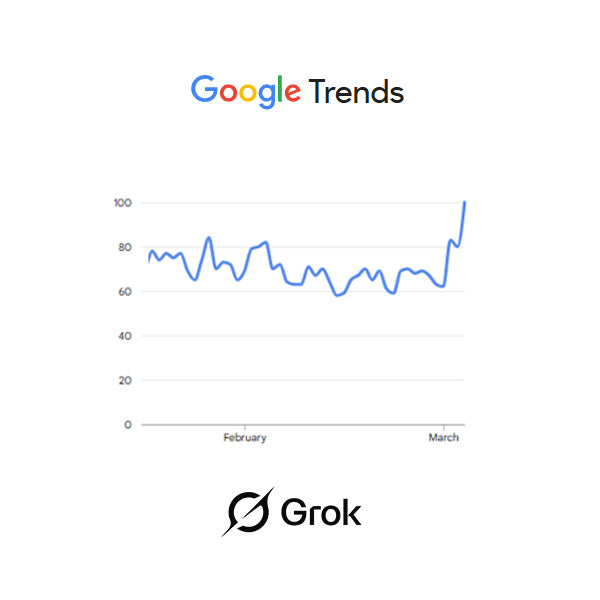
The News: Elon Musk announced that Grok, xAI's flagship AI model, has reached a new performance high — coinciding with a wave of confirmed capability upgrades and the active training of Grok 5.
Why It Matters: Grok is deeply integrated into Tesla's AI roadmap, powering features from in-car assistants to Optimus robot intelligence. Every leap in Grok's capability is a direct upstream input to what Tesla owners will experience in their vehicles.
Source: @elonmusk on X
Grok Hits a New Performance High — Here's What's Actually Happening Inside xAI
Elon Musk posted two words on March 4, 2026 that sent the AI community into analysis mode: "Grok hits new high." Brief as it was, the announcement lands against a backdrop of rapid, verifiable progress at xAI — and the implications for Tesla's broader AI ecosystem are worth unpacking.

📊 Key Figures
| Metric | Value | Context |
|---|---|---|
| Grok 4.20 Beta 2 | Released March 3, 2026 | 5 targeted reliability fixes |
| Grok 4.1 Fast context window | 2 million tokens | Among the largest available in any commercial model |
| Grok 5 parameter count | ~6 trillion (MoE architecture) | Largest publicly announced AI model |
| Grok 5 AGI probability (Musk estimate) | 10% and rising | Human-level general intelligence threshold |
| Grok 5 public beta estimate | March–April 2026 | Full API access expected Q2 2026 |
What Just Changed — The Full Picture
Musk's announcement isn't coming in isolation. Just 24 hours earlier, xAI shipped Grok 4.20 Beta 2, a focused update that addresses five specific reliability gaps: instruction following, capability hallucination reduction, scientific text quality (including LaTeX rendering), image search precision, and multi-image rendering stability. These aren't headline-grabbing features — they're the kind of foundational fixes that make an AI model actually trustworthy in daily use.
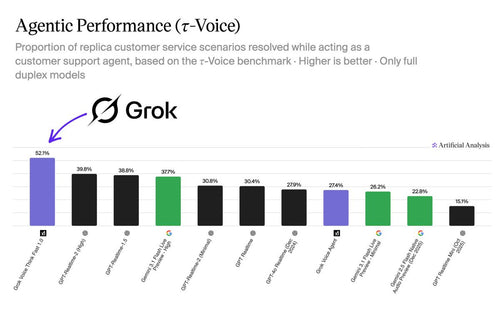
Also confirmed on March 3: Grok can now assist users with tax preparation, a meaningful expansion into high-stakes productivity territory that signals xAI is pushing Grok beyond casual Q&A into domains where accuracy genuinely matters. According to reporting from The Jerusalem Post published the same day as Musk's announcement, Grok also outperformed competing AI models in a predictive accuracy experiment — correctly identifying a specific date in a hypothetical geopolitical scenario when others did not.
Grok 5: The Model That Could Change Everything
The more consequential story running in parallel is Grok 5, currently in active training on xAI's Colossus 2 supercluster, which came online in January 2026. The reported architecture — a Mixture-of-Experts model carrying approximately 6 trillion parameters — would make it the largest publicly announced AI model in existence by a significant margin.
Musk has publicly stated a "10% and rising" probability that Grok 5 achieves human-level AGI. That's a deliberately hedged number, but the fact that he's quantifying it at all reflects how seriously xAI is treating this training run. A public beta is estimated for March to April 2026, with full API access expected in Q2 2026.
For context on what Colossus 2 represents: the original Colossus cluster was built in Memphis in 2024 and was, at the time, the largest GPU training cluster in the world. Colossus 2 is its successor, built specifically to handle the compute demands of models at Grok 5's scale.
🔭 The BASENOR Take
Timeline: Grok 4.20 Beta 2 live now → Grok 5 public beta estimated March–April 2026 → Full API Q2 2026
Impact Level for Tesla Owners: 🟡 Medium-term — no immediate in-car change, but foundational
Confidence: High on current milestones (confirmed by xAI releases) | Moderate on Grok 5 timeline (Musk estimates, not official commitments)
Here's the direct line that matters for Tesla owners: Grok isn't a standalone product. It's the AI backbone that feeds into Tesla's voice assistant, the intelligence layer being developed for Optimus, and the reasoning engine that will eventually power more sophisticated FSD decision-making. When Grok gets smarter and more reliable, that capability doesn't stay on your phone — it migrates into your car.
The Grok 4.20 Beta 2 reliability improvements are particularly relevant here. Reduced hallucination and better instruction-following are exactly the properties you want in an AI that's helping navigate a vehicle or interpret complex driver commands. These aren't abstract benchmarks — they're the table stakes for AI that can be trusted in safety-adjacent applications.
Grok 5, if it performs at the scale xAI is targeting, would represent a step-change in what's possible. A 6-trillion-parameter model with a 2-million-token context window could, in theory, hold an entire vehicle's operational history in context during a single session — the kind of capability that makes truly personalized, adaptive vehicle AI feasible rather than theoretical.
The measured caveat: Musk's timelines have historically been optimistic. The March–April public beta estimate for Grok 5 should be treated as a target, not a commitment. But the infrastructure is real, the training is confirmed, and the trajectory is clear. xAI is moving fast — and Tesla owners will eventually feel it.

Sarah focuses on Tesla Energy, SpaceX missions, and the broader Musk AI portfolio. Former data analyst in clean energy. Based in San Francisco.
Sources verified at publish time. Spotted an inaccuracy? Email editorial@basenor.com.