30-Second Brief
The News: Voyager Space's 10-K SEC filing reveals a $90 million contract with SpaceX to launch the Starlab commercial space station aboard a Starship vehicle.
Why It Matters: This is one of the largest publicly confirmed commercial contracts for Starship, validating the rocket's role as the backbone of the post-ISS commercial space economy — and SpaceX's dominance in that transition.
Source: @jeff_foust on X
SpaceX Scores $90M Starship Contract to Launch Starlab Space Station
A buried line in a routine SEC filing just gave us one of the clearest price signals yet for what a Starship commercial launch actually costs. Voyager Space's 10-K annual report, flagged by space industry journalist Jeff Foust, confirms a $90 million contract with SpaceX to launch the Starlab commercial space station on a Starship vehicle — no earlier than 2028.

📊 Key Figures
| Metric | Value | Context |
|---|---|---|
| Starship launch contract value | $90M | Disclosed in Voyager 10-K |
| Target launch date | No earlier than 2028 | Before ISS decommissioning |
| NASA development grant for Starlab | $217.5M | Confirmed in Voyager financials |
| Total Starlab development cost estimate | $2.8B – $3.3B | Per Voyager IPO filing, May 2025 |
| Starlab crew capacity | 4 crew members | Microgravity research focus |
What Is Starlab and Why Does It Need Starship?
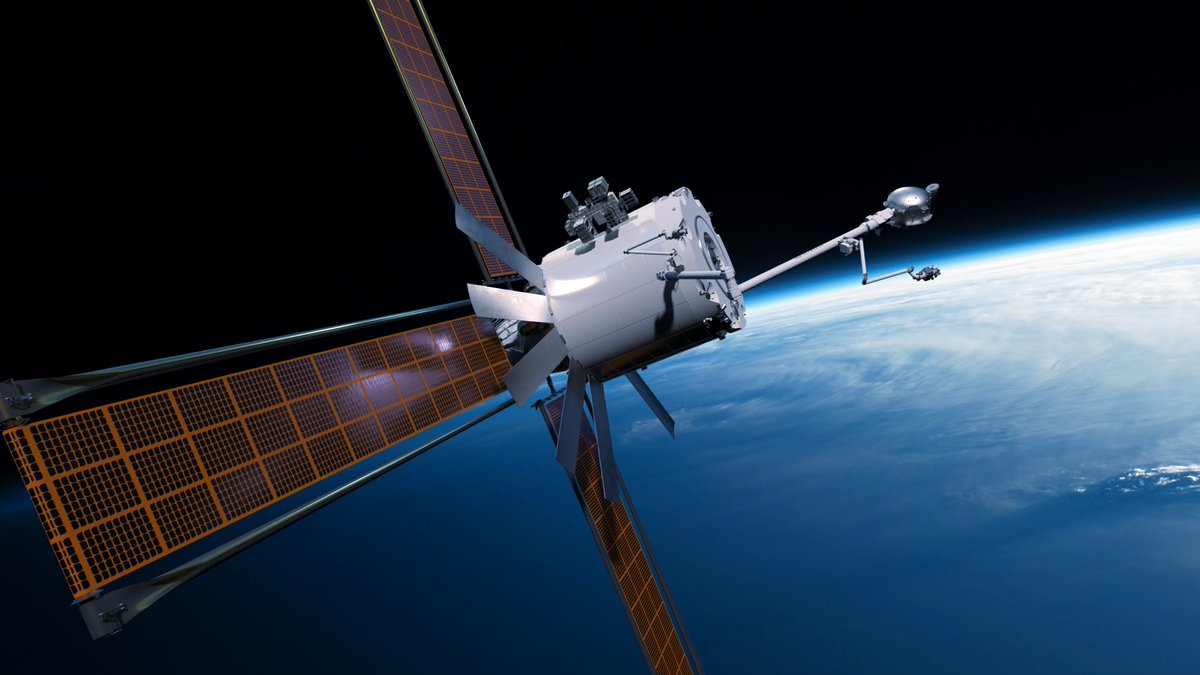
Starlab is a commercial space station being developed by Starlab Space LLC — a joint venture anchored by Voyager Technologies and Airbus, with partners including Mitsubishi Corporation, MDA Space, Palantir Technologies, and Northrop Grumman. The station is designed to serve as a direct successor to the International Space Station, which is scheduled for decommissioning later this decade.
The mission architecture is unusually ambitious: rather than assembling the station in orbit over multiple launches, Starlab is designed to be deployed fully outfitted in a single Starship flight directly to Low Earth Orbit. That's only possible because of Starship's unprecedented payload volume — no other operational or near-operational rocket comes close to the fairing diameter and mass-to-orbit capacity required to pull this off in one shot.
Starlab Space officially selected SpaceX's Starship as its launch vehicle in January 2024. The $90 million figure, now formalized in Voyager's 10-K filing, is the first time the contract value has appeared in a public document.
🔭 The BASENOR Take
Timeline: Contract signed (pre-2026 10-K filing) → Launch target: no earlier than 2028 → ISS decommissioning window
Impact Level: 🟢 High — First publicly confirmed large commercial Starship contract value
Confidence: ⭐⭐⭐⭐⭐ — Sourced directly from SEC 10-K filing (primary legal document)
The $90 million number matters more than it might seem. For years, SpaceX has been deliberately opaque about Starship pricing. Elon Musk has spoken publicly about a long-term aspiration of driving launch costs toward $10 million per flight at scale, but those figures were always theoretical. An Airbus executive speculated in late 2023 that a Starship launch for Starlab would come in "below $100 million" — and now we know the actual contracted number landed at $90 million.
That's a meaningful data point for the entire commercial space industry. At $90 million for a single launch capable of placing an entire space station into LEO, Starship is already price-competitive with a Falcon Heavy mission — but with vastly more payload capacity. The economics of large-scale orbital infrastructure just changed.
For SpaceX's commercial launch business, this is also a validation story. Starlab isn't a government contract with cost-plus flexibility — it's a fixed commercial deal with a publicly traded company (Voyager Technologies went public in May 2025) that has to disclose this in SEC filings. That's real commercial accountability, and it signals that major infrastructure customers are willing to commit real money to Starship on a defined timeline.
The broader picture: with Starlab targeting a 2028 launch, SpaceX has a hard deadline that will put pressure on Starship's development and operational cadence. The station needs to be in orbit before the ISS comes down. That's not a soft goal — it's a contractual and geopolitical imperative. For those following our SpaceX coverage, this is one of the clearest signals yet that Starship's commercial era is no longer hypothetical.

Sarah focuses on Tesla Energy, SpaceX missions, and the broader Musk AI portfolio. Former data analyst in clean energy. Based in San Francisco.
Sources verified at publish time. Spotted an inaccuracy? Email editorial@basenor.com.