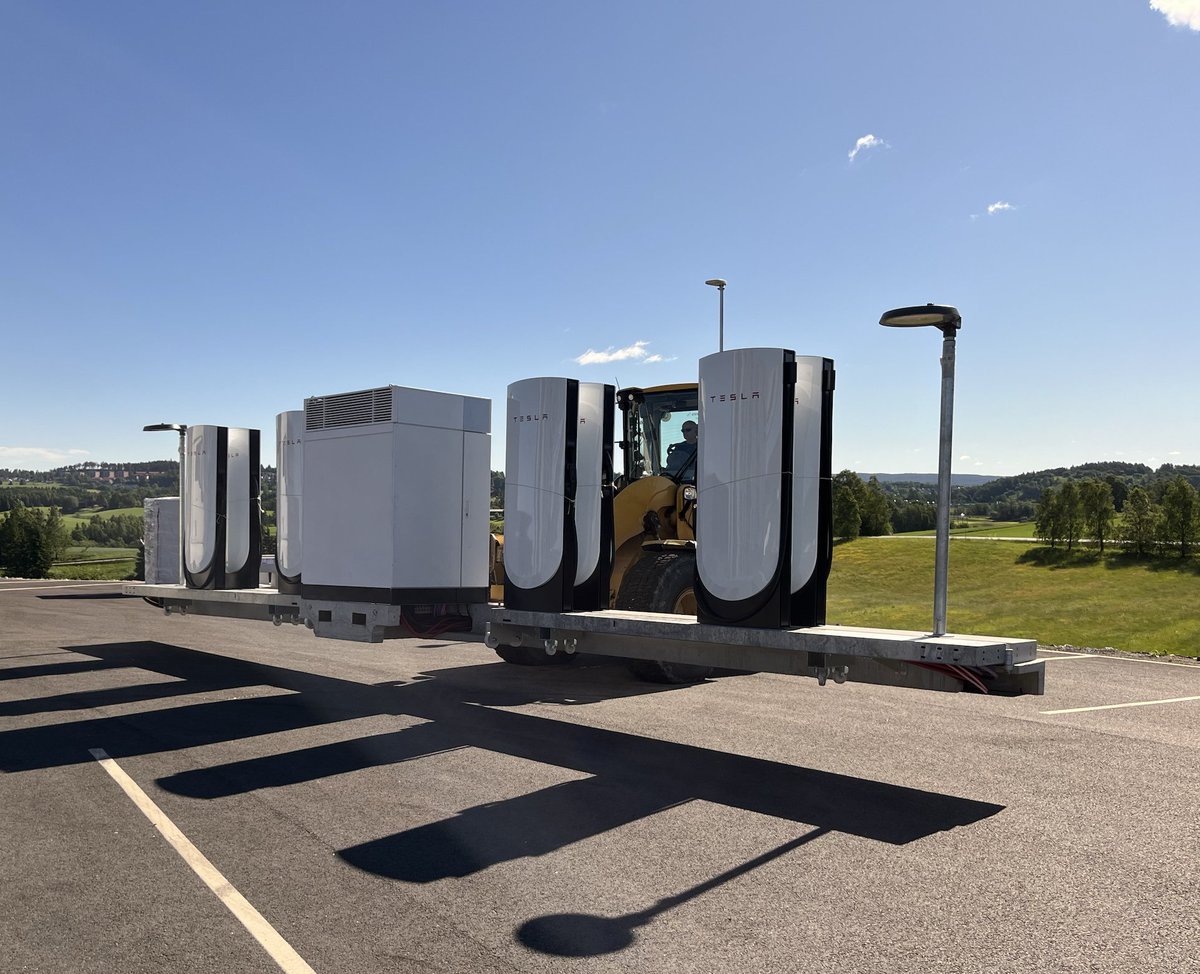
Tesla has officially brought its Folding Unit Superchargers to Europe, marking a significant step forward in how the company builds out its charging network. The pre-assembled V4 stations are engineered to deploy faster, ship more efficiently, and cost less to install than anything Tesla has put in the ground before.

What Makes the Folding Unit Different
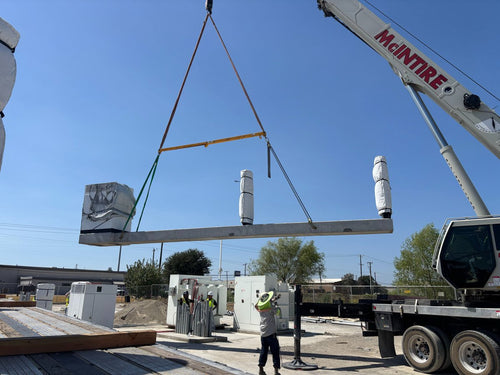
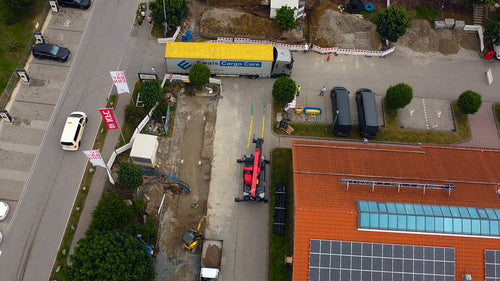
The Folding Unit — or FU Supercharger — is a factory pre-assembled station built around Tesla's V4 architecture. Each unit pairs a single V4 power cabinet with eight charging posts, all mounted on a heavy-duty concrete plate with an industrial hinge system. The whole assembly arrives on-site ready to unfold and connect, eliminating the field labor that traditional installations require.

Tesla confirmed the units feature telescopic light poles specifically designed for easy transportation and fast on-site deployment — a detail that signals how carefully the logistics chain has been engineered alongside the hardware itself.
The Numbers Behind the Design
| Metric | Folding Unit Performance |
|---|---|
| Peak power per stall | Up to 500 kW |
| Total station output | 1.2 MW |
| Deployment cost savings | Over 20% vs. traditional install |
| Installation speed | 2× faster than previous methods |
| Posts per truck | 16 (up from 12 — a 33% gain) |
| Hardware revision | Rev1 now; Rev3 targeted for Q2 2026 |
The logistics improvement alone is worth noting. Fitting 16 posts — two complete FU units — onto a single truck versus the previous maximum of 12 reduces both freight costs and the carbon footprint of each new station. Combined with the elimination of DC busbar field connections and on-site Tesla technician commissioning, the savings compound quickly at scale.
What It Means for European Tesla Owners
Faster deployment translates directly into more stations appearing sooner. If Tesla can cut installation time in half while reducing costs by more than a fifth, the economic case for adding Supercharger locations in underserved European markets becomes considerably stronger. The V4 hardware is backward-compatible with all Tesla models and includes longer cables for non-Tesla vehicles — so every new FU station serves the broadest possible pool of drivers from day one.
The initial Rev1 hardware is already in the ground. A Rev3 revision is reportedly on track for Q2 2026, which suggests Tesla is treating this as a rapidly iterated platform rather than a finished product. European owners can expect to see more of these stations appearing across the continent over the coming months as the rollout accelerates.
Related Gear
Gear up your Tesla with tested, custom-fit BASENOR accessories — shop Tesla accessories →
Sources & reporting notes
The links below identify the material source records used for this report.
- @TeslaCharging on X (2026-06-10T20:40:03.000Z) — Direct source
- @TeslaCharging on X (2026-06-10T20:41:59.000Z) — Direct source
Source links are preserved as published or accessed. See our editorial standards and corrections policy.
The BASENOR Editorial Desk covers Tesla, SpaceX, and related technology, curating reporting from primary sources — official accounts, regulatory filings, and software release data. Every article passes source-record and fact-checking review before publication. About the newsroom.
This report was curated by the BASENOR Editorial Desk from the sources listed above. Read our editorial standards or email editorial@basenor.com to report an error.