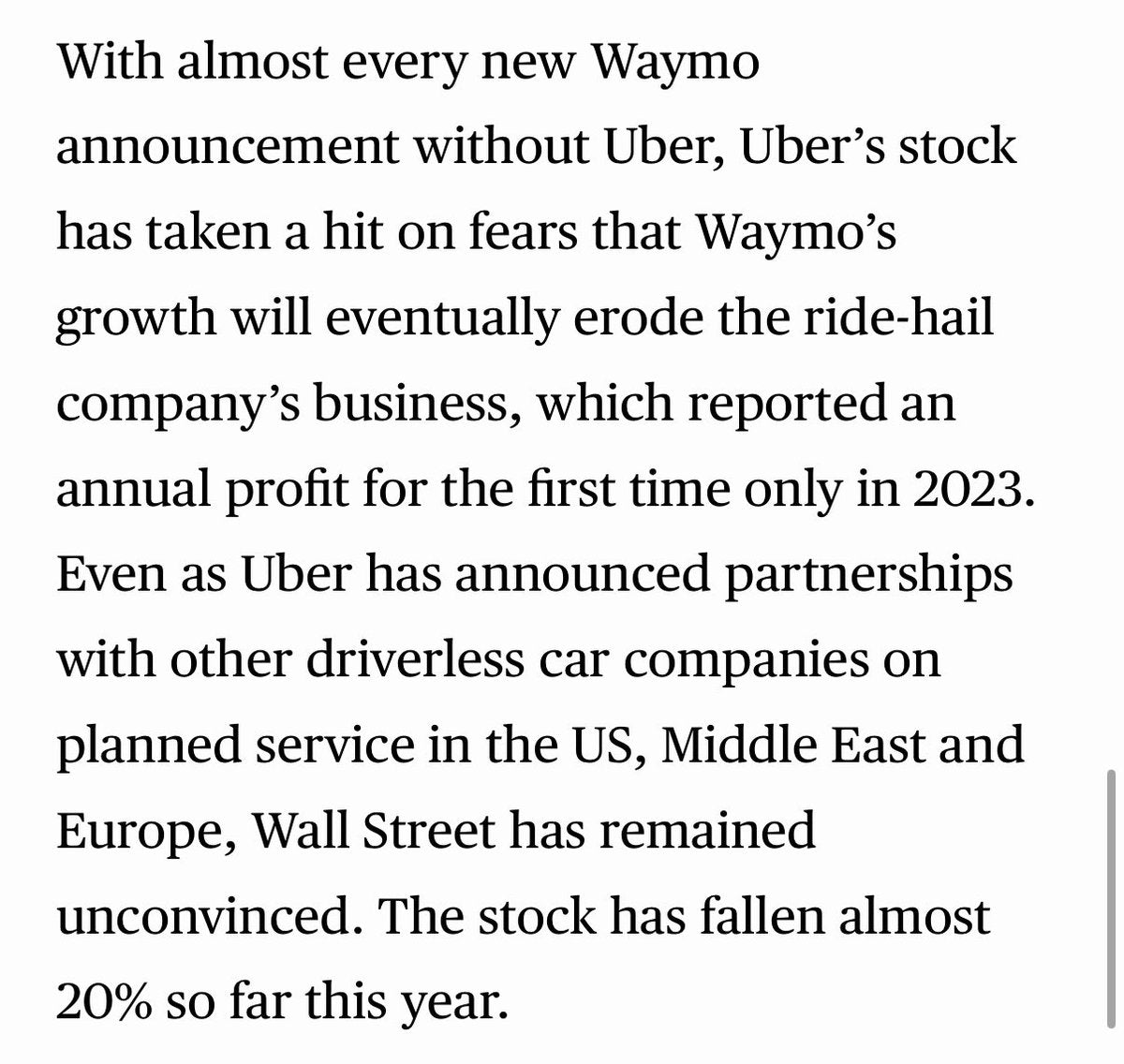
For years, a comfortable consensus held on Wall Street: Uber, with its massive ride-hail network and platform partnerships, would be the default winner when autonomous vehicles finally scaled. That consensus is starting to fray. A growing number of investors are questioning whether a company that sold off its own self-driving unit in 2020 can realistically claim the autonomy prize — and the scrutiny is arriving at a moment when vertically integrated competitors are putting real miles on real roads.

How the Uber Autonomy Thesis Was Built
The bull case for Uber in autonomy was always about distribution, not technology. The argument: Uber already owns the customer relationship, the driver-matching infrastructure, and the regulatory relationships in hundreds of cities. When robotaxis arrive, Uber would simply swap human drivers for AV fleets operated by partners — collecting the platform fee without bearing the hardware and software development cost.
That thesis looked more credible when Uber divested its Advanced Technologies Group to Aurora Innovation in 2020, explicitly choosing the asset-light partnership route. The bet was that being the operating system of autonomous mobility was more valuable than building the vehicle stack yourself. Investors largely accepted it.
What's Changed
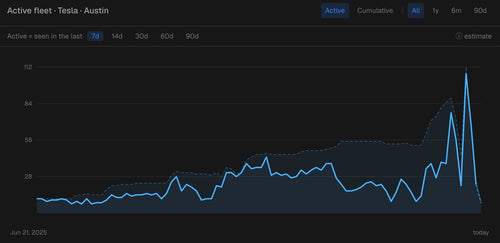
The problem with the platform thesis is that it depends on AV developers needing Uber's distribution. That assumption is increasingly hard to defend. Waymo is operating a fully driverless paid service in multiple U.S. cities and expanding without routing rides through Uber's app. Tesla's robotaxi ambitions are built entirely around a direct-to-consumer model — the same philosophy that cut dealerships out of vehicle sales. Neither of those trajectories requires Uber as an intermediary.
Uber's partnerships with AV companies do exist and are generating real rides, but the structure of those deals puts Uber in a weaker position over time. As AV operators gain brand recognition and consumer trust in their own right, the leverage to demand platform fees erodes. A passenger who has ridden in a Waymo ten times isn't necessarily opening Uber to hail the next one.
For Tesla specifically, the calculus is different from every other player in the space. Tesla owns the sensor suite, the neural net training pipeline, the vehicle hardware, the energy infrastructure, and — critically — a fleet of millions of customer-owned cars already collecting real-world driving data. The robotaxi product, when it scales, would be deployed through Tesla's own app and network. Uber doesn't appear anywhere in that stack.
Why the Narrative Shift Matters Now
Investor narratives in emerging technology markets aren't just sentiment — they drive capital allocation, analyst coverage, and ultimately the competitive resources available to each player. When the consensus view was that Uber wins autonomy, capital flowed toward Uber's stock as a proxy bet on the AV transition. As that consensus softens, the question becomes where that capital repositions.
The shift also has implications for how AV developers negotiate partnership terms. If Uber's platform is perceived as less essential to autonomy's endgame, the leverage in those deals moves toward the technology owners. Aurora, Waymo, and others gain more room to build their own consumer-facing brands rather than remaining white-labeled within Uber's app.
None of this means Uber is irrelevant to the autonomous future — the company's existing network and regulatory footprint remain genuine assets in markets where AV operators want fast deployment without building local infrastructure from scratch. But there's a meaningful difference between being a useful distribution partner in some markets and being the defining winner of the autonomy era. The former is a defensible business; the latter was always a more aggressive claim.
The more interesting question for Tesla watchers isn't whether Uber loses the narrative — it's whether the market is ready to price Tesla's autonomy upside as a first-party platform story rather than a vehicle manufacturer story. That reframing, if it takes hold with institutional investors, would represent a more significant shift than any single partnership announcement.
🚕 Following the Robotaxi rollout? See every operating city, launch date and announced market in our Tesla Robotaxi Tracker.
Related Gear
Gear up your Tesla with tested, custom-fit BASENOR accessories — shop Tesla accessories →
Sources & reporting notes
The links below identify the material source records used for this report.
- @wholemars on X (2026-07-25T21:47:49.000Z) — Direct source
Source links are preserved as published or accessed. See our editorial standards and corrections policy.
The BASENOR Editorial Desk covers Tesla, SpaceX, and related technology, curating reporting from primary sources — official accounts, regulatory filings, and software release data. Every article passes source-record and fact-checking review before publication. About the newsroom.
This report was curated by the BASENOR Editorial Desk from the sources listed above. Read our editorial standards or email editorial@basenor.com to report an error.