A post from Electrek's Fred Lambert is making the rounds, suggesting that active Cybercab Robotaxis in Austin thinned out after what he called a 'disappointing' launch — drawing a pointed comparison to stock promoters who showed up for the event and then left. The claim is getting traction, but the registered fleet data tells a more complicated story. Here's what we actually know.

What exactly did Fred Lambert claim?
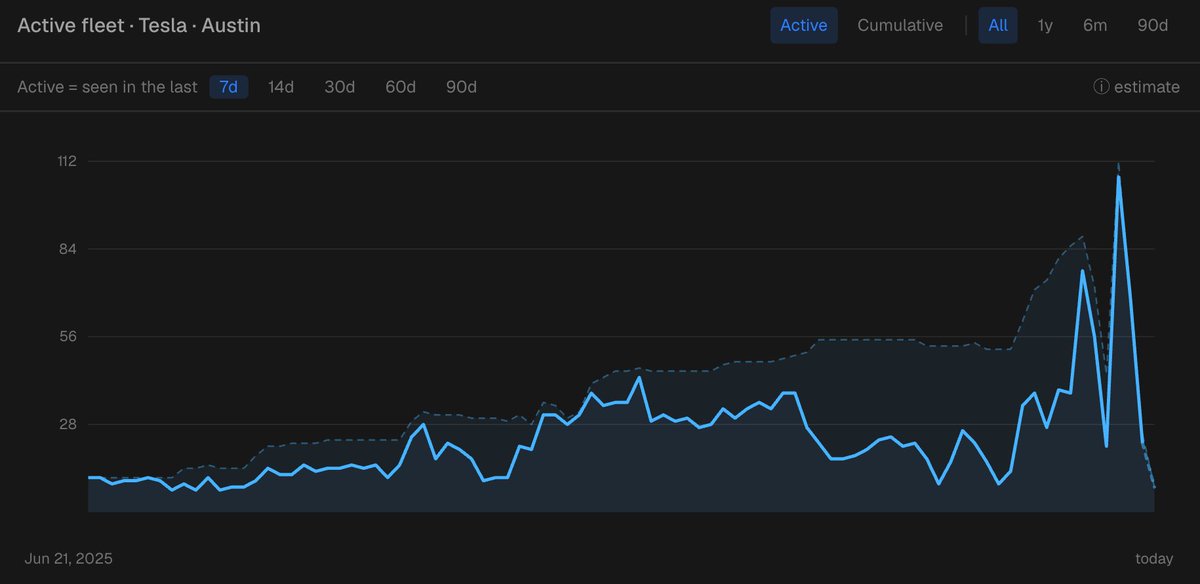
Lambert posted on September 22 that active Robotaxis in Austin declined after the Cybercab launch — implying the initial deployment was more of a PR event than a genuine service rollout. He linked the pullback to what he characterized as a 'disappointing' launch, suggesting that once the hype cycle ended, so did the street-level activity. Lambert writes for Electrek, which has been consistently skeptical of Tesla's autonomous vehicle timeline.
Does the registered fleet data back that up?
Not straightforwardly. According to Texas regulatory records, the number of Cybercabs registered for driverless operations in the state has actually grown since launch — from roughly 45 units at the September 3 commercial debut to 67 units as of September 22, the same day Lambert posted. The total Tesla autonomous vehicle fleet in Texas, including Model Ys, stands at 476 registered units. That's not a fleet in retreat. Lambert's observation may reflect day-to-day visible activity on specific streets rather than the overall registered count — those are two different metrics.
When did the Cybercab service actually launch, and what does it include?
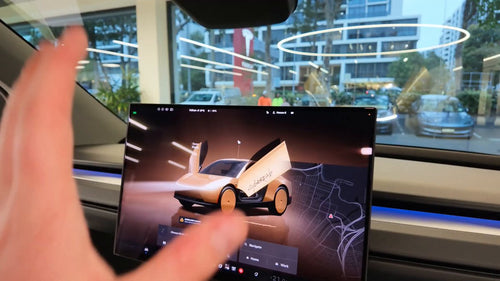
Tesla held an invite-only Cybercab launch event in Austin on September 3, 2026, with public paid rides beginning the following day. The Cybercab is a purpose-built two-seat autonomous vehicle with no steering wheel or pedals. It operates alongside a larger fleet of driverless Model Ys, which have been running in Austin since June 2025. The combined service now covers approximately 288 square miles across the Austin metro — the full area, not a limited corridor.
Is there any regulatory pressure that could be affecting deployment?
Yes, and this is worth watching closely. NHTSA launched an audit query (AQ26002) on September 3 — the same day commercial service began — covering approximately 1,000 Cybercab vehicles. The core issue: the Cybercab lacks permanently attached conventional controls like a steering wheel, pedals, and mirrors, which current Federal Motor Vehicle Safety Standards technically require. NHTSA issued a Special Order on September 10 requiring Tesla to respond under sworn oath by September 30, explaining how the vehicle achieves compliance. The Austin Fire Department has separately raised concerns about emergency access. None of this has resulted in a service suspension, but it adds real operational uncertainty to the picture.
So is the Austin launch actually struggling?
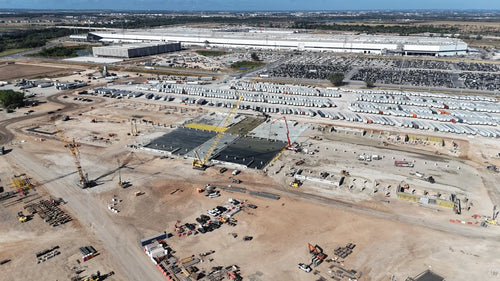
The honest answer is: it depends on what benchmark you're using. If the expectation was a rapid, city-wide saturation of Cybercabs within weeks of launch, then yes — 67 registered units across a 288-square-mile metro is a modest footprint. Tesla is building Cybercabs at Gigafactory Texas with a stated target of 125,000 units per year, and over 150 were recently spotted in the outbound lot — so supply isn't the constraint. The service has also expanded beyond Austin: Tesla's Robotaxi footprint now spans Dallas, Houston, Miami, Orlando, and Tampa. Whether the Austin pace reflects deliberate caution under NHTSA scrutiny, a measured ramp-up strategy, or something more problematic is genuinely unclear from public data alone.
What should Cybercab riders or prospective users do right now?
If you're in Austin and want to try the service, it remains available — the app is the access point, and coverage spans the full metro. Availability at any given moment will fluctuate based on how many units are actively dispatched versus in maintenance or charging cycles, which is normal for any fleet operation at this scale. The NHTSA deadline of September 30 is the next meaningful date to watch: Tesla's response could either clarify the regulatory path forward or introduce new friction. Keep an eye on our FSD coverage for updates as that deadline approaches.
🚕 Following the Robotaxi rollout? See every operating city, launch date and announced market in our Tesla Robotaxi Tracker.
Related Gear
Gear up your Tesla with tested, custom-fit BASENOR accessories — shop Tesla accessories →
Sources & reporting notes
The links below identify the material source records used for this report.
- @FredLambert on X (2026-09-22T14:03:55.000Z) — Direct source
Source links are preserved as published or accessed. See our editorial standards and corrections policy.
The BASENOR Editorial Desk covers Tesla, SpaceX, and related technology, curating reporting from primary sources — official accounts, regulatory filings, and software release data. Every article passes source-record and fact-checking review before publication. About the newsroom.
This report was curated by the BASENOR Editorial Desk from the sources listed above. Read our editorial standards or email editorial@basenor.com to report an error.