📌 UPDATE — March 30, 2026
SpaceX has confirmed that the Transporter 16 rideshare deployment sequence is complete, with all 119 customer payloads successfully delivered to their intended sun-synchronous orbits. The announcement came via SpaceX's official X account on Monday afternoon, marking a successful conclusion to the mission that launched earlier that morning from Vandenberg Space Force Base.

📌 UPDATE — March 30, 2026
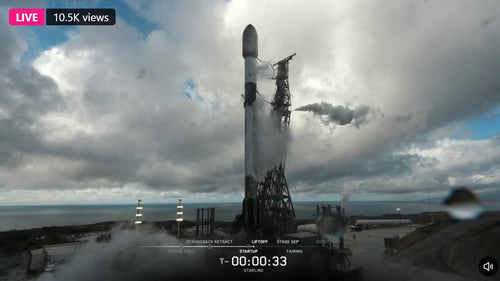
Transporter-16 has successfully launched. Falcon 9 booster B1093 (its 12th flight) lifted off from SLC-4E at Vandenberg at 11:03 UTC and stuck its landing shortly after at 11:11 UTC. Satellite deployment began at approximately 11:56 UTC, with SpaceX confirming the rideshare sequence is underway. The mission's diverse manifest includes in-space manufacturing technologies, Earth observation satellites, autonomous navigation systems, and a reentry vehicle.


📌 UPDATE — March 30, 2026
SpaceX has successfully launched Falcon 9 carrying the Transporter-16 rideshare mission to orbit. The rocket lifted off from Vandenberg and deployed its 119 payloads to sun-synchronous orbit, continuing SpaceX's high-tempo rideshare cadence. SpaceX posted a pre-launch heads-up less than 45 minutes before liftoff and streamed the event live.

📌 UPDATE — March 29, 2026
Transporter 16 has successfully launched and delivered all 119 satellites to orbit. Elon Musk confirmed the mission's success on X, highlighting that Falcon 9 — capable of carrying ~20 tons to orbit with a reusable booster and fairing — qualifies as a "heavy" class rocket by conventional standards, underscoring just how capable SpaceX's workhorse has become.
Elon Musk @elonmusk · Mar 29, 2026Delivering 119 satellites to orbit at once!
Falcon 9, which can carry ~20 tons to orbit (with a reusable booster & fairing), is a "heavy" class rocket by conventional standards.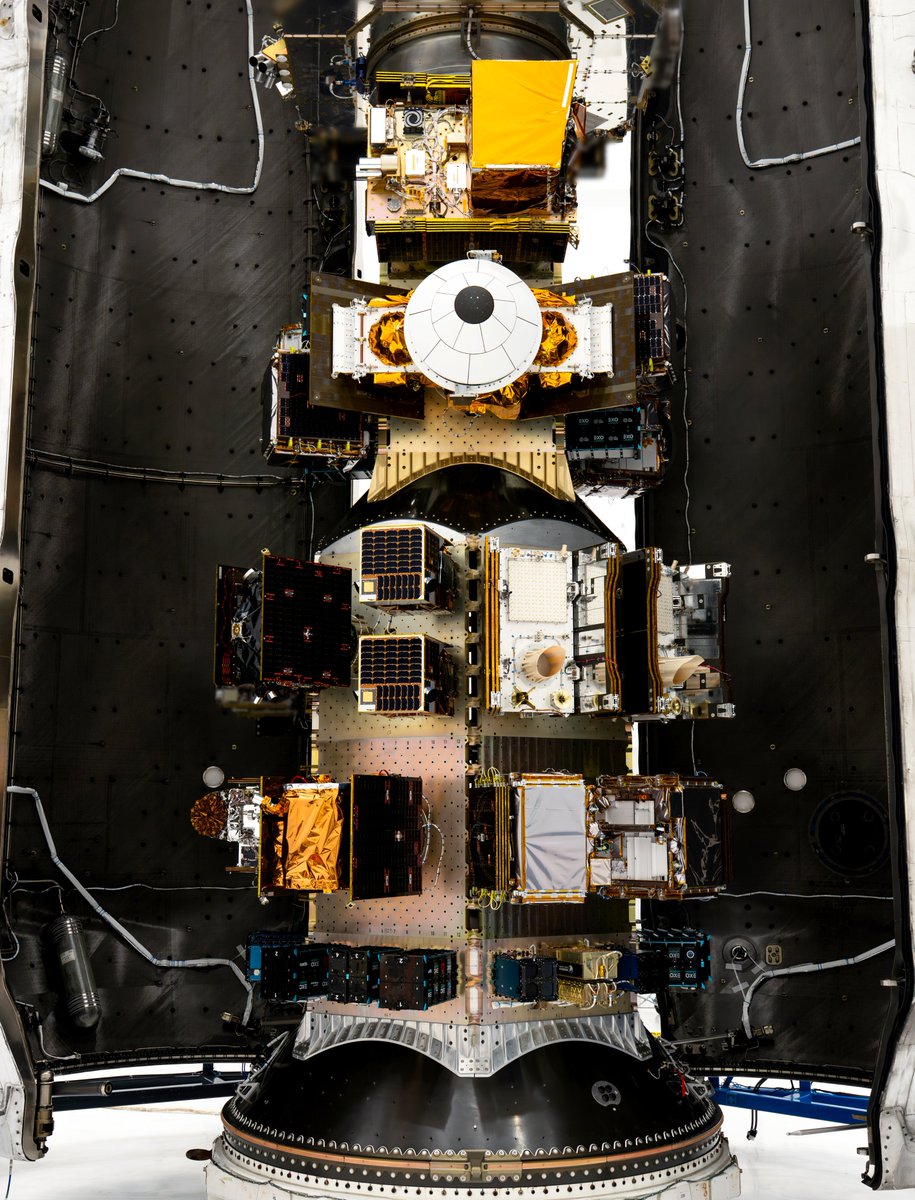 ❤️ 14,734 | 🔁 1,776 | 👁 1.67M
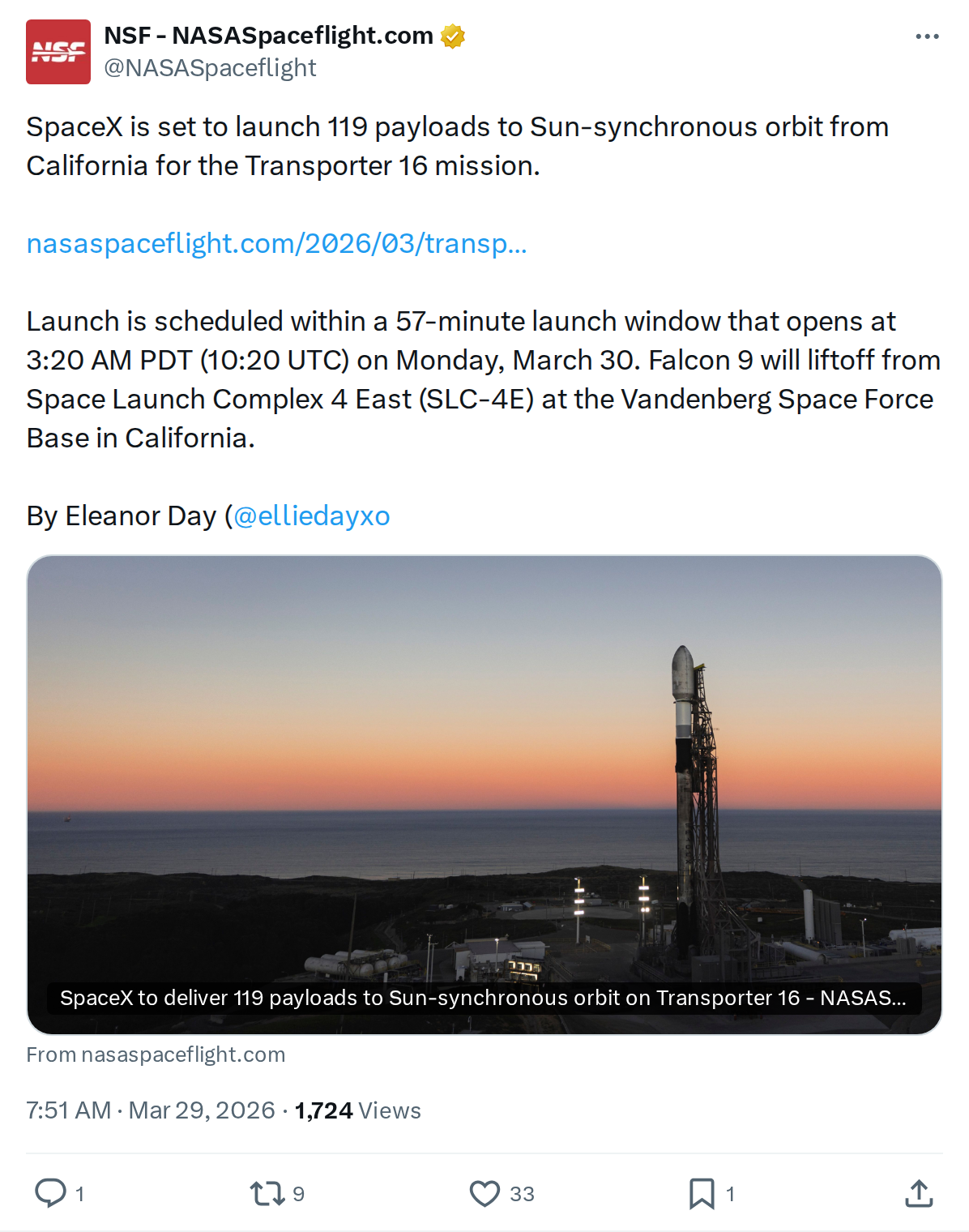
The News: SpaceX will launch its Transporter 16 rideshare mission Monday, March 30, carrying 119 payloads into Sun-synchronous orbit from Vandenberg Space Force Base, California.
Why It Matters: Transporter missions are the backbone of commercial small-satellite access to space — and SpaceX's rideshare cadence directly funds the infrastructure that powers Starlink, which Tesla owners rely on for remote connectivity and over-the-air updates in off-grid areas.
Source: @NASASpaceflight on X
SpaceX Transporter 16: Falcon 9 to Carry 119 Payloads to Sun-Synchronous Orbit Monday Morning
SpaceX is hours away from its next Transporter rideshare mission, and the numbers are significant. Transporter 16 will place 119 payloads into Sun-synchronous orbit (SSO) from Space Launch Complex 4 East (SLC-4E) at Vandenberg Space Force Base in California — with the launch window opening at 3:20 AM PDT (6:20 AM EDT / 10:20 UTC) on Monday, March 30, 2026.

The 57-minute launch window gives SpaceX a reasonable margin to execute, with a backup opportunity available Tuesday, March 31 at the same time if Monday's attempt is scrubbed. SpaceX will provide a live webcast starting approximately 15 minutes before liftoff on its website and X account.
📊 Key Figures
| Metric | Value | Context |
|---|---|---|
| Total Payloads | 119 | Cubesats, microsats, OTVs, reentry vehicle |
| Launch Window Opens | 3:20 AM PDT | 10:20 UTC / 6:20 AM EDT |
| Window Duration | 57 minutes | Backup: March 31, same window |
| Booster (B1093) | 12th flight | Landing on droneship in Pacific |
| Target Orbit | Sun-synchronous | Polar orbit, ideal for Earth observation |
What's on Board Transporter 16?
The 119-payload manifest is a cross-section of the commercial small-satellite industry. According to confirmed mission details, the cargo includes cubesats, microsats, a reentry vehicle, and orbital transfer vehicles (OTVs) — the last of which will deploy eight additional payloads at a later time after reaching their initial orbit. This kind of secondary deployment capability is increasingly common in rideshare missions and reflects the growing sophistication of the commercial space ecosystem SpaceX has helped create.
Sun-synchronous orbit is the destination of choice for Earth observation and remote sensing satellites, as it allows a spacecraft to pass over any given point on Earth at the same local solar time each day — critical for consistent imaging conditions. The polar trajectory from Vandenberg, rather than the eastward launches typical of Kennedy Space Center in Florida, is specifically suited to reaching SSO.
Booster B1093 Goes for Flight 12
One of the quieter but telling details of this mission: the Falcon 9 first stage booster supporting Transporter 16 is B1093, which will be making its 12th flight. Following stage separation, the booster will execute a controlled landing on the Of Course I Still Love You droneship, positioned in the Pacific Ocean off the California coast.
A booster on its 12th flight would have been unthinkable a decade ago. Today it's routine — and that reusability cadence is precisely what allows SpaceX to offer competitive rideshare pricing and maintain the launch frequency that keeps Starlink expanding globally.
🔭 The BASENOR Take
Timeline: Launch March 30, 2026 at 3:20 AM PDT | Backup: March 31
Impact Level: Medium — industry infrastructure, indirect Tesla/Starlink relevance
Confidence: High — confirmed by SpaceX mission page and multiple verified sources
Transporter missions don't generate the same headlines as a Starship test or a Crew Dragon docking, but they're arguably the most commercially important launches SpaceX runs. Each rideshare mission demonstrates that SpaceX has turned rocket launches into something closer to a logistics service than a bespoke engineering event — and that shift has downstream effects for the entire space economy.
For Tesla owners specifically, the Starlink connection is worth noting. Starlink's ability to continuously expand coverage and improve latency depends on SpaceX maintaining a high launch cadence. While Transporter missions carry third-party payloads rather than Starlink satellites, the operational infrastructure, booster reusability economics, and launch site utilization are all shared resources. Every successful rideshare mission strengthens SpaceX's position as the default launch provider — which ultimately benefits the Starlink network that an increasing number of Tesla owners use for connectivity in remote locations.
The 12th flight of booster B1093 is also worth a moment of appreciation. SpaceX's ability to fly the same hardware repeatedly — landing it on a droneship in the Pacific and turning it around for another mission — is the core reason commercial launch costs have dropped as dramatically as they have. That same cost discipline is what makes the Transporter program viable at all: 119 customers sharing a single rocket is only economically attractive when the rocket itself is affordable enough to make the math work for small satellite operators.
Watch the SpaceX webcast live starting around 3:05 AM PDT Monday on SpaceX's official channels. For our full SpaceX coverage, follow along as we track the launch outcome.
Sources & reporting notes
The links below identify the material source records used for this report.
- @NASASpaceflight on X (2026-03-28T23:51:20.000Z) — Direct source
- @elonmusk on X (2026-03-29T19:15:04.000Z) — Direct source
- @SpaceX on X (2026-03-30T10:46:12.000Z) — Direct source
- @SpaceX on X (2026-03-30T10:18:39.000Z) — Direct source
- @NASASpaceflight on X (2026-03-30T11:11:24.000Z) — Direct source
- @NASASpaceflight on X (2026-03-30T11:03:05.000Z) — Direct source
- @SpaceX on X (2026-03-30T11:56:38.000Z) — Direct source
- @SpaceX on X (2026-03-30T11:11:40.000Z) — Direct source
- @SpaceX on X (2026-03-30T11:03:37.000Z) — Direct source
- @SpaceX on X (2026-03-30T11:00:20.000Z) — Direct source
- @SpaceX on X (2026-03-30T13:33:25.000Z) — Direct source
Source links are preserved as published or accessed. See our editorial standards and corrections policy.
The BASENOR Editorial Desk covers Tesla, SpaceX, and related technology, curating reporting from primary sources — official accounts, regulatory filings, and software release data. Every article passes source-record and fact-checking review before publication. About the newsroom.
This report was curated by the BASENOR Editorial Desk from the sources listed above. Read our editorial standards or email editorial@basenor.com to report an error.