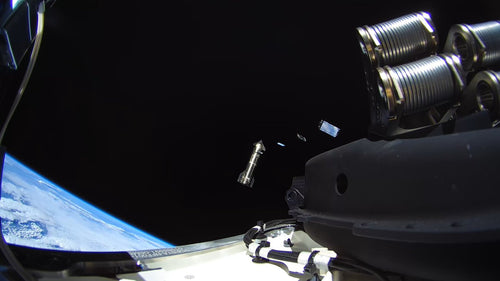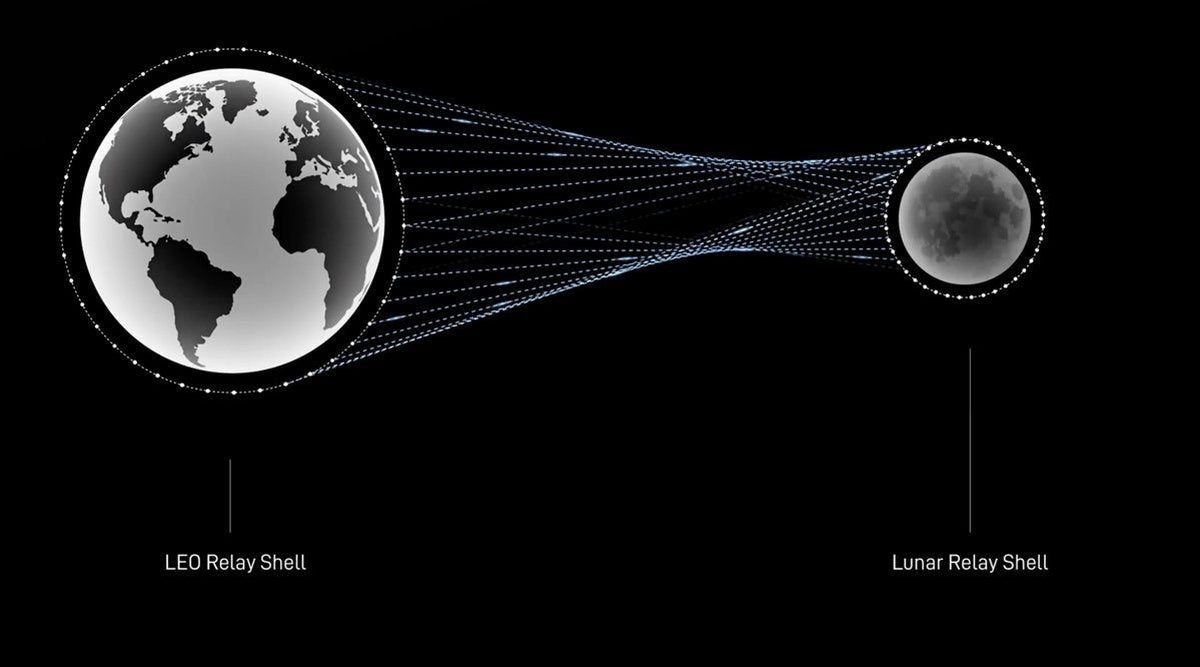
SpaceX has confirmed that its Starlink team is actively exploring high-bandwidth laser connectivity for communications around the Moon. Rather than relying on traditional radio frequency transmissions — the backbone of deep space comms for decades — this new approach would use optical lasers to relay data back to Earth, potentially transforming how humanity stays connected beyond low Earth orbit.

The technology SpaceX would be building on is already proven in orbit. Current Starlink satellites each carry three Optical Intersatellite Links — the so-called 'space lasers' — capable of sustaining 100 Gbps per link, with peak transmissions reaching 200 Gbps in some cases. According to verified data from early 2024, roughly 9,000 of these lasers are already operating in orbit, collectively transmitting more than 42 petabytes of data every day, with link uptime exceeding 99%. The system operates on near-infrared wavelengths around 1,550 nm — a mature, well-understood band for optical communications.
Extending that infrastructure to lunar distances is a fundamentally different engineering challenge. The Moon sits roughly 384,000 km from Earth, compared to the few hundred kilometers separating Starlink satellites in LEO. Maintaining a coherent laser link across that gap — while accounting for orbital mechanics, pointing precision, and atmospheric interference on the Earth-side terminal — is non-trivial. SpaceX hasn't disclosed a timeline or deployment architecture, and the tweet from Sawyer Merritt suggests the project is still in the exploration phase.
Still, the ambition fits squarely within SpaceX's broader lunar roadmap. NASA's Artemis program has contracted SpaceX's Starship as a Human Landing System, and reliable high-bandwidth communications will be essential for sustained lunar surface operations. If Starlink's laser mesh can be adapted for cislunar space, it could give NASA — and eventually commercial operators — a data pipeline far more capable than anything the Deep Space Network currently provides. Whether that vision translates into hardware on orbit is the question worth watching.
Sources & reporting notes
The links below identify the material source records used for this report.
- @SawyerMerritt on X (2026-05-21T23:06:55.000Z) — Direct source
Source links are preserved as published or accessed. See our editorial standards and corrections policy.
The BASENOR Editorial Desk covers Tesla, SpaceX, and related technology, curating reporting from primary sources — official accounts, regulatory filings, and software release data. Every article passes source-record and fact-checking review before publication. About the newsroom.
This report was curated by the BASENOR Editorial Desk from the sources listed above. Read our editorial standards or email editorial@basenor.com to report an error.