📌 UPDATE — May 21, 2026
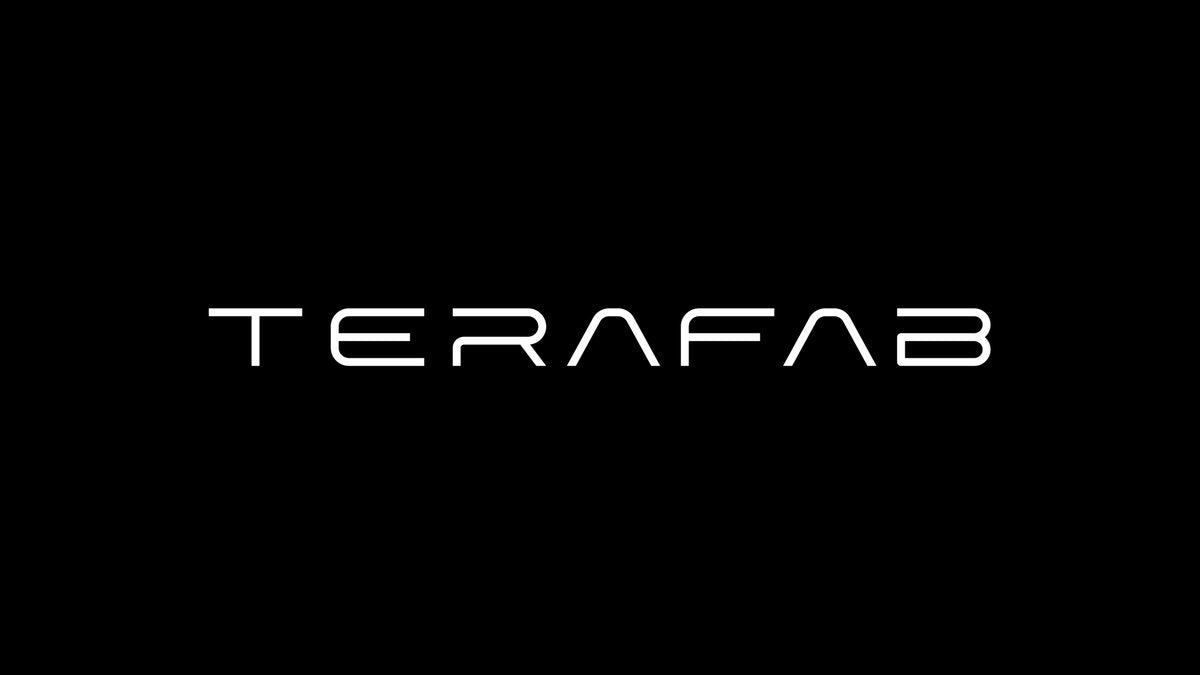
A new trademark application has confirmed that Tesla is the primary company behind the Terafab project, with the "Tesla Terafab" wordmark explicitly tying the brand to Tesla rather than a multi-company joint venture. The filing also reveals the official Terafab logo for the first time, giving the clearest branding picture yet of this ambitious manufacturing initiative. This latest application reinforces Tesla's leading role in what could be a landmark expansion of its factory and semiconductor technology capabilities.
📸 via @TeslaNewswire · May 21, 2026
Tesla quietly filed trademark applications for the wordmark Tesla Terafab and an associated logo earlier this week, according to trademark reporter Sawyer Merritt. The filing date was Monday, May 19 — and while the name may be new to some owners, the project behind it has been building for months. Terafab is shaping up to be one of the most ambitious manufacturing ventures in tech history, with implications that run straight through Tesla's FSD roadmap and Optimus program.

What Terafab Actually Is
Terafab is a planned semiconductor fabrication facility — a chip foundry — announced by Elon Musk on March 21, 2026, at the former Seaholm Power Plant in Austin, Texas. It is being developed as a joint venture between Tesla, xAI, and SpaceX, with Intel brought in during April 2026 to contribute manufacturing expertise. The name itself is a statement of intent: one terawatt of AI compute capacity per year, produced under one roof.
The scope is staggering. According to verified reporting, the full-scale facility would target 1 million wafer starts per month and produce between 100 and 200 billion custom AI and memory chips annually. The process technology target is 2-nanometer, with Musk announcing in April that Intel's 14A manufacturing process would be used at the full-scale plant.
Why This Matters for Tesla Owners
Two chip families are expected to come out of Terafab that directly affect Tesla vehicles and products. The first is edge-inference processors — specifically the AI5 and AI6 chips — designed for Tesla's Full Self-Driving system, robotaxis, and Optimus humanoid robots. The second is D3 chips hardened for space applications, serving SpaceX's Starlink constellation and future deep-space missions.
For Tesla owners watching the FSD roadmap, the timeline is concrete: small-batch production of the AI5 chip is targeted for 2026, with volume production in 2027. A prototype fab in Austin — near Gigafactory Texas — is planned to handle initial runs. The full-scale Terafab location remains undecided, though Grimes County, Texas, has been cited in connection with a potential $55 billion facility filing by SpaceX.
The Investment Numbers
The financial scale of Terafab is unlike anything Tesla has attempted before. According to SpaceX's S-1 IPO filing, the company estimates an initial investment of $55 billion for the prototype fab alone, with total investment across all phases reaching $119 billion. Analyst estimates for the full-scale facility range from $5 trillion to $13 trillion — figures that put Terafab in a category alongside national infrastructure projects rather than typical corporate capex.
Initial project estimates had ranged from $20 billion to $25 billion when first announced, making the upward revision in the S-1 a significant disclosure.
Still Very Early — The S-1 Caveat
The trademark filing this week formalizes the Terafab brand identity, but the project itself remains in early stages. SpaceX's S-1 filing is explicit: Terafab is at a "very early stage" with "no binding terms" finalized between the parties. The filing describes only a "general framework" agreement, warns that Tesla and Intel are not obligated to remain involved, and states that definitive agreements may never be reached.
That said, ASML's CEO Christophe Fouquet — whose company makes the extreme ultraviolet lithography machines required for 2nm chip production — confirmed direct talks with Musk and said he is "very serious" about the project. ASML's EUV machines are a critical chokepoint for any advanced fab, so that confirmation carries real weight.

Trademark filings are often the first concrete paper trail a company leaves before a major brand launch. The fact that Tesla is securing both the wordmark and the logo now — while the underlying agreements are still being negotiated — suggests the company is moving to lock down the Terafab identity ahead of a more formal announcement. Whether that comes alongside a funding round, a groundbreaking, or a binding partner agreement remains to be seen.
Related Gear
Gear up your Tesla with tested, custom-fit BASENOR accessories — shop Tesla accessories →
Sources & reporting notes
The links below identify the material source records used for this report.
- @SawyerMerritt on X (2026-05-21T15:24:42.000Z) — Direct source
- @SawyerMerritt on X (2026-05-21T15:24:43.000Z) — Direct source
- @TeslaNewswire on X (2026-05-21T18:54:41.000Z) — Direct source
Source links are preserved as published or accessed. See our editorial standards and corrections policy.
The BASENOR Editorial Desk covers Tesla, SpaceX, and related technology, curating reporting from primary sources — official accounts, regulatory filings, and software release data. Every article passes source-record and fact-checking review before publication. About the newsroom.
This report was curated by the BASENOR Editorial Desk from the sources listed above. Read our editorial standards or email editorial@basenor.com to report an error.