Elon Musk confirmed this week that Grok Bot operates on its own dedicated remote computer hosted by SpaceXAI — meaning tasks keep running whether your laptop is closed, your desktop is rebooted, or you've stepped away entirely. It's a meaningful architectural shift from how most AI assistants work, and it raises real questions about what Grok can now do that others can't.

What exactly does 'persistent remote computer' mean?
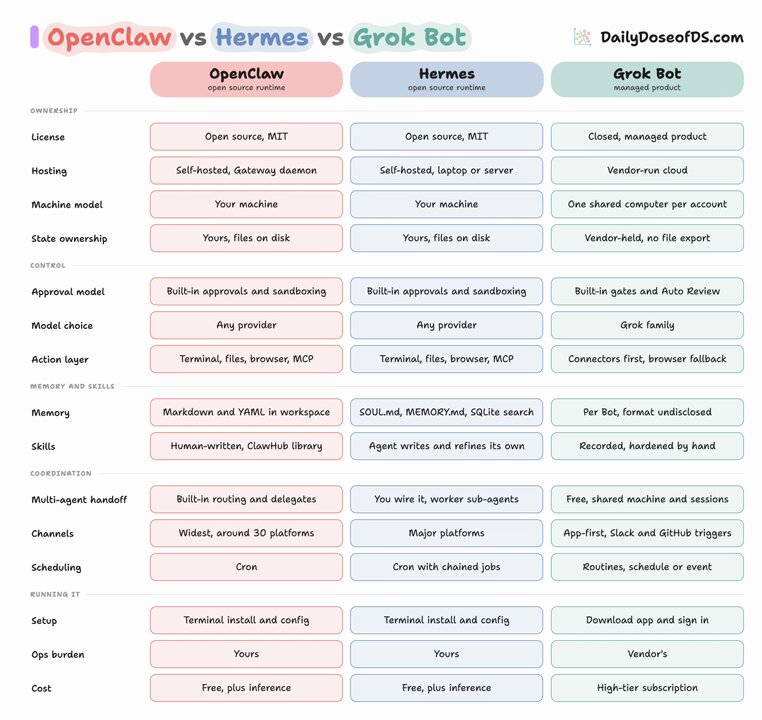
Most AI tools run computations locally or in short-lived cloud sessions that terminate when you close the app. Grok Bot is different: it runs on a dedicated cloud computer at SpaceXAI that includes a browser, a filesystem, and a terminal. That environment stays alive indefinitely. If you kick off a multi-step task — say, researching a topic, drafting a document, and filing it somewhere — Grok keeps executing that workflow after you've shut your laptop lid. You come back to results, not a frozen spinner.
How is this different from what other AI assistants do?
Most conversational AI tools are stateless between sessions — they don't hold an active process open on your behalf. Grok Bot is designed as an "AI teammate" that can sign into apps and websites, manage files, run terminal commands, and execute multi-step workflows end-to-end. It only surfaces to ask for your input when it genuinely needs a decision or approval. That's a different operating model than a chatbot you ping and wait on.
When did this launch, and what's the underlying model?
Grok Bot entered early beta on August 11, 2026, followed by the launch of Grok 4.6 on August 13. According to reporting from VentureBeat and InfoQ, Grok 4.6 is the model powering the agent layer, with a score of 61 on the Artificial Analysis Intelligence Index — up from 56 for Grok 4.5. The improvement is focused specifically on complex, multi-step agentic coding and knowledge-work tasks, which aligns with what persistent computing actually demands.
Can multiple Grok Bots run at the same time?
Yes. According to SpaceXAI, multiple Grok Bots can operate in parallel, coordinate tasks, exchange context, and divide work between them. Bots can also remember prior conversations, learn workflows by observation, and apply corrections over time. The practical implication: you could theoretically have one bot monitoring a data source while another drafts a report based on its findings — simultaneously, without you babysitting either one.
What's the connection to Cursor?
SpaceXAI acquired Cursor — the AI-powered code editor — for $60 billion in June 2026. Grok Bot is integrated into Cursor's development environment, which is part of why the persistent computing infrastructure matters so much for developers. Long-running build jobs, test suites, and deployment pipelines are exactly the kind of tasks that can't be interrupted by a laptop reboot. The Cursor integration makes Grok Bot a credible tool for professional software workflows, not just casual queries.
Who can access Grok Bot right now?
Grok Bot is currently in beta for SuperGrok Heavy, Cursor Ultra, and Cursor Premium Teams subscribers. For individuals, access comes with Cursor Ultra at $200 per month. It runs on macOS, Windows, Linux, and iOS — Android support is listed as coming soon. It's not broadly available yet, so if you're not on one of those tiers, you're watching from the sidelines for now.
Are there any known privacy concerns?
Worth flagging: earlier in July 2026, there were confirmed reports of Grok Build uploading complete code repositories even when privacy settings were disabled. Elon Musk acknowledged the issue publicly, and SpaceXAI committed to deleting the previously uploaded user data. As of this writing, no independent audit has confirmed that deletion has been completed. If you're considering using Grok Bot for sensitive work, that's a detail worth tracking before you hand it access to your filesystem and browser.
The persistent computing model is a genuine architectural bet — it shifts Grok from a tool you use to an agent that works for you in the background. Whether that's compelling depends entirely on what you're trying to get done. For developers and knowledge workers running long workflows, the value proposition is obvious. For everyone else, the $200/month entry point and the unresolved privacy audit are the two questions still hanging in the air.
Sources & reporting notes
The links below identify the material source records used for this report.
- @elonmusk on X (2026-08-20T11:00:25.000Z) — Direct source
Source links are preserved as published or accessed. See our editorial standards and corrections policy.
The BASENOR Editorial Desk covers Tesla, SpaceX, and related technology, curating reporting from primary sources — official accounts, regulatory filings, and software release data. Every article passes source-record and fact-checking review before publication. About the newsroom.
This report was curated by the BASENOR Editorial Desk from the sources listed above. Read our editorial standards or email editorial@basenor.com to report an error.