SpaceX confirmed on October 5, 2026 that all systems are green and weather is favorable for the Falcon 9 launch carrying the Space Development Agency's fourth Tranche 1 data transport mission from Vandenberg Space Force Base in California. Propellant loading is underway, with liftoff targeted for 1:17 a.m. PT — and if you live along the Central Coast, you may already know it happened before you read the news.

What exactly is the SDA Tranche 1 mission?
The Space Development Agency is building what it calls the Proliferated Warfighter Space Architecture — a mesh network of optically interconnected satellites in low-Earth orbit designed to give the U.S. military global tactical communications and missile warning, indication, and tracking capabilities. Tranche 1 is the first operational layer of that network. This launch is the fourth of nine Tranche 1 missions that SpaceX is flying on the SDA's behalf.
What's actually on board the rocket?
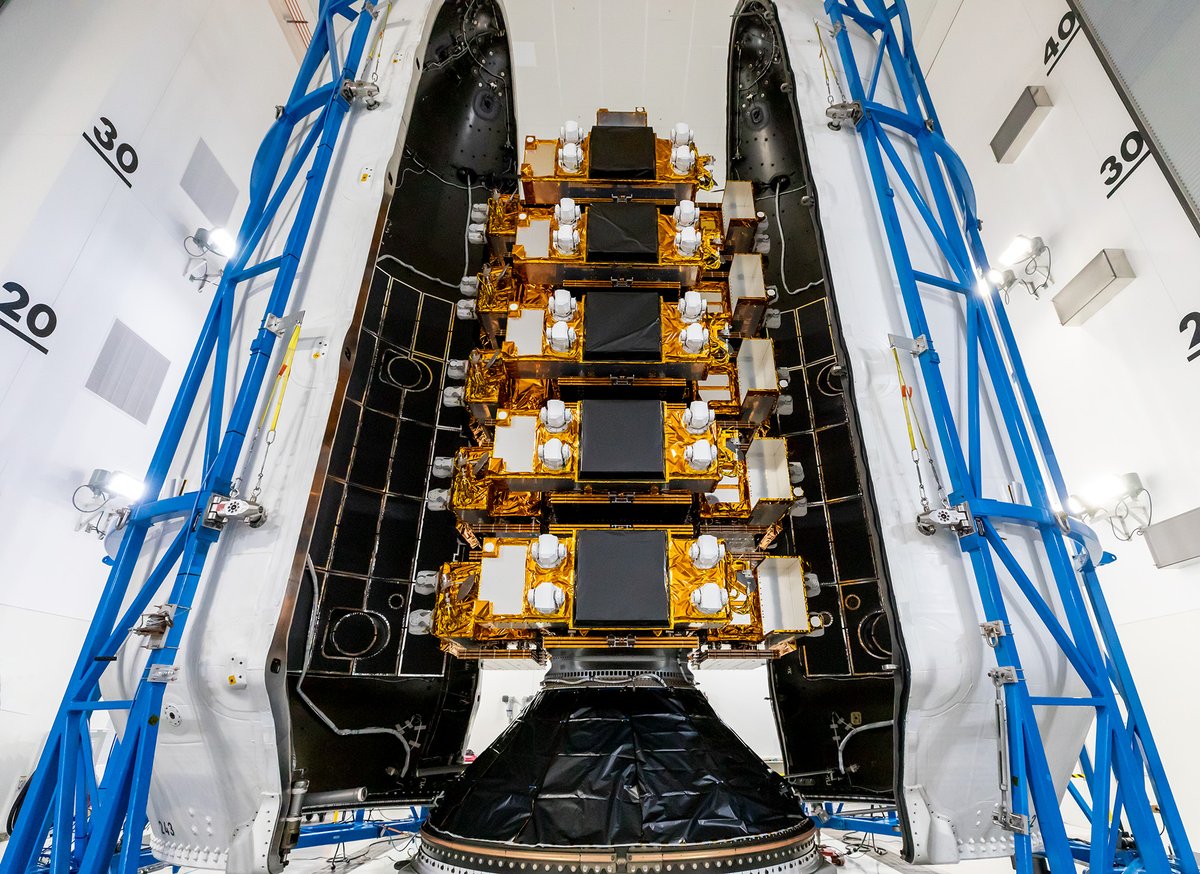
This Falcon 9 is carrying 21 data transport satellites built by Northrop Grumman Corp. Once deployed into low-Earth orbit, they join the growing constellation and extend the network's coverage and capacity. Each satellite communicates with others via optical inter-satellite links — essentially laser crosslinks that don't rely on ground infrastructure to relay data.
Where is it launching from, and when?
The rocket lifts off from Space Launch Complex 4 East (SLC-4E) at Vandenberg Space Force Base in California. The primary launch window opened at 1:17 a.m. PT on October 5, 2026 (8:17 a.m. UTC). According to SpaceX, a backup opportunity is available on October 6 at 1:08 a.m. PT if needed.
What happens to the booster after launch?
About eight minutes after liftoff, the Falcon 9 first stage separates and returns to Landing Zone 4 at Vandenberg — the same base it launched from. This booster is on its sixth flight, having previously supported the NROL-179 mission, the SDA-T1TL-E mission, and three Starlink launches. The landing will be a ground touchdown rather than a drone ship recovery, which is why it produces the characteristic double crack of a sonic boom on approach.

Will I hear the sonic boom, and should I be concerned?
If you're in Santa Barbara, San Luis Obispo, or Ventura County, there's a real chance you'll hear one or more sonic booms as the booster decelerates for landing — depending on weather and atmospheric conditions at the time. It's a sharp, loud bang, not a sustained rumble. It's completely normal and expected. SpaceX and Vandenberg Space Force Base routinely notify local residents ahead of these landings for exactly this reason.
How does this fit into the bigger picture for U.S. military space?
The SDA's architecture is a deliberate shift away from a small number of expensive, high-value satellites toward a large constellation of smaller, cheaper ones that are harder to target and faster to replace. With four of nine Tranche 1 missions now complete, the network is steadily approaching its intended operational capacity. SpaceX is the primary launch provider for this program, and the cadence of flights reflects how seriously the Pentagon is treating low-Earth orbit as contested military terrain.
A live webcast is available on the SpaceX website and on X (@SpaceX), beginning approximately 10 minutes before liftoff. For more on SpaceX's launch manifest and mission history, see our SpaceX coverage.
Sources & reporting notes
The links below identify the material source records used for this report.
- @SpaceX on X (2026-10-05T07:40:56.000Z) — Direct source
- @SpaceX on X (2026-10-05T07:45:26.000Z) — Direct source
Source links are preserved as published or accessed. See our editorial standards and corrections policy.
The BASENOR Editorial Desk covers Tesla, SpaceX, and related technology, curating reporting from primary sources — official accounts, regulatory filings, and software release data. Every article passes source-record and fact-checking review before publication. About the newsroom.
This report was curated by the BASENOR Editorial Desk from the sources listed above. Read our editorial standards or email editorial@basenor.com to report an error.