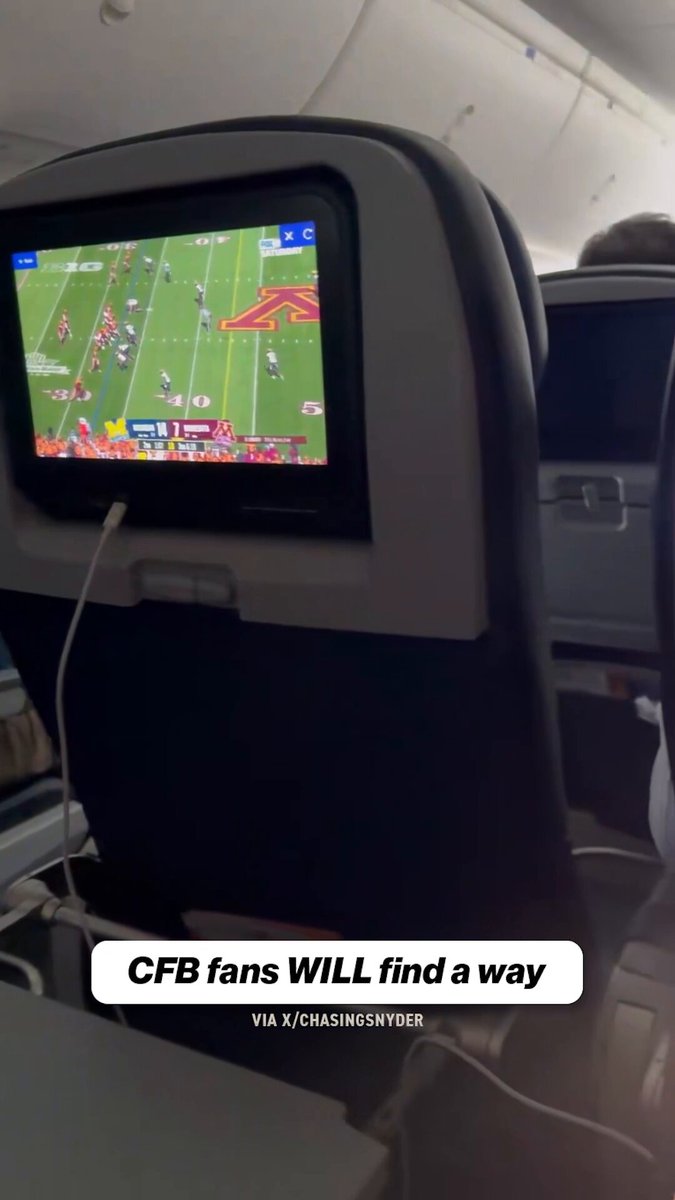
A United Airlines passenger streamed five live college football games at the same time — three on seatback screens, two on personal devices — during a single commercial flight on October 3, 2026. Elon Musk shared the moment on X the following day, and the clip quickly drew over 530,000 views. It's a vivid illustration of how far in-flight internet has come, and how central Starlink has become to that shift.

The Numbers Behind the Demo
Streaming five simultaneous live broadcasts isn't a party trick — it's a bandwidth stress test. Starlink Aviation's current hardware is rated for download speeds up to 250 Mbps on United flights, while newer terminal kits are officially confirmed to deliver up to 1 Gbps per aircraft. Ookla Speedtest data from Q1 2025 recorded a median in-flight downlink of 152.4 Mbps on Starlink-equipped planes, with peak observed speeds reaching 370 Mbps at 35,000 feet. For context, a single 4K stream typically requires 15–25 Mbps, meaning the network had significant headroom even with five concurrent feeds running.
| Metric | Value |
|---|---|
| Rated download speed (United fleet) | Up to 250 Mbps |
| Next-gen terminal capacity | Up to 1 Gbps |
| Median in-flight downlink (Ookla Q1 2025) | 152.4 Mbps |
| Peak observed speed at altitude | 370 Mbps |
| Latency ceiling | Under 99 ms |
| Fuel drag impact (new antennas) | ~0.3% (vs ~2% legacy) |
United's Rollout — and What's Still Ahead
United Airlines began fitting Starlink hardware on select aircraft in March 2025. According to the airline, it expects to have more than 880 aircraft equipped by the end of 2026, with full-fleet coverage targeted by the end of 2027. The live football streaming capability specifically came online in September 2026, through a partnership with Dish that brings professional and college games from multiple networks directly to seatback screens. That service currently runs across more than 200 Starlink-equipped planes, covering up to 700 flights per day.
For MileagePlus members, the service is free — no paywall, no session limits. That's a meaningful commercial differentiator at a time when rival carriers still charge per-session fees or throttle speeds during peak usage.
The Broader Picture
United is one of more than 40 commercial carriers that have signed agreements to deploy Starlink Aviation. As of August 2026, over 1,400 commercial aircraft globally were already flying with Starlink hardware installed — a figure that has grown sharply since the service's aviation launch. The aerodynamic profile of the newer flat-panel antennas is also worth noting for airlines: at roughly 0.3% fuel drag impact versus the approximately 2% associated with legacy satellite radomes, the operational cost argument for switching has strengthened considerably.
The five-games-at-once demo is a single data point, but it lands at a moment when the aviation connectivity market is actively being re-priced. Legacy in-flight Wi-Fi providers built their business models around scarcity — slow speeds justified high per-session fees. Starlink's architecture inverts that logic. The question now is how quickly the rest of the industry catches up, and whether United's free-for-MileagePlus-members model becomes the new baseline expectation rather than a competitive edge.
Sources & reporting notes
The links below identify the material source records used for this report.
- @elonmusk on X (2026-10-04T19:22:10.000Z) — Direct source
Source links are preserved as published or accessed. See our editorial standards and corrections policy.
The BASENOR Editorial Desk covers Tesla, SpaceX, and related technology, curating reporting from primary sources — official accounts, regulatory filings, and software release data. Every article passes source-record and fact-checking review before publication. About the newsroom.
This report was curated by the BASENOR Editorial Desk from the sources listed above. Read our editorial standards or email editorial@basenor.com to report an error.