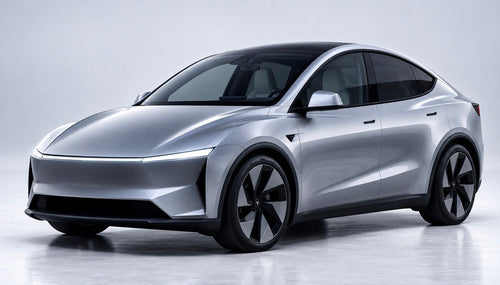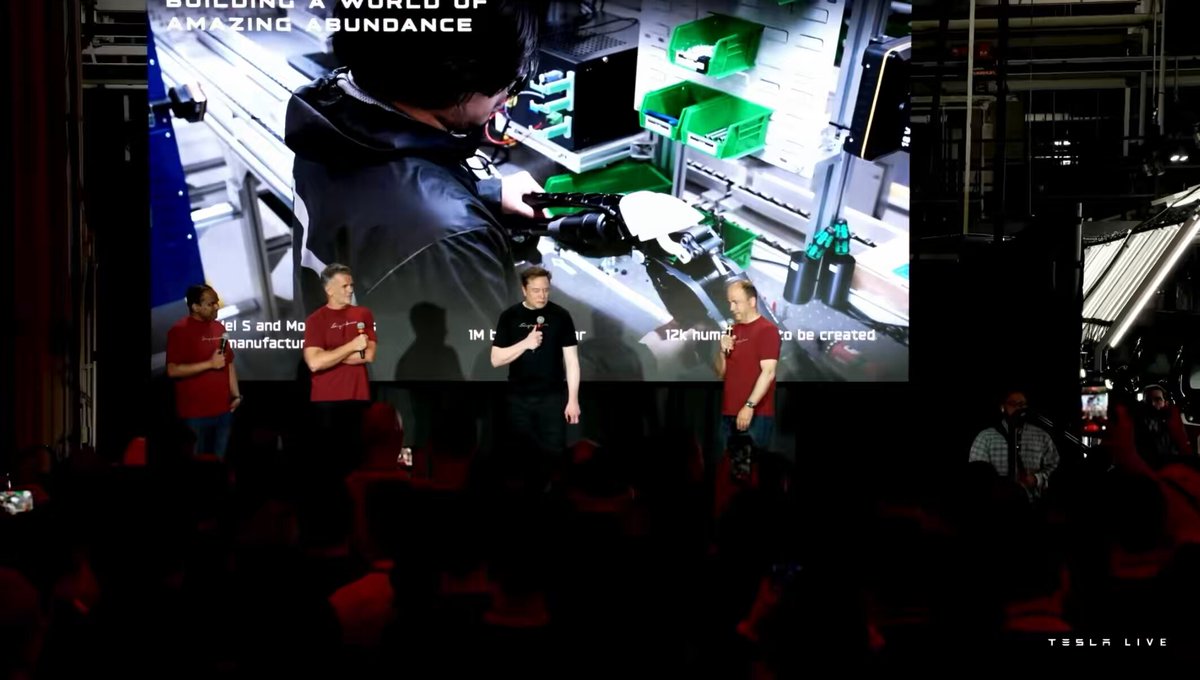
Tesla's VP of Vehicle Engineering, Lars Moravy, announced that the Cybercab has been certified as the most efficient electric vehicle ever — posting an energy consumption rating of 165 Wh/mi (103 Wh/km). That's not a marketing claim or an internal target: it's a certified figure, and it sets a new benchmark for the entire EV industry.

Why 165 Wh/mi Is a Big Deal
To put that number in context: the current Tesla Model 3 Long Range RWD — already one of the most efficient passenger EVs on the road — comes in around 240–250 Wh/mi in EPA testing. The Cybercab at 165 Wh/mi is roughly 30–35% more efficient than that. For a production vehicle, that's a significant leap, not an incremental improvement.
The engineering story behind that number starts with the Cybercab's purpose-built design. Unlike any existing Tesla, it's a two-seat, fully autonomous vehicle with no steering wheel and no pedals — a clean-sheet platform optimized entirely around efficiency and autonomy rather than retrofitted from a traditional car architecture. Its teardrop aerodynamic shape and purpose-designed aero wheel covers minimize drag at every speed. Removing the driver controls also eliminates weight and complexity that every conventional vehicle carries by default.
According to previous reporting, Moravy and Senior Design Executive Franz von Holzhausen had flagged an efficiency target of approximately 166 Wh/mi as early as March 2025. The certification announcement suggests Tesla hit — and marginally beat — that target in production-spec form.
What It Means for Range and the Battery Pack
The efficiency rating has a direct and meaningful implication for real-world range. At 165 Wh/mi, a battery pack under 50 kWh can deliver close to 300 miles of real-world range. That's a number that would have required a 75–80 kWh pack in a conventional EV just a few years ago. A smaller pack means lower material costs, less weight, and faster charging times — all of which matter enormously for a vehicle designed to run as a commercial Robotaxi, cycling through charge-and-deploy loops many times per day.
For Tesla's Robotaxi economics, efficiency isn't just a spec sheet win. It directly affects the cost per mile of operation, which is the core unit economics of the entire autonomous ride-hail business model. A vehicle that uses 30% less energy per mile has a structurally lower operating cost floor than its competitors — before you even account for the labor savings from full autonomy.
Production Is Already Underway
This certification lands as Cybercab production is already running. Tesla officially began manufacturing the Cybercab at Gigafactory Texas in February 2026, with Elon Musk confirming the production start during the Q1 2026 earnings call in April. Moravy also confirmed in April that the Cybercab will not be subject to NHTSA's 2,500-vehicle annual production cap — it complies with existing Federal Motor Vehicle Safety Standards, clearing the path for rapid volume scaling.
Tesla has stated its goal of having Robotaxi operations running in roughly a dozen US states by the end of 2026. The efficiency certification adds another data point suggesting the vehicle is progressing through its readiness milestones on schedule.
The 165 Wh/mi figure is now the number every other EV manufacturer will be measured against. Whether competitors can approach it — without the benefit of a purpose-built autonomous platform — is the harder question.
🚕 Following the Robotaxi rollout? See every operating city, launch date and announced market in our Tesla Robotaxi Tracker.
Related Gear
Gear up your Tesla with tested, custom-fit BASENOR accessories — shop Tesla accessories →
Sources & reporting notes
The links below identify the material source records used for this report.
- @TeslaNewswire on X (2026-05-21T04:53:13.000Z) — Direct source
Source links are preserved as published or accessed. See our editorial standards and corrections policy.
The BASENOR Editorial Desk covers Tesla, SpaceX, and related technology, curating reporting from primary sources — official accounts, regulatory filings, and software release data. Every article passes source-record and fact-checking review before publication. About the newsroom.
This report was curated by the BASENOR Editorial Desk from the sources listed above. Read our editorial standards or email editorial@basenor.com to report an error.