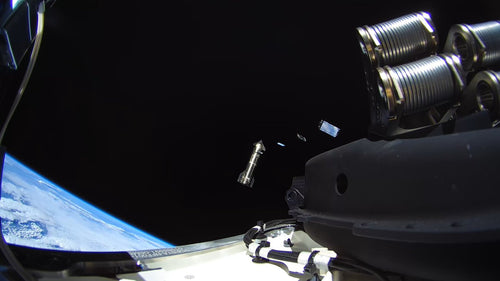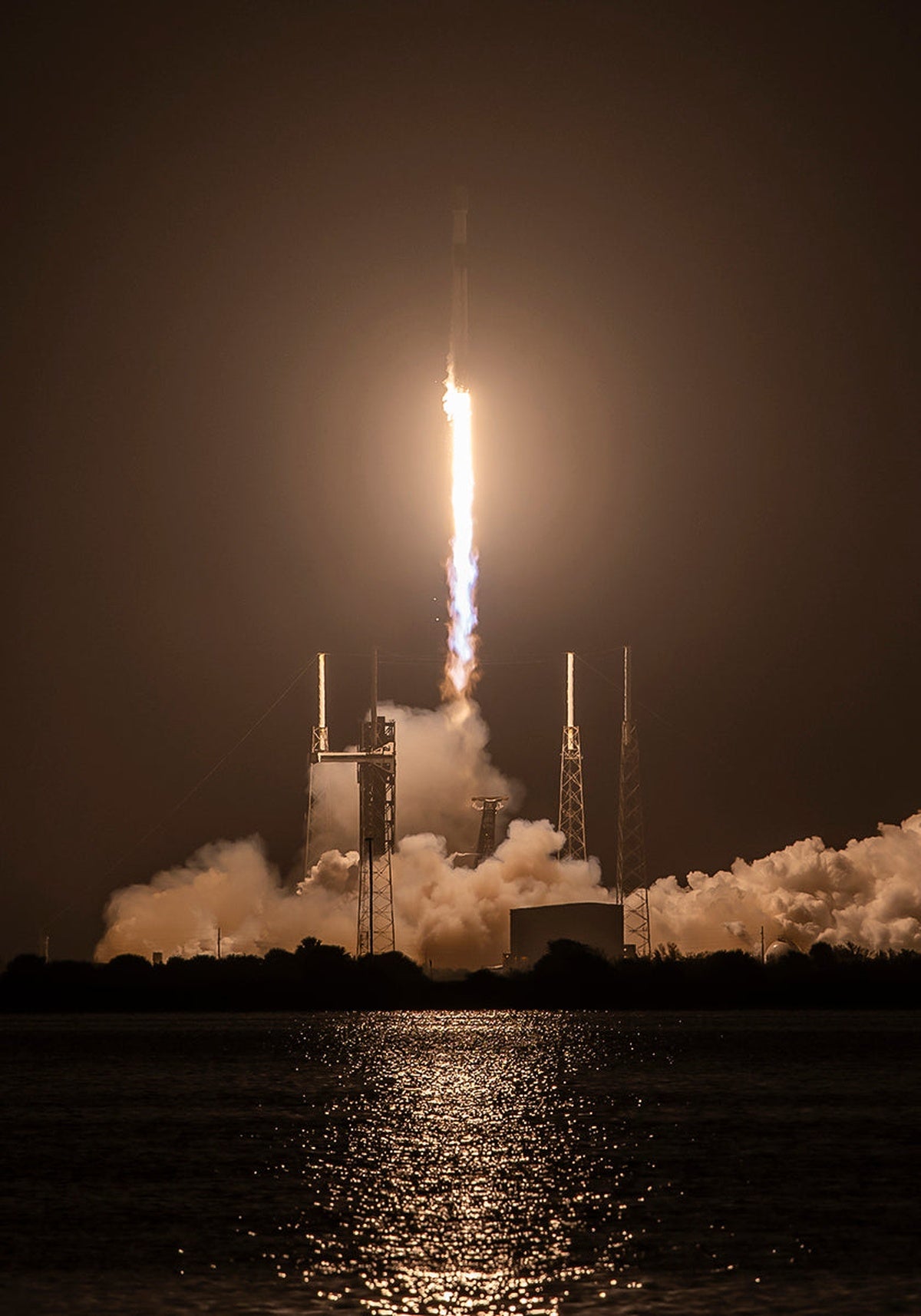
SpaceX lifted off from Cape Canaveral this morning with another batch of Starlink satellites, continuing its relentless pace of constellation expansion. Falcon 9 carried 29 Starlink V2 Mini Optimized satellites into low-Earth orbit at 6:04 AM EDT — the Starlink 10-31 mission — further thickening coverage for the network's 2.7 million active customers worldwide.

The mission carried a few milestones worth noting. Booster B1077 — a veteran that has previously flown Crew-5, CRS-28, and NG-20 — completed its 28th flight, touching down cleanly on the drone ship A Shortfall of Gravitas in the Atlantic. That landing was the 150th on that specific vessel and the 613th booster recovery in SpaceX history. At this point, reusability isn't an engineering achievement to celebrate — it's just how SpaceX operates.
The Starlink constellation now exceeds 10,000 spacecraft in orbit. For Starlink subscribers — including Tesla owners who rely on it for in-vehicle connectivity in remote areas — each new batch nudges latency lower and capacity higher, particularly in high-demand regions. Whether this mission moves the needle noticeably for any individual user is hard to say, but the cumulative effect of launches like this one is what keeps Starlink competitive as a global broadband provider. For more on SpaceX's broader launch cadence, see our SpaceX coverage.
Sources & reporting notes
The links below identify the material source records used for this report.
- @SpaceX on X (2026-05-21T12:35:16.000Z) — Direct source
Source links are preserved as published or accessed. See our editorial standards and corrections policy.
The BASENOR Editorial Desk covers Tesla, SpaceX, and related technology, curating reporting from primary sources — official accounts, regulatory filings, and software release data. Every article passes source-record and fact-checking review before publication. About the newsroom.
This report was curated by the BASENOR Editorial Desk from the sources listed above. Read our editorial standards or email editorial@basenor.com to report an error.