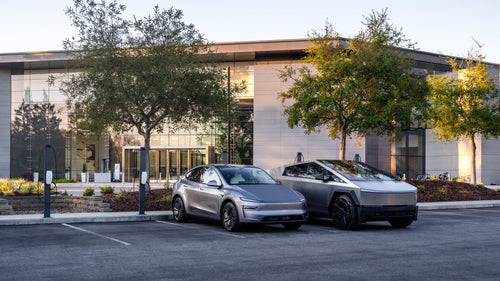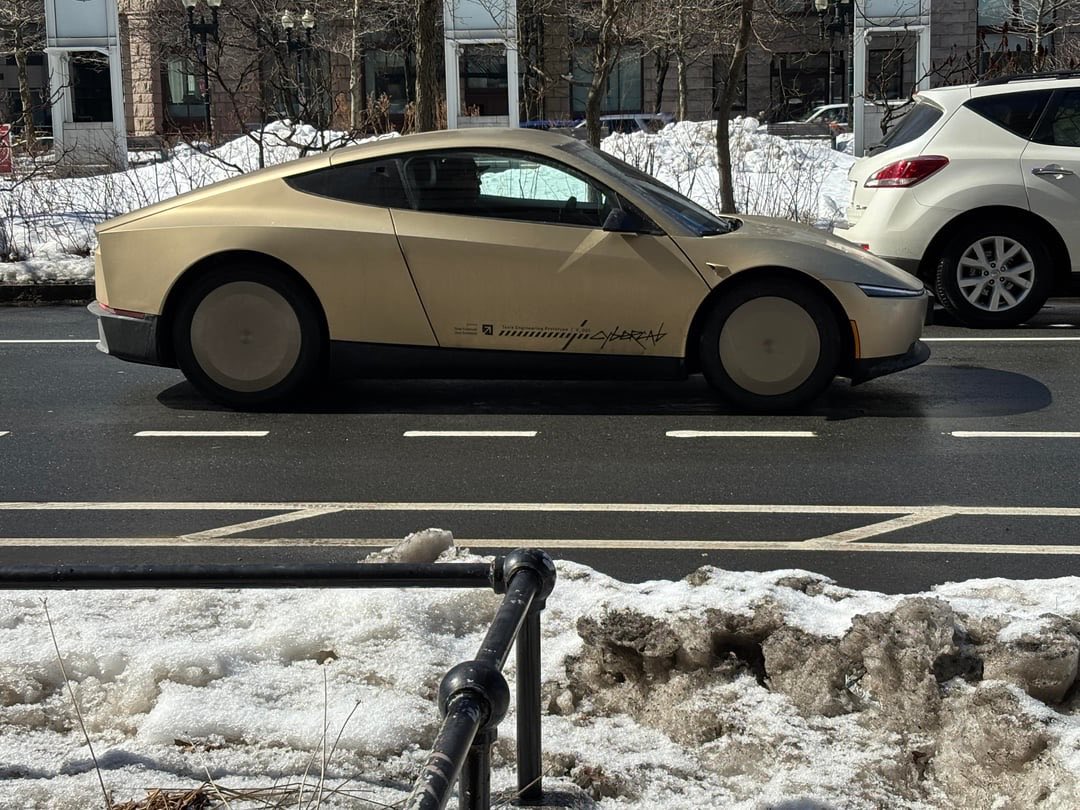
The News: A Tesla Cybercab has been spotted undergoing real-world testing in Boston, Massachusetts.
Why It Matters: Boston is a dense, complex urban environment — testing here signals Tesla is pushing the Cybercab beyond its familiar California stomping grounds and stress-testing it in genuinely challenging conditions.
Source: @TeslaNewswire on X
Cybercab Heads Northeast: Boston Sighting Confirmed
Tesla's Cybercab robotaxi has been spotted testing in Boston, Massachusetts — marking one of the most notable geographic expansions of the vehicle's real-world validation program to date. The sighting, shared by @TeslaNewswire, confirms the dedicated robotaxi is no longer confined to the sunbelt routes where Tesla has historically done the bulk of its autonomous driving development.

📊 Why Boston Is a Significant Test Location
Boston is not a random choice. It is widely considered one of the most demanding driving environments in the United States — and that's exactly the point. Here's what makes this sighting meaningful:
- Complex road geometry: Boston's street grid is famously irregular, with rotaries, narrow colonial-era lanes, and intersections that confound even experienced human drivers.
- Aggressive traffic culture: Boston drivers are known for unpredictable behavior — a real-world stress test for any autonomous system's edge-case handling.
- Harsh weather conditions: New England winters bring snow, ice, and low-visibility conditions that California testing simply cannot replicate. Validating sensor performance and driving logic in these conditions is a prerequisite for any national rollout.
- Dense urban pedestrian activity: High foot traffic, cyclists, delivery vehicles, and double-parked cars create the kind of chaotic scenarios that push autonomy stacks to their limits.
The fact that Tesla is running the Cybercab through Boston's streets — not just controlled test tracks or familiar Palo Alto routes — suggests the program is maturing. This is validation work, not early-stage development.
🔭 The BASENOR Take
Timeline: Ongoing real-world testing phase, pre-commercial deployment
Impact Level: Medium-High — geographic expansion of testing is a meaningful program milestone
Confidence: High — confirmed visual sighting from a credible source
Tesla has been methodical about expanding Cybercab testing into new environments. Earlier sightings were concentrated in California, where Tesla operates its primary FSD development corridors. The move to Boston — and reportedly the broader New England area — represents a deliberate effort to gather data from environments that look nothing like the California suburbs where most Tesla fleet miles are accumulated.
For Tesla owners watching the robotaxi program, the key question isn't whether the Cybercab works in good conditions — it's whether it can handle the full spectrum of real-world complexity. Boston is about as demanding as it gets in the continental US. If Tesla is comfortable enough to test there, that's a signal the program is further along than many observers assume.
It's also worth noting the broader context: Tesla has indicated the Cybercab is a purpose-built robotaxi — no steering wheel, no pedals — which means every mile of testing is building toward a vehicle that will need regulatory approval for fully driverless operation. Testing in a state like Massachusetts, with its own regulatory framework, may also be laying groundwork for future licensing conversations.
What This Means for Tesla Owners
If you're a current Tesla owner watching the Cybercab program, here's the practical read: expanded geographic testing is the clearest leading indicator of progress toward commercial launch. Tesla doesn't send vehicles to new cities for publicity — these are engineering miles with a purpose.
The Cybercab is a separate product from the existing Tesla lineup, but its success directly impacts the broader Tesla ecosystem. A successful robotaxi network would generate revenue that funds future vehicle development, potentially accelerating the next generation of consumer Teslas. For owners interested in our FSD coverage, the Cybercab program and the consumer FSD stack are deeply intertwined — advances in one feed the other.
📰 Deep Dive
The Cybercab's appearance in Boston is part of a broader pattern of Tesla pushing its autonomous testing program into increasingly challenging real-world environments. While Tesla has not publicly detailed the specific scope of its Northeast testing operations, the sightings in Boston and surrounding areas suggest a structured expansion beyond the company's traditional West Coast testing corridors.
From an engineering standpoint, Boston represents a valuable data collection environment precisely because of its difficulty. Every unusual intersection, every aggressive merge, every snow-covered lane marking that the Cybercab's sensor suite must interpret becomes training data that strengthens the underlying autonomy model. Tesla's data-driven approach to FSD development means that more diverse geographic exposure translates directly into a more robust system.
The timing also matters. With Tesla having previously outlined ambitions for Cybercab commercial operations, real-world testing in major metropolitan areas outside California is a necessary step on the path to any kind of scaled deployment. Regulators, insurers, and municipal governments will all want evidence that the vehicle has been validated in conditions relevant to their specific environments — and Boston sightings start building that case.
For the broader EV and autonomous vehicle industry, Tesla's willingness to test the Cybercab in a high-visibility, high-complexity city like Boston also sends a competitive signal. The robotaxi race is intensifying, and geographic testing breadth is one of the clearest public indicators of program maturity. Boston is a statement as much as it is a test.

Marcus covers Tesla's software releases, FSD rollouts, and OTA changes. Background in automotive engineering. Based in Austin.
Sources verified at publish time. Spotted an inaccuracy? Email editorial@basenor.com.