⚡ 30-Second Brief
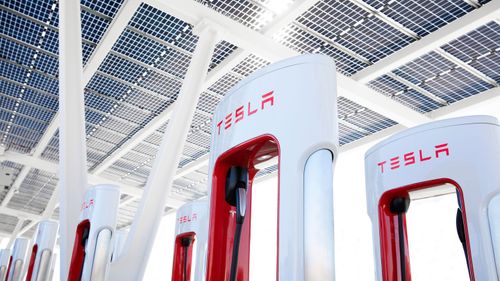
- The News: Tesla is significantly expanding its dedicated 'For Business' Supercharger stations, which are designed for commercial fleets and high-utilization vehicles.
- Why It Matters: This move signals Tesla's deeper commitment to the commercial EV sector, addressing a critical need for reliable and scalable charging infrastructure beyond personal use.
📊 Key Figures
| Metric | Value | Context |
|---|---|---|
| Target Segment | Commercial Fleets | Addressing specific needs of businesses with Tesla vehicles. |
| Charging Type | Dedicated Superchargers | Ensuring preferential access and optimized charging for commercial operations. |
🔭 The Basenor Take
- Timeline: In Progress
- Impact Level: 🔴 High
What This Means for You: While this news directly targets commercial operators, it's a significant indicator of Tesla's long-term strategy for infrastructure. As more commercial vehicles adopt Tesla platforms (like the upcoming Cybercab or existing Model Y robotaxis), dedicated charging will decongest public Superchargers, potentially improving availability and wait times for individual owners. It also showcases Tesla's commitment to building out the ecosystem required for a future dominated by electric and autonomous fleets, which will ultimately benefit all Tesla owners through continued innovation and network expansion.
🗣️ Community Pulse
Community discussions are still developing around this news. However, related discussions around Tesla's commercial efforts, such as the Cybercab and Robotaxi initiatives, highlight the critical need for robust charging infrastructure. Owners are keenly aware that fleet deployment will require dedicated solutions to avoid overwhelming existing public Supercharger networks, expressing concerns about cargo capacity for specific use cases and the readiness of FSD for unsupervised robotaxi operations.
📰 Deep Dive
Tesla's expansion of its branded 'For Business' Supercharger network represents a strategic pivot towards solidifying its position in the commercial electric vehicle (EV) market. Traditionally, Superchargers have served individual Tesla owners, but as Tesla's ambitions grow to include large-scale commercial deployments like the Cybercab robotaxi and existing Model Y-based fleets, the need for specialized charging infrastructure becomes paramount. These 'For Business' stations are designed to cater to the unique demands of commercial operators, offering dedicated access and potentially optimized charging profiles for high-utilization vehicles that require rapid and consistent turnaround times.
This initiative is critical for several reasons. Firstly, it ensures that the influx of commercial Teslas does not strain the existing public Supercharger network, which is already a concern for many individual owners. By providing separate, dedicated facilities, Tesla can manage charging demand more efficiently. Secondly, it offers commercial partners a more predictable and reliable charging solution, which is essential for business operations where vehicle downtime directly impacts profitability. This move underscores Tesla's understanding that fleet charging requires a different approach than personal vehicle charging, focusing on maximizing uptime and operational efficiency.
The expansion is also a forward-looking step, laying the groundwork for the widespread adoption of future commercial vehicles like the Cybercab. While the Cybercab itself is still in testing and facing trademark challenges, the infrastructure to support it must be in place well in advance. This strategy not only supports Tesla's own commercial ventures but also positions the company as a leader in providing comprehensive EV solutions for businesses, potentially attracting more companies to electrify their fleets with Tesla vehicles. The long-term implication is a more robust and diversified charging ecosystem, benefiting the entire Tesla community.
🚕 Following the Robotaxi rollout? See every operating city, launch date and announced market in our Tesla Robotaxi Tracker.
Related Gear
Gear up your Tesla with tested, custom-fit BASENOR accessories — shop Tesla accessories →
Sources & reporting notes
This article does not include retained source links. Our editorial standards and corrections policy, linked below, explain how BASENOR sources its reporting and how to request a correction.
Source links are preserved as published or accessed. See our editorial standards and corrections policy.
The BASENOR Editorial Desk covers Tesla, SpaceX, and related technology, curating reporting from primary sources — official accounts, regulatory filings, and software release data. Every article passes source-record and fact-checking review before publication. About the newsroom.
This report was curated by the BASENOR Editorial Desk from the sources listed above. Read our editorial standards or email editorial@basenor.com to report an error.