📌 UPDATE — May 11, 2026
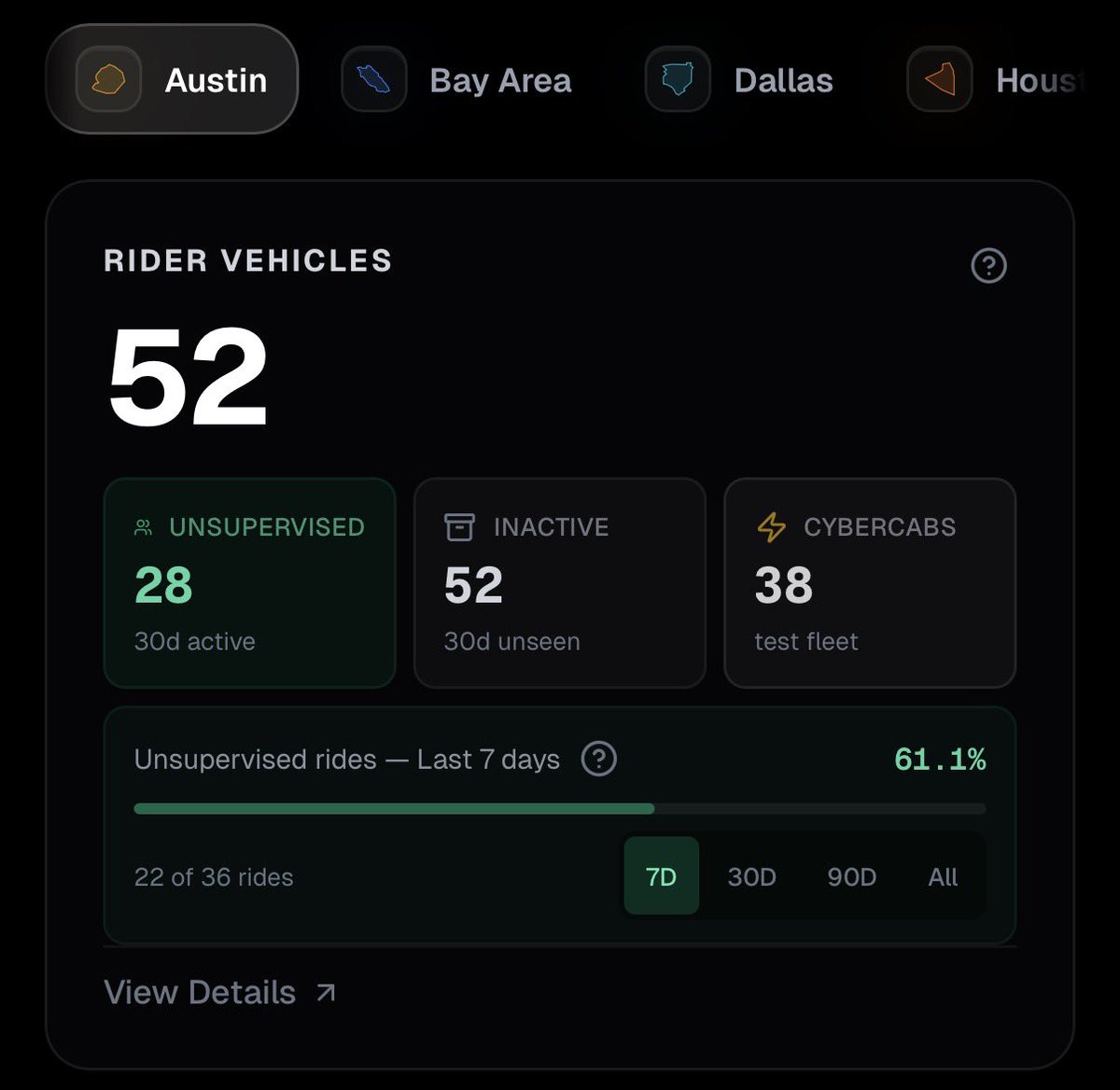
New data out of Texas shows that supervised FSD rides now represent a minority of total Tesla FSD usage in the state — a notable milestone that underscores how rapidly unsupervised operation is becoming the norm rather than the exception. This shift suggests Tesla's Robotaxi expansion is absorbing an increasingly large share of miles driven. Observers are already looking ahead to what this trajectory means once FSD becomes available globally, a move that could dramatically multiply the scale of autonomous miles logged. The momentum in Texas appears to be a proving ground for that broader rollout.


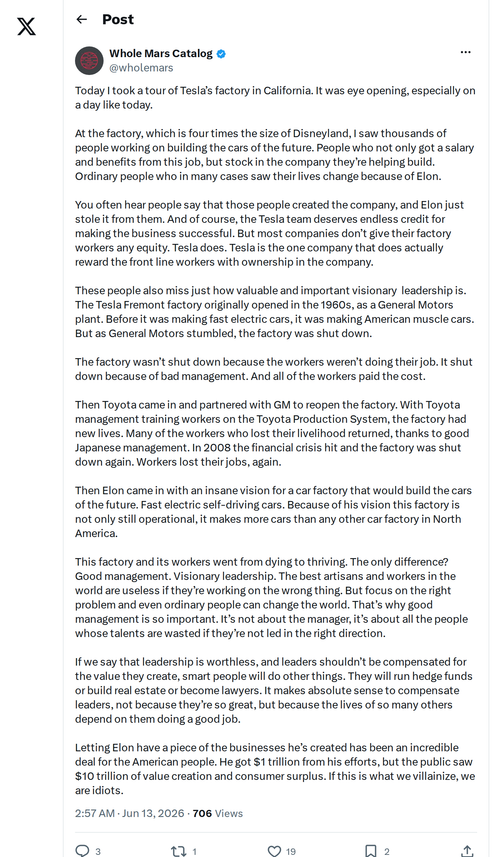
Tesla's push toward fully unsupervised autonomous driving is gaining real momentum. According to Whole Mars Catalog, supervised self-driving is being gradually phased out in Texas — a significant signal that Tesla's FSD deployment is maturing beyond the need for human oversight in the state. The next frontier: securing the necessary permits to operate the same way in California.

What's Happening in Texas
The regulatory groundwork in Texas has been building for months. Texas Senate Bill 2807, which created a formal authorization framework for commercial automated vehicle operations on public roads, took effect on September 1, 2025. The administrative rules were finalized in February 2026, with enforcement beginning May 28, 2026. Under SB 2807, an "Automated Vehicle" is defined as a motor vehicle capable of Level 4 or Level 5 automation per SAE International Standard J3016 — the threshold Tesla's Robotaxi service is now operating at.
Tesla moved quickly once the framework was in place. The Robotaxi service expanded to Dallas and Houston on April 18, 2026, with unsupervised vehicles operating from day one. In Austin, the fleet began running unsupervised during evening hours as of May 4, 2026, extending beyond previous daylight-only restrictions. The phasing out of "supervised" self-driving in Texas isn't a sudden policy shift — it's the natural conclusion of a regulatory arc that Tesla has been navigating for over a year.
California Is the Harder Fight
California has historically been the more demanding regulatory environment for autonomous vehicles. The California DMV and CPUC both maintain oversight of autonomous vehicle testing and deployment, and Tesla has not yet secured the permits required to operate unsupervised FSD commercially in the state. That's the gap Whole Mars Catalog is pointing to — Texas is largely sorted, California is the remaining major obstacle for a truly national unsupervised FSD rollout.
For Tesla owners in California, this means supervised FSD remains the operative mode for now. The underlying technology is the same as what's running unsupervised in Texas — the bottleneck is regulatory, not technical.
What This Means for FSD Owners
If you're a Tesla owner in Texas, the transition away from supervised self-driving is a direct upgrade to your day-to-day experience — the system is being trusted to operate without requiring your active readiness to intervene at every moment. For owners in California, the situation is unchanged for now, but the Texas precedent makes a strong case to regulators that unsupervised operation is viable at scale.
The broader trajectory is clear: Tesla is systematically converting supervised FSD markets into unsupervised ones, state by state. California, given its size and symbolic weight in the EV and autonomous vehicle industry, will be the most consequential permit Tesla pursues next. How quickly that happens depends as much on Sacramento as it does on Tesla's engineering team. For our ongoing coverage of FSD milestones and regulatory developments, see our FSD coverage.

Marcus covers Tesla's software releases, FSD rollouts, and OTA changes. Background in automotive engineering. Based in Austin.
Sources verified at publish time. Spotted an inaccuracy? Email editorial@basenor.com.