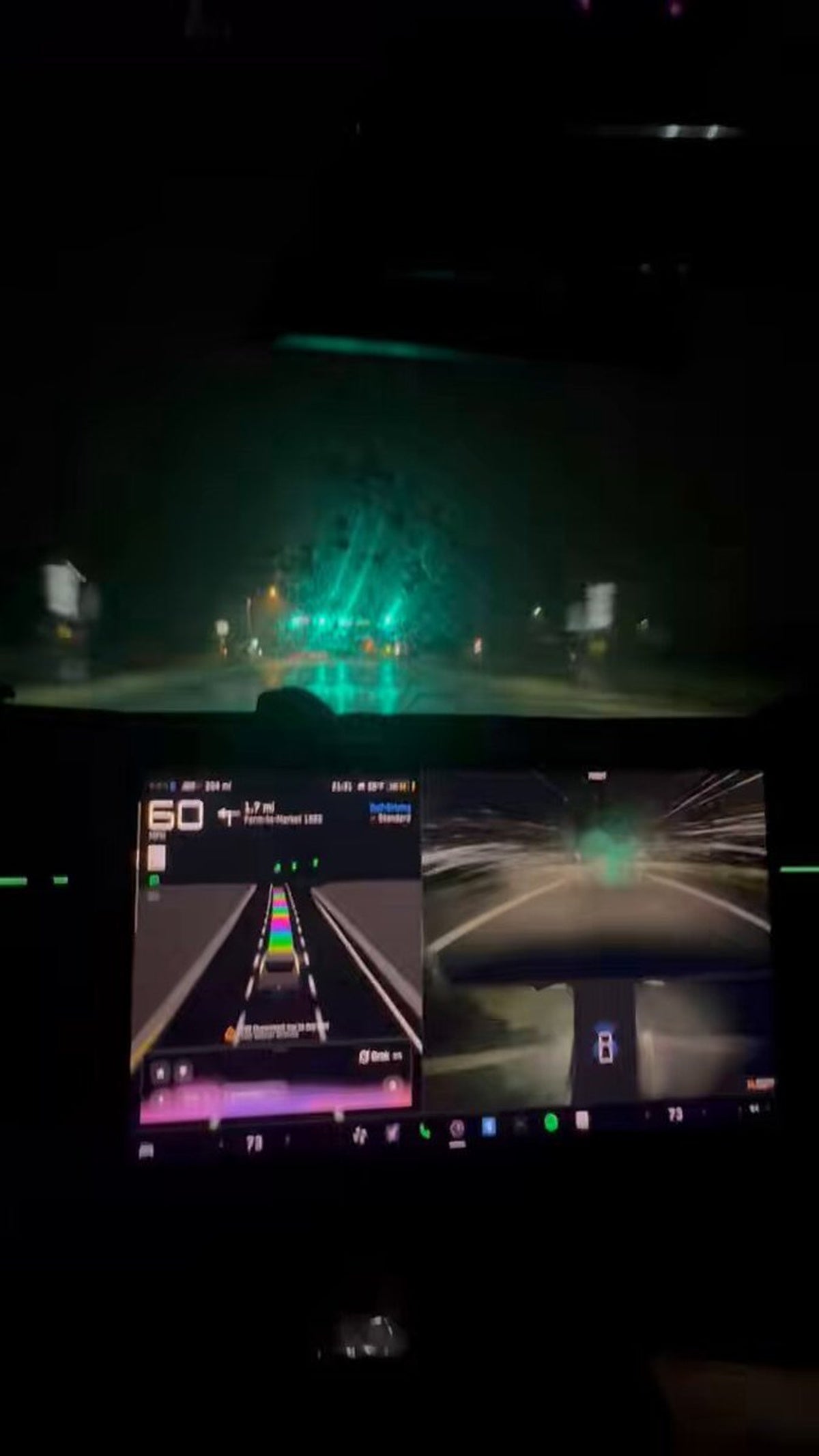
Tesla's official Cybertruck account posted a short but pointed video this week: FSD Supervised driving through heavy rain without missing a beat. It's a deliberate signal from Tesla that its autonomous driving system is maturing beyond fair-weather use cases — and Cybertruck owners in particular are the audience.

This isn't the first time Tesla has made this case publicly. Back in February 2026, the @Tesla_AI account shared footage of FSD navigating heavy rain and flooded road conditions — the first time Tesla officially showcased the system's extreme-weather performance through an official channel. The Cybertruck post this week reinforces that message, this time from the truck's own account and aimed squarely at owners who regularly encounter demanding weather.
Under the hood, recent FSD versions have made meaningful strides in low-visibility scenarios. FSD (Supervised) v14.3.3 — part of update 2026.14.6.6 that began rolling out May 17 — includes an improved neural network vision encoder specifically tuned for low-visibility situations and 3D geometry comprehension, along with a rewritten AI compiler that delivers roughly 20% faster reaction times. Hardware 4 vehicles also benefit from upgraded 5-megapixel Sony IMX sensors engineered for better dynamic range in challenging lighting and weather. The 2026 Model Y Juniper added a self-cleaning lip on side repeater cameras, a small but targeted design detail for exactly these conditions.
That said, Tesla's own documentation still cautions that Self-Driving features "may not work as intended" when visibility is poor due to heavy rain, snow, or hail. And real-world reports from early 2026 showed mixed results: FSD 14.3.1 completed test runs in heavy rain without disengagements, but some users flagged concerns about speed control and navigation decisions in wet conditions. A separate incident in February 2026 involved a hydroplane at highway speed with FSD engaged — a reminder that driver attention remains non-negotiable regardless of what the system can handle on a good run.
The broader picture is that Tesla is actively building the public case for FSD's all-weather capability, likely with European regulatory authorization in mind. For owners, the practical takeaway is straightforward: keep your cameras clean, stay engaged at the wheel, and treat wet-road FSD runs as supervised — exactly as the name says.
📋 Tracking Tesla software? See every firmware, FSD and app version in one place in our Tesla Software Update Tracker.
Related Gear
Gear up your Cybertruck with tested, custom-fit BASENOR accessories — shop Cybertruck accessories →
Sources & reporting notes
The links below identify the material source records used for this report.
- @cybertruck on X (2026-05-20T17:33:37.000Z) — Direct source
Source links are preserved as published or accessed. See our editorial standards and corrections policy.
The BASENOR Editorial Desk covers Tesla, SpaceX, and related technology, curating reporting from primary sources — official accounts, regulatory filings, and software release data. Every article passes source-record and fact-checking review before publication. About the newsroom.
This report was curated by the BASENOR Editorial Desk from the sources listed above. Read our editorial standards or email editorial@basenor.com to report an error.