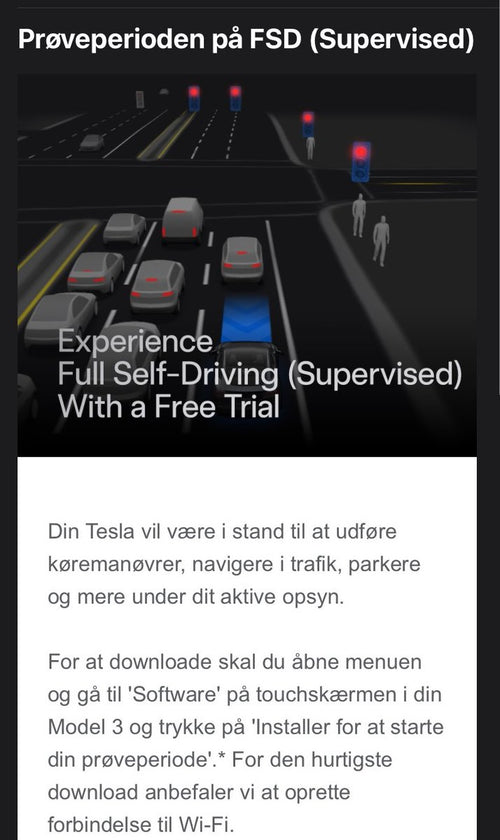
Teslascope has detected a new feature called Vision-Based Attention Monitoring appearing in Tesla vehicles — and it wasn't mentioned in any official release notes. The system builds on Tesla's existing cabin camera infrastructure to more precisely track whether a driver is genuinely paying attention while FSD (Supervised) or Autopilot is active.

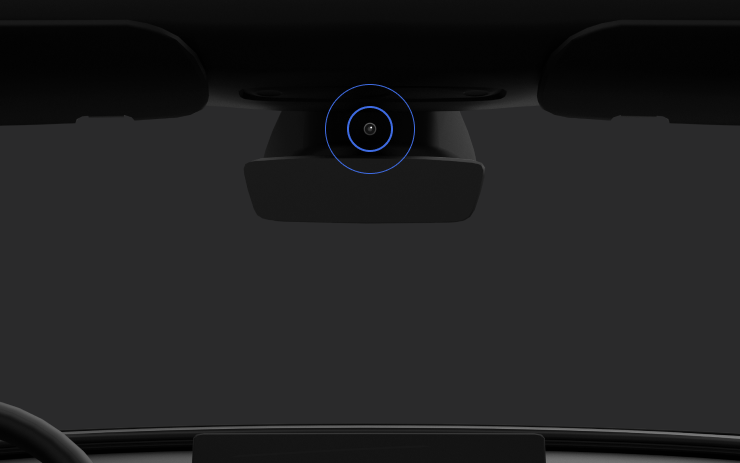
This isn't Tesla's first pass at driver monitoring — the cabin camera above the rearview mirror has been watching for inattentiveness since the 2021.15.11 update back in May 2021. But the explicit labeling of a distinct "Vision-Based" system suggests Tesla is formalizing and likely expanding what the camera tracks. According to verified sources, the current system already monitors eye gaze, head position, and steering inputs in real time, and can detect whether a driver is holding a handheld device. Repeated inattention triggers escalating warnings and can result in a "Strikeout" — suspending FSD (Supervised) for roughly one week.
The timing of this detection is notable. Recent FSD versions, including v14.3.1 and v14.3.2, have brought upgrades to the neural network vision encoder and reinforcement learning pipeline. Separately, software update 2026.8.6 quietly expanded the cabin camera's capabilities to include facial analysis for age estimation — a feature currently running in the background, not yet surfaced to drivers, but believed to be groundwork for Robotaxi operations that would prevent underage users from engaging autonomous driving. A dedicated "Vision-Based Attention Monitoring" label appearing now fits squarely into that trajectory.
For owners using FSD (Supervised) daily, the practical implication is straightforward: Tesla's cabin camera is getting smarter, not just more strict. The system runs entirely on-device — Tesla states that cabin camera images do not leave the vehicle by default and that no facial recognition or identity linking is performed. Hardware-wise, it operates on HW3 and HW4 vehicles with Intel or Ryzen MCUs, which covers the vast majority of the active fleet. Whether this specific feature string represents a coming UI change, a backend sensitivity adjustment, or a prerequisite for a future Robotaxi rollout remains to be seen — but Teslascope's detection suggests it's already present in at least some builds.

Marcus covers Tesla's software releases, FSD rollouts, and OTA changes. Background in automotive engineering. Based in Austin.
Sources verified at publish time. Spotted an inaccuracy? Email editorial@basenor.com.