The Tesla Semi is doing something the company's cars took years to achieve: it's not just competing in its market — it's redefining the terms of the competition. New data out of California's state incentive programs, combined with a glowing New York Times review published this week, paints a picture of a commercial vehicle that trucking operators are betting on in a serious way.

The Numbers That Tell the Story
California trucking firms have submitted subsidy applications to purchase more than 1,200 Tesla Semi trucks through the state's incentive programs — a figure that exceeds the total applications for every other electric truck manufacturer combined since California's program launched in 2019. That's not a narrow lead. That's a category-defining gap.

At the Semi's Long Range price of $290,000, those 1,200+ applications represent roughly $350 million in potential sales from California alone. To put that in further context: between January 2025 and February 2026, the Tesla Semi accounted for 965 of 1,067 applications in California's Clean Truck & Bus Voucher program — competitors like Daimler, PACCAR, and Volvo split the remaining 102 applications between them.
| Metric | Figure |
|---|---|
| CA subsidy applications for Tesla Semi | 1,200+ |
| All other EV trucks (since 2019) | Fewer than 1,200 |
| HVIP vouchers issued for Tesla Semi | $172M value |
| Semi applications (Jan 2025–Feb 2026) | 965 of 1,067 total |
| Estimated sales value (1,200 units) | ~$350M |
| Long Range model price | $290,000 |
| Estimated range | 500 miles |
| Mass production start | April 29, 2026 |
| Gigafactory Nevada capacity (annual) | 50,000 trucks |
| Analyst delivery forecast (2026) | 5,000–15,000 units |
Large Orders Are Already Flowing
The subsidy applications aren't just abstract interest — they're backed by real purchase commitments. WattEV, a California-based electric freight operator, placed an order for 370 Tesla Semis valued at approximately $100 million, described as the largest single electric truck order in California history. The first 50 units are slated for delivery in 2026, with the full fleet operational by end of 2027. Separately, port trucking operators Big F Transport and NICA Container Freight Line collectively ordered 60 Semis through Forum Mobility.
These aren't speculative reservations. They're operational fleets being planned around a vehicle that only entered mass production on April 29, 2026, at Tesla's dedicated 1.7-million-square-foot facility at Gigafactory Nevada — designed for an annual capacity of 50,000 trucks. Analysts currently project 2026 deliveries of between 5,000 and 15,000 units as the production ramp builds.
California's Incentive Stack Makes the Math Work
A key driver of this demand is California's layered subsidy structure, which significantly reduces the Semi's $290,000 sticker price for qualifying operators. The existing Hybrid and Zero-Emission Truck and Bus Voucher Incentive Program (HVIP) offers vouchers ranging from $84,000 to $351,000 per vehicle depending on operator type and fleet size. According to state data, over $200 million in HVIP funding remains available.
On top of that, California launched a new Clean Fuel Reward (CCFR) program on May 13, 2026, with applications opening June 26. The CCFR offers rebates of $7,500 to $120,000 per vehicle, with $250 million allocated for 2026 and over $1 billion committed through 2030. For fleet operators running the numbers, the combination of fuel savings, lower maintenance costs, and available subsidies is making the Semi's total cost of ownership increasingly difficult to argue against.
The NYT Verdict
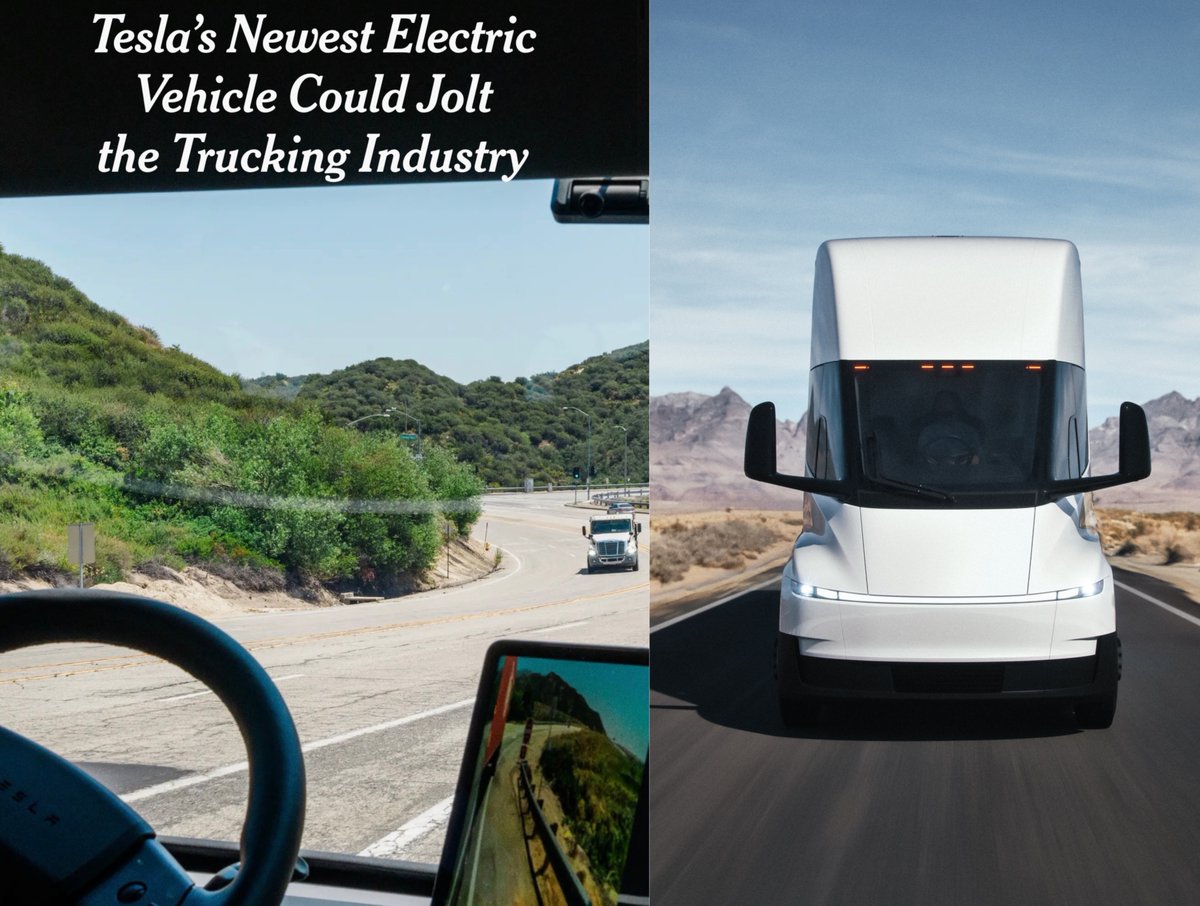
The demand data lands alongside a significant piece of mainstream media validation. The New York Times published a review this week describing the Semi as a "much-needed hit" for Tesla and suggested it "could shake up the staid business of truck manufacturing in the same way that Tesla's cars upended the auto industry." For a vehicle category that has historically been resistant to disruption — where buying decisions are driven by total cost of ownership, reliability, and dealer service networks rather than consumer enthusiasm — that kind of mainstream endorsement carries weight with fleet managers who need cover for unconventional procurement decisions.
The production ramp is still in its early stages, and whether Tesla can fulfill this surge of demand at scale remains the open question. But the signal from California is unambiguous: when trucking operators are given a financially viable path to electrification, the Tesla Semi is the vehicle they're choosing — by a margin that leaves the competition looking like an afterthought.

David covers the EV industry, regulatory developments, and accessory ecosystem. 15+ years writing about consumer tech. Based in London.
Sources verified at publish time. Spotted an inaccuracy? Email editorial@basenor.com.