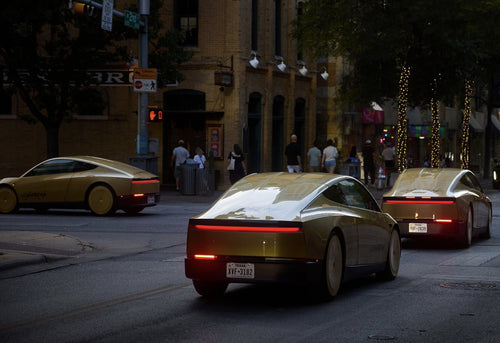
The News: Tesla has opened its first true 500 kW V4 Supercharger on the East Coast, in Kissimmee, Florida — bringing the total U.S. count of 500 kW-capable stations to four.
Why It Matters: For Tesla owners and NACS-compatible EV drivers in the eastern U.S., this marks the beginning of genuinely next-generation charging infrastructure becoming accessible — not just a West Coast perk.
Source: @SawyerMerritt on X
Tesla's 500 kW V4 Supercharger Network Reaches 4 U.S. Locations — East Coast Finally Gets Its First
Tesla's rollout of true 500 kW V4 Supercharging stations just reached a meaningful milestone. As of this week, there are now four locations across the United States capable of delivering up to 500 kW of charging power — and critically, the East Coast is no longer left out. The newest station, in Kissimmee, Florida (near Orlando), opened March 19, 2026, and it's the first of its kind on the entire eastern seaboard.

📊 Key Figures
| Metric | Value | Context |
|---|---|---|
| Max Charging Speed | 500 kW | ~2× V3 peak |
| Stalls at Kissimmee | 8 | All 500 kW capable |
| Tesla owner rate (peak) | $0.40/kWh | $0.20/kWh off-peak |
| Non-Tesla EV rate (peak) | $0.56/kWh | $0.28/kWh off-peak (~40% premium) |
| Cabinet total output | 1.2 MW | Serves up to 8 dispensers |
| Voltage range supported | 400–1,000 V | Supports 800 V architecture |
| Total U.S. 500 kW stations | 4 | As of March 19, 2026 |
The Four Stations: Where They Are and When They Opened
Tesla's 500 kW V4 Supercharger rollout has been deliberate and geographically strategic. Here's the full picture of what's live right now:
🔌 U.S. 500 kW V4 Supercharger Locations
| Location | Opened | Stalls |
|---|---|---|
| Kissimmee, Florida 🆕 | March 19, 2026 | 8 |
| Nashville, Tennessee | Recently (March 2026) | 8 |
| Taylorsville, Utah | January 23, 2026 | 8 active (16 posts) |
| Redwood City, California | September 29, 2025 | — |

What Makes a V4 Supercharger Different?
The term "V4" gets used loosely, so it's worth being precise. A true 500 kW V4 station uses a single power electronics cabinet capable of delivering 1.2 MW total output across up to eight dispensers. That's double the stall count of a V3 cabinet and nearly double the per-stall peak speed — V3 tops out at 250 kW per stall under ideal conditions.
The voltage range is also significant: V4 cabinets operate at 400–1,000 volts, meaning they natively support 800 V battery architectures found in newer vehicles. For today's Tesla fleet, which operates at 400 V, the practical charging speeds will depend on each vehicle's onboard charge controller — but the infrastructure ceiling is now dramatically higher, future-proofing these stations for next-generation Tesla hardware.
There's also a manufacturing shift worth noting: Tesla's Gigafactory New York concluded V3 Supercharger cabinet production on March 16, 2026, after producing over 15,000 units across seven years. The Buffalo factory has fully transitioned to ramping V4 cabinet manufacturing. That's a clear signal — V4 is no longer a pilot program. It's the production standard.
Pricing: Tesla Owners vs. Everyone Else
The Kissimmee station is open to all NACS-compatible vehicles, not just Teslas. But the pricing structure makes Tesla ownership clearly advantageous. Tesla owners pay $0.20/kWh off-peak and $0.40/kWh at peak — already competitive with home charging in many Florida markets. Non-Tesla EVs pay $0.28–$0.56/kWh, roughly a 40% premium across the board.
For context, the Taylorsville, Utah station charges Tesla drivers $0.27–$0.37/kWh and non-Tesla EVs $0.38–$0.52/kWh, suggesting Tesla is applying a consistent pricing philosophy across its 500 kW network: open access, but with a meaningful loyalty discount baked in.
🔭 The BASENOR Take
Timeline: First 500 kW station (Redwood City) opened September 2025 → four stations by March 2026. That's a slow build, but the pace is clearly accelerating — two new stations opened within weeks of each other in March alone.
Impact Level: 🟡 Medium now, 🟢 High within 12 months. Four stations is a proof-of-concept footprint. The real inflection point comes when V4 deployments number in the dozens and cover major interstate corridors.
Confidence: High — multiple confirmed openings, verified pricing data, and the Gigafactory NY transition to V4 production all point in the same direction.
The bigger picture: Tesla isn't just upgrading charging speeds — it's rebuilding the economics of its Supercharger network. At a target cost under $40,000 per stall and 1.2 MW of output per cabinet, V4 stations are more cost-efficient to deploy than V3 at scale. Combined with NACS revenue from non-Tesla EVs, these stations become profit centers, not just owner amenities. The East Coast opening in a high-tourism market like Kissimmee/Orlando is no accident — it's exactly the kind of location where charging throughput and non-Tesla revenue potential are highest.
📰 Deep Dive
The geographic sequencing of Tesla's 500 kW rollout tells a deliberate story. Redwood City was the engineering validation site — close to Tesla's California engineering teams for rapid feedback. Taylorsville added a Mountain West data point. Nashville and Kissimmee, opening in close succession, suggest Tesla has moved past validation and into strategic deployment. Florida and Tennessee are high-traffic, high-tourism states where fast turnaround at charging stalls directly translates to revenue and owner satisfaction.
For owners planning road trips along the I-95 or I-4 corridors, Kissimmee is a genuinely useful addition — not just a symbolic milestone. The off-peak rate of $0.20/kWh for Tesla owners is particularly compelling for anyone who can time their stop during lower-demand hours. With 8 stalls and 500 kW capability, wait times at this station should be minimal even during peak Florida tourism seasons.
The broader implication of Gigafactory New York's full pivot to V4 cabinet production is that the supply constraint on new 500 kW deployments is being actively addressed. V3 production ran for seven years and produced over 15,000 units — the backbone of the current Supercharger network. As V4 manufacturing ramps, expect the pace of 500 kW openings to accelerate significantly through 2026 and into 2027. For charging news followers, this is the year the V4 era genuinely begins.
Related Gear
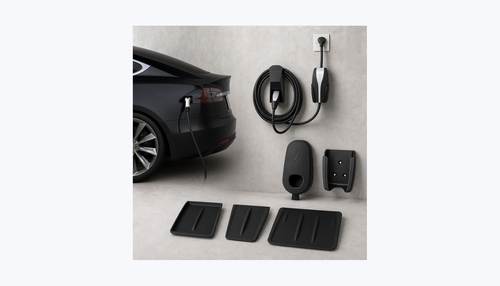
Gear up your Tesla with tested, custom-fit BASENOR accessories — shop Tesla accessories →
Sources & reporting notes
The links below identify the material source records used for this report.
- @SawyerMerritt on X (2026-03-19T23:54:57.000Z) — Direct source
- @SawyerMerritt on X (2026-03-19T23:40:12.000Z) — Direct source
Source links are preserved as published or accessed. See our editorial standards and corrections policy.
The BASENOR Editorial Desk covers Tesla, SpaceX, and related technology, curating reporting from primary sources — official accounts, regulatory filings, and software release data. Every article passes source-record and fact-checking review before publication. About the newsroom.
This report was curated by the BASENOR Editorial Desk from the sources listed above. Read our editorial standards or email editorial@basenor.com to report an error.