📌 UPDATE — March 19, 2026
xAI has taken the next step beyond the TTS API: Grok Voice Mode is now live on X for Android and web. This brings real-time voice interaction directly into the X platform, letting everyday users — not just developers — speak with Grok without any API integration required. The rollout was confirmed by the official @X account, which cheekily asked users if they'd said "thank you" to Grok yet.
@X · March 19, 2026"have you said thank you to Grok yet? voice mode now live on X for Android and web"

❤️ 702 · 🔁 115 · 👁️ 49,250
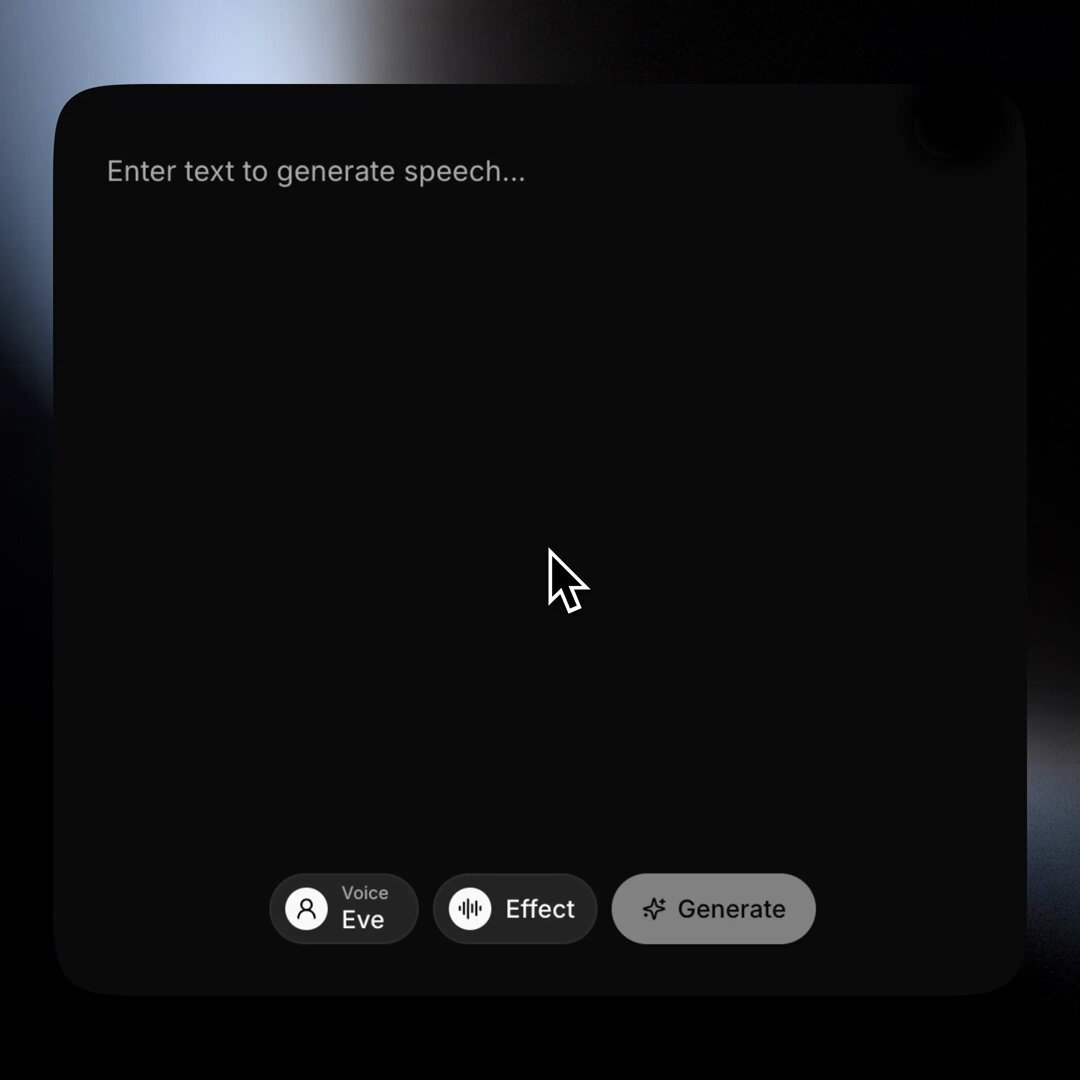
The News: xAI has officially launched its Grok Text-to-Speech (TTS) API, giving developers access to natural, expressive voice synthesis with fine-grained control over delivery and tone.
Why It Matters: Grok is already embedded across Tesla's ecosystem — this API opens the door for richer, more natural voice interactions in third-party apps and, potentially, future Tesla software integrations.
Source: @xai on X — March 16, 2026
xAI Launches Grok Text-to-Speech API: 5 Voices, 20+ Languages, and Expressive Controls for Developers
xAI's Grok just got a significant new capability. On March 16, 2026, xAI officially opened its Grok Text-to-Speech (TTS) API to developers — a move that meaningfully expands what Grok can do beyond text generation and into the realm of natural, expressive audio. For anyone building voice-enabled apps, or watching how Grok's capabilities might eventually feed back into Tesla's own software stack, this is worth paying close attention to.

📊 Key Figures
| Metric | Value | Context |
|---|---|---|
| Available Voices | 5 (Ara, Eve, Leo, Rex, Sal) | Each with distinct character and tone |
| Language Support | 20+ languages auto-detected | BCP-47 code support for consistent output |
| Output Formats | MP3, WAV, PCM, G.711 μ-law, G.711 A-law | Broad compatibility across platforms |
| Expressive Controls | Inline speech tags | Pauses, laughter, whispers, emphasis |
| Launch Date | March 16, 2026 | Available to developers immediately |
What the Grok TTS API Actually Does
At its core, the Grok TTS API converts written text into spoken audio — but the implementation details are what make it interesting. Developers aren't just getting a basic text-to-speech engine. They're getting a system with five distinct voices (Ara, Eve, Leo, Rex, and Sal), each designed to sound natural rather than robotic, and a set of inline speech tags that let you program specific emotional or stylistic qualities directly into the output.
Want a pause at a dramatic moment? Tag it. Need a line delivered as a whisper for a meditation app? Tag it. Building something that requires a laugh at a specific point? That's in there too. This level of expressive control is what separates a usable TTS API from one that actually enables compelling user experiences.
On the language side, the API auto-detects the input language and processes over 20 languages natively. Developers who need deterministic, consistent output can specify a BCP-47 language code directly — a practical feature for production applications serving global audiences.
Audio output is flexible: MP3, WAV, PCM (Linear16), G.711 μ-law, and G.711 A-law are all supported, meaning the API can slot into virtually any audio pipeline without format conversion headaches.
🔭 The BASENOR Take
Timeline: Launched March 16, 2026 — available to developers immediately via the xAI API.
Impact Level: 🟡 Medium-term significance for Tesla owners / High immediate significance for developers
Confidence: ✅ High — confirmed directly by @xai official account with documentation link
Here's the bigger picture: xAI isn't building Grok in isolation. Grok is already the AI engine behind Tesla's voice assistant on newer vehicles, and every capability xAI adds to its API ecosystem is a capability that can — and likely will — find its way into Tesla's software over time. A TTS API with expressive, natural voices is exactly the kind of building block that could eventually replace the flat, synthetic voice responses Tesla owners currently hear when interacting with their cars.
The five-voice lineup (Ara, Eve, Leo, Rex, Sal) also suggests xAI is thinking about personalization. If Tesla were to integrate these voices into the vehicle UI, owners could conceivably choose how their car sounds when it speaks to them — a small but genuinely pleasant quality-of-life upgrade that competitors have already started exploring.
For now, this is a developer-facing launch. The immediate beneficiaries are app builders who want to add high-quality voice output to Grok-powered products — think AI companions, accessibility tools, content creation apps, and interactive experiences. But the infrastructure being built here matters for the longer arc of where Grok goes inside Tesla's ecosystem.
The multilingual support is also worth flagging. Tesla operates in dozens of markets globally, and a TTS system that handles 20+ languages with auto-detection removes a significant friction point for international deployments. If this capability flows into Tesla's voice assistant, it would represent a meaningful improvement for non-English-speaking owners who have historically gotten a worse experience from in-car AI features.
📰 Deep Dive
The launch of the Grok TTS API is a deliberate step in xAI's strategy to build a full-stack AI platform — not just a chatbot. By offering text generation, reasoning, image understanding, and now voice synthesis through a unified API, xAI is positioning Grok as infrastructure rather than a standalone product. That's a fundamentally different competitive posture, and it has real implications for how deeply Grok can embed itself into third-party products and Tesla's own software roadmap.
The expressive controls deserve particular attention. Inline speech tags — covering pauses, laughter, whispers, and emphasis — indicate that xAI is targeting use cases where emotional authenticity matters. Generic TTS systems produce audio that sounds technically correct but emotionally flat. The tag system is an attempt to close that gap without requiring developers to manually splice audio or use complex prosody markup languages. For Tesla specifically, this kind of expressiveness could make voice interactions feel less like querying a database and more like talking to something genuinely responsive.
The breadth of supported audio formats (MP3, WAV, PCM, G.711 variants) is a signal that xAI is serious about enterprise and telephony use cases, not just consumer apps. G.711 formats are the standard for traditional phone networks — their inclusion suggests xAI is actively courting call center, IVR, and telecommunications integrations. That's a much larger addressable market than consumer AI apps, and it signals commercial ambition well beyond the Tesla ecosystem.
For Tesla owners watching the AI roadmap: this is the kind of foundational capability that doesn't make headlines the way a new FSD version does, but quietly shapes what's possible in future software updates. The question isn't whether Grok's voice capabilities will eventually show up in your Tesla — it's when, and in what form. Check our FSD coverage for the broader picture of how AI is reshaping the Tesla driving experience.
Sources & reporting notes
The links below identify the material source records used for this report.
- @xai on X (2026-03-16T18:51:27.000Z) — Direct source
- @X on X (2026-03-19T17:01:38.000Z) — Direct source
Source links are preserved as published or accessed. See our editorial standards and corrections policy.
The BASENOR Editorial Desk covers Tesla, SpaceX, and related technology, curating reporting from primary sources — official accounts, regulatory filings, and software release data. Every article passes source-record and fact-checking review before publication. About the newsroom.
This report was curated by the BASENOR Editorial Desk from the sources listed above. Read our editorial standards or email editorial@basenor.com to report an error.