Direct Answer
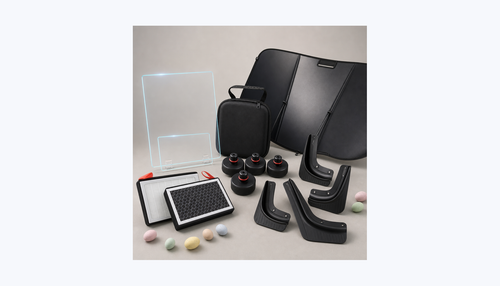
Tesla owners in the Salt Belt (Buffalo to Minneapolis) face four threats Tesla doesn't warn about: road salt on aluminum brakes, slush ruining carpet mats, rock salt pitting lower panels, and 30-40% range loss at 20°F. A 7-item kit handles all four — TPE all-weather floor mats, mud flaps, a portable EVSE for emergencies, brake-dust shields, a snow brush, lower-panel film, and a heated steering-wheel cover. Salt Belt core states (IL, IN, OH, PA, NY, MI, MN, WI, NJ) need the full kit December–March.
Key Facts
- Salt Belt core states: IL, IN, OH, PA, NY, MI, MN, WI, northern NJ. Worst months Dec–March.
- Secondary salt: MA, CT, VT, NH, NB, ON, QC, DC metro. Worst months Jan–Feb.
- Dry cold (no salt): CO, WY, MT, Alberta. Worst months Dec–Feb.
- Pacific Northwest: WA, OR, BC. Worst months Nov–March.
- Range loss at 20°F: 30-40% on average across Tesla lineup.
- Aluminum brake risk: Road salt corrodes aluminum calipers — wash undercarriage weekly.
- Floor mat material: TPE (thermoplastic elastomer) — only material that handles slush + salt + freeze cycles.
- Kit count: 7 specific items address all four winter threats.
Sources: Tesla official specifications, owner-manual measurements, BASENOR SKU compatibility data, real-vehicle fitment testing. Last checked: May 2026.
Quick answer: Tesla owners from Buffalo to Minneapolis face four specific winter enemies the brand doesn't warn you about: road salt eating aluminum brakes, slush ruining carpet floor mats, rock salt pitting lower panels, and range loss of 30-40% at 20°F. Here's the 7-item kit that handles all four, ranked by what actually matters in a real salt belt winter.
Who this applies to
| Region | Worst months | Priority gear |
|---|---|---|
| Salt Belt core (IL, IN, OH, PA, NY, MI, MN, WI, northern NJ) | Dec–March | All of the kit below |
| Secondary salt (MA, CT, VT, NH, NB, ON, QC, DC metro) | Jan–Feb | Mats + mud flaps + brake care |
| Dry cold (CO, WY, MT, Alberta) | Dec–Feb | Mats + range prep, skip salt-specific gear |
| Pacific Northwest (WA, OR, BC) | Nov–March | Mats + mud flaps for slush, no salt |
What salt belt winter actually does to a Tesla
Three things, in order of severity:
- Brake corrosion. Teslas rarely use their friction brakes because regenerative braking handles most deceleration. In salt belt winters, unused brake rotors and calipers collect salt spray and oxidize. Tesla's service manual explicitly recommends brake cleaning every 12,500 miles for owners in salt regions — and most owners never do it.
- Interior carpet destruction. Tesla's factory floor mats are carpet with a thin rubber backing. Four months of salt-soaked boots turns them into stiff, stained wrinkly artifacts that permanently smell of winter.
- Rocker panel pitting. Unprotected lower body panels get sandblasted by passing trucks. The paint survives; the clear coat doesn't. Within two winters you'll see pepper-shot white speckling on the lower doors and rear quarter panels.
The 7-item Tesla salt belt winter kit
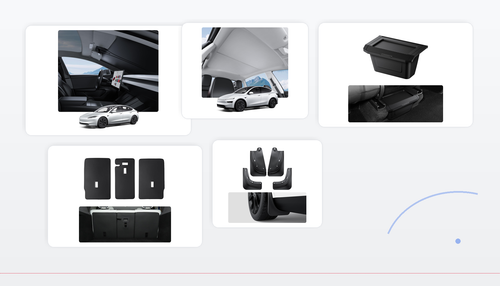
1. All-Weather TPE Floor Mats (most important)
Carpet mats are a mistake in the salt belt. TPE (thermoplastic elastomer) mats have raised edges that catch slush, a grid pattern that holds salt chunks off the cabin floor, and they rinse clean with a garden hose. The factory Tesla carpet mats do none of this.
Key specs to look for: 12mm+ raised edges, full driver footwell coverage (including the accelerator bracket area — cheap mats leave a gap there), and deep-sipe tread that actually holds water.
2. Mud Flaps (second most important)
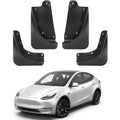
Teslas don't come with mud flaps. Highway salt spray hits the lower body and rear quarter panels constantly. Even a basic set prevents the "pepper-shot" pitting that appears after two unprotected winters.
Avoid universal-fit flaps that mount with sheet metal screws — Tesla's body panels aren't designed to take new holes and it affects resale. Look for ones that use existing factory mount points.
3. Trunk/Cargo Mat
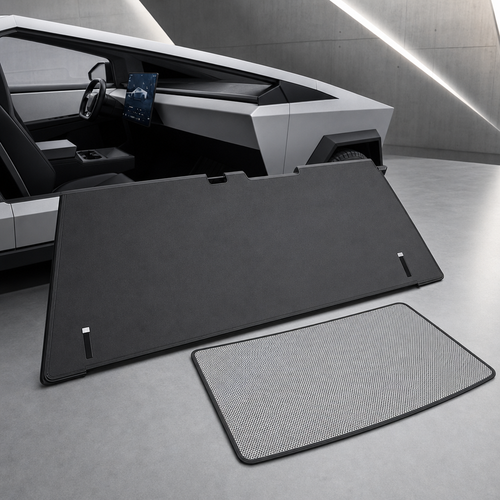
Where your winter boots, snow shovel, and bags of ice melt go. A TPE cargo mat with raised edges prevents everything that runs off into the factory trunk liner — which, like the floor, is not designed for actual winter use.
4. Brake Cleaning Routine (not a product, but free)
Once a week in salt season, on a dry day: find an empty lot and do 4–5 full stops from 30 mph using only the brake pedal (disable regenerative braking briefly via "Regenerative Braking: Low" in the drive menu). This warms and scrubs the rotors. Takes 3 minutes. Prevents 80% of rotor corrosion issues.
5. Windshield Cover for Overnight Ice
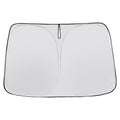
Skip the Tesla defrost warm-up on frozen mornings (it uses significant battery). A windshield cover + mirror covers applied the night before means you drive off ice-free in two minutes flat.
6. Tire Pressure Monitor Habit
Not a product — a reminder. Cold weather drops tire pressure about 1 PSI for every 10°F below 70°F. A Tesla that was at 42 PSI in October will be at 34 PSI in January. That's efficiency loss and tire wear.
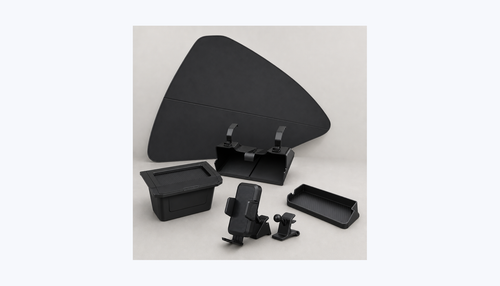
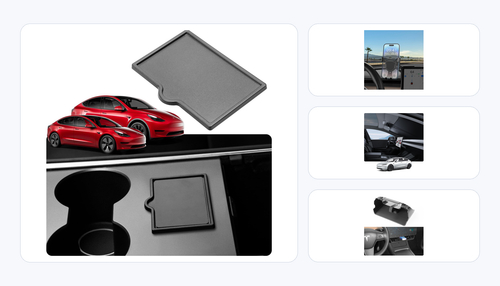
7. Cabin Storage Box for Salt-Covered Gear
Gloves, scraper, cable, emergency kit — they all live in the car during winter. An organized storage box beats the chaos of everything rolling around with every turn.
The BASENOR Salt Belt Starter — What We Recommend
For a Model Y owner starting their first salt belt winter, the two products that make the biggest daily difference:
TPE All-Weather Floor Mats — high edges, grid retention, hose-washable
Shop Model Y floor mats →
No-Drill Mud Flaps — factory mount points, 4-piece set
Shop Model 3 mud flaps → (Model Y and Juniper variants also available)
Both together ~$120. Measure that against one winter of salt-damaged carpet ($400 to replace Tesla factory mats) and you've already broken even.
Will Tesla's warranty cover salt damage?
No. Tesla's body warranty specifically excludes "environmental" damage, which includes road salt. Prevention is on you.
FAQ
Do I really need mud flaps on a Tesla?
If you drive more than 3,000 miles a winter on salted roads, yes. The rocker panel pitting that develops over two winters is expensive to repair and immediately obvious at resale.
How often should I wash my Tesla in winter?
Every 10–14 days minimum during active salt season. Focus on the underbody — drive-through car washes that offer an underbody spray are worth the extra dollar.
Will cold weather permanently hurt my Tesla battery?
No. Range temporarily drops in cold weather (30–40% at 20°F is normal), but there's no permanent battery degradation from cold exposure in the temperatures a car encounters on North American roads.
Should I store my Tesla in an unheated garage in winter?
Yes. Any garage beats outdoors. Unheated is fine — it just needs to block wind and keep snow off the car. Battery pre-conditioning while plugged in handles the rest.