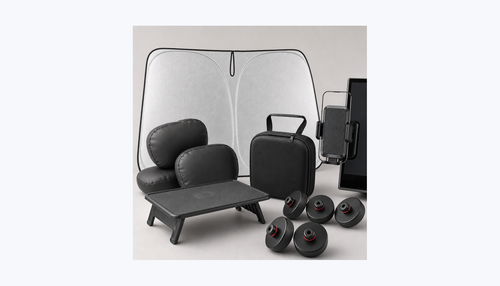
BASENOR Testing Lab · Owner buying checklist
Before You Buy Tesla Accessories: 7 Checks We Use in the BASENOR Lab
Premium Tesla accessories are worth it only when they pass fitment, safety, warranty, material, and installation checks. Use this guide before you buy anything that touches trim, glass, charging gear, lift points, sensors, or the cabin.
Bottom Line Up Front
Check fitment before brand. The right question is not "does this fit Tesla?" It is whether the product matches your exact model, generation, year range, and mounting area.
Skip anything that interferes with airbags, sensors, steering controls, lift points, charging cables, or factory seals. A premium look is not enough if the install path creates risk.
Use warranty nuance correctly. The FTC says aftermarket parts do not automatically void a warranty, but Tesla warranty language still matters when damage is caused by installation, modification, or failure to follow owner documentation.
1. Ask for generation-level fitment proof
Tesla accessory shopping gets messy because product pages often compress several cars into one label. "Model 3/Y" can mean a universal cabin organizer, or it can hide important differences between legacy Model 3, Model 3 Highland, legacy Model Y, Model Y Juniper, Model S, Model X, and Cybertruck.
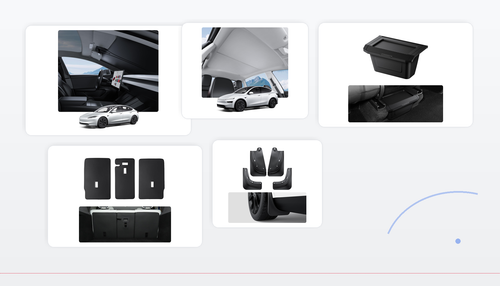
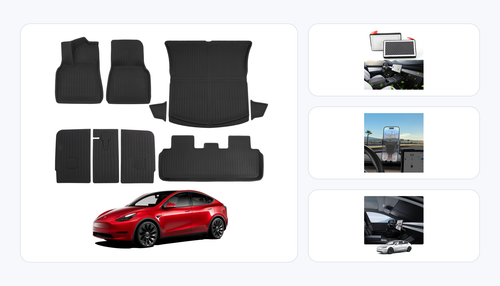
Our first buying check is simple: the product must state the model and year range it supports, then the shape or mounting point must make sense. Floor mats, sunshades, trunk liners, center-console inserts, screen protectors, and cargo organizers are not judged by vibes. They are judged by edge shape, clip location, trim clearance, sensor clearance, and whether the part can sit flush without forcing the factory panel.
For broad accessories like jack pads, trash cans, or charging cable organizers, multi-model fit can be legitimate because the product does not need to trace a cabin panel. For fitted accessories, broad labels deserve more scrutiny. If a seller uses one photo for every model and does not show the exact installed area, treat that as a reason to pause.
For a deeper model-by-model boundary, use our Tesla fitment guide before buying fitted trim, mats, or storage parts.
2. Separate "aftermarket is allowed" from "bad installation is safe"
A common myth says any aftermarket accessory voids a vehicle warranty. That is too broad. The Federal Trade Commission explains that aftermarket or recycled parts do not automatically void a warranty. The practical risk is causation: if an accessory or its installation causes damage, the repair tied to that damage can become a problem.
Tesla's New Vehicle Limited Warranty also frames exclusions around damage caused by installation, modification, non-genuine parts, or failure to follow owner documentation. That is why the safest premium accessories are reversible, non-invasive, and clear about where they mount.
Before buying, put the product into one of three risk tiers:
| Risk tier | Examples | Buying rule | What to verify |
|---|---|---|---|
| Low | Trash can, organizer tray, removable sunshade | Usually safe if it cannot block controls | Clearance, cleaning, removal |
| Medium | Jack pads, cabin filters, wall cable holders | Buy only with clear install steps | Lift point, airflow direction, wall mounting |
| High | Steering wheel add-ons, wiring taps, sensor-adjacent covers | Skip unless documentation is excellent | Airbag, sensor, electrical, legal limits |
Airbag-zone products deserve special caution. The Associated Press reported on an NHTSA warning after a driver was hurt by metal pieces from an aftermarket steering-wheel decal during airbag deployment. We use that as a hard rule in our lab: decoration near an airbag is not a harmless cosmetic upgrade.
3. Match the material to the job
"Premium" should describe the material choice and the manufacturing fit, not just the finish. Tesla owners often pay more for an accessory because it looks cleaner than a generic part. That can be worth it, but only if the material solves the right problem.
TPE
Best for protective parts that need shape memory, weather resistance, and easy cleaning. We like it for lift-point pads, mats, liners, and maintenance protection.
TPU and silicone
Best for soft contact, grip, and waterproof cabin use. Check whether the product attracts dust, feels sticky in heat, or can be cleaned without leaving residue.
ABS with textured finish
Best for rigid trim, trays, and organizers. Use "carbon fiber texture" language carefully; most affordable trim is textured ABS with a realistic carbon fiber look, not woven carbon composite.
Tempered glass
Best for screen protection. Confirm edge coverage, coating, installation dust control, and whether the product works with the screen's touch sensitivity.
The material test also protects you from overbuying. A daily trash can does not need aerospace language. It needs waterproof construction, a stable mount, and a lid or shape that does not spill under braking. A cabin filter does not need a luxury finish. It needs correct airflow, sealed edges, and clear replacement timing.
4. Avoid accessories that create a new problem
The best accessory disappears into the car's routine. A weak one forces you to work around it every day. Before buying, ask whether the part makes cleaning harder, blocks a storage area, rattles on rough roads, changes charging cable strain, or adds an edge that passengers hit with knees, shoes, bags, or pets.
This is why we do not recommend buying a full cabin bundle blind. Build from the owner's highest-friction use case: heat, charging, kids, pets, ride-share cleaning, road trips, maintenance, or protection in winter climates.
5. Five BASENOR examples and what to check before buying
These are not ranked "best accessories." They are representative product families that show how we evaluate premium Tesla accessories before recommending them.

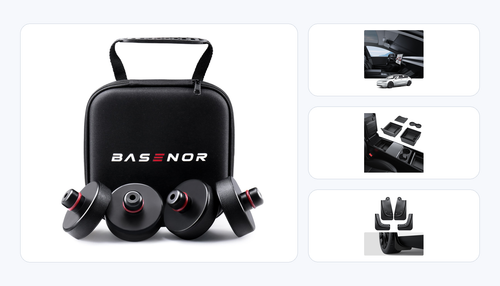
Jack pads: verify lift-point protection
A jack pad is a small part with a high consequence. Check lift-point shape, TPE density, storage case, and whether the puck stays seated before any tire or service work.
View jack pads
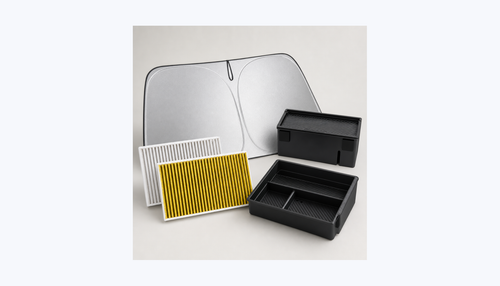
Cabin filters: verify timing and airflow
Do not replace a new-car filter immediately just because it sounds premium. Use cabin smell, dust, pollen season, and service timing to decide when replacement makes sense.
View cabin filters
Sunshades: verify coverage and storage
Heat accessories must be easy enough to use daily. Check glass coverage, foldability, storage bag size, and whether the shade interferes with dash visibility.
View windshield shade
Cabin organizers: verify motion and cleaning
A cabin trash can should not become loose cargo. Check mount stability, waterproofing, lid access, passenger knee room, and whether it can be emptied quickly.
View cabin trash can
Charging cable organizers: verify wall load and cable strain
A garage accessory can protect the cable only if it is mounted into the right surface and does not bend the cable sharply. Check hardware, wall material, reach from the Wall Connector, and whether the cable hangs naturally.
View Wall Connector cable organizer6. Use reviews for failure modes, not just star ratings
Star ratings tell you whether buyers were generally happy. They do not tell you whether the product will solve your specific problem. Read reviews for failure modes: edge lift, adhesive failure in heat, rattles, unclear instructions, fitment gaps, odor, hard-to-clean texture, cable drag, and whether the part still looks good after a month of use.
For BASENOR's internal checks, we turn those review clues into yes/no buying questions. Can the product be removed without damage? Does it have enough photos to verify fit? Are the dimensions clear? Does it show the exact generation? Does it avoid airbag and sensor zones? Would a new owner understand the installation without guessing?
If the answer is not clear, the product needs better documentation before it deserves a premium price.
7. When to skip a Tesla accessory even if it looks useful
Skip the accessory if it solves a problem you do not have yet. New owners often buy too many cabin pieces in the first week, then discover the actual friction point is charging storage, summer heat, kids' seat backs, pets, or road-trip cargo organization.
Skip anything with unclear installation near airbags, steering controls, cameras, ultrasonic areas, seat tracks, pedals, charging hardware, or lift points. Skip a fitted product when the seller cannot show your exact generation. Skip decorative trim if the only proof is a studio render and the install depends on adhesive over a high-touch factory surface.
And skip a "premium" product that cannot explain why its material is right for the job. TPE, TPU, silicone, ABS texture, and tempered glass all have good uses. None of them is automatically better everywhere.
If you are building a first upgrade list, start with the broad Best Tesla Accessories guide, then narrow by model, driving climate, family use, charging setup, and the parts of your car that are actually getting dirty, hot, scratched, or disorganized.
Sources we used
- Federal Trade Commission: Auto Warranties and Auto Service Contracts - aftermarket and recycled parts do not automatically void a warranty.
- Tesla New Vehicle Limited Warranty - warranty exclusions around damage caused by installation, modification, non-genuine parts, or failure to follow owner documentation.
- Associated Press: NHTSA warning on steering-wheel decals - airbag-zone accessories can become a safety risk during deployment.
FAQ
Do aftermarket Tesla accessories void the warranty?
Not automatically. The FTC says aftermarket parts do not automatically void a warranty, but damage caused by an accessory or its installation can still create a claim issue. Choose reversible products with clear fitment and installation documentation.
What Tesla accessories should new owners buy first?
Start with the problem you already have: heat, charging cable storage, floor protection, cabin organization, pet or kid mess, or maintenance prep. Avoid buying a full bundle before you know your daily friction points.
How do I know if a Tesla accessory fits my exact model?
Look for a specific model and year range, installed photos, and shape details that match your generation. Fitted parts should identify Model 3 Highland, Model Y Juniper, legacy Model Y, Cybertruck, Model S, or Model X when relevant.
Are premium Tesla accessories worth the higher price?
They are worth it when the higher price buys better fitment, safer installation, clearer documentation, more durable material, and fewer daily tradeoffs. They are not worth it when the only upgrade is a studio photo or a vague material claim.
Which Tesla accessories should I avoid?
Avoid anything that can interfere with airbags, steering controls, cameras, sensors, pedals, lift points, charging cables, or factory seals. Also avoid fitted parts that do not show your exact generation.
Ready to buy with less guesswork?
Start with fitment, installation risk, and material purpose. Then choose BASENOR accessories that match your Tesla, your climate, and the way you actually use the car.
Shop Tesla accessoriesLast updated: June 2026 - Added warranty, safety-zone, fitment, and product-documentation checks for Tesla owners comparing premium accessories.

Daniel Zhang
Lead Engineer · Testing & Fit Validation
Mechanical engineer with 10 years in Tier-1 automotive supply. Daniel runs the BASENOR test lab and signs off on every product before launch.