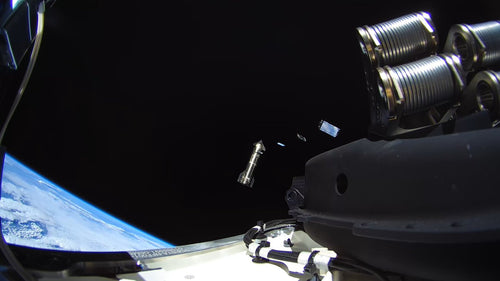
The News: Artemis II is scheduled to launch today, April 1, 2026 at 6:24 p.m. EDT — sending four astronauts around the Moon for the first time since Apollo 17 in December 1972.
Why It Matters: This is the foundational crewed mission that paves the way for future lunar landings — including SpaceX's Starship HLS, which is contracted to put boots on the Moon's surface.
Source: @JoeTegtmeyer on X
Artemis II Launches Today: Humans Return to the Moon's Vicinity After 53 Years
For the first time since December 1972, humans are heading to the Moon's vicinity. Artemis II — NASA's first crewed lunar mission in over half a century — is scheduled to lift off from Kennedy Space Center today at 6:24 p.m. EDT, and the space community is buzzing with the kind of anticipation that only a genuinely historic moment can generate.

Veteran space observer Joe Tegtmeyer captured the mood perfectly: "I can't believe we could be ~7 hours from launching humans back to the moon for the 1st time in 53+ years! Incredibly exciting to see the second golden age of space actually beginning for real." That sentiment is shared across the industry — and for good reason. What happens today sets the trajectory for everything that follows, including SpaceX's role in eventually landing humans on the lunar surface.
📊 Key Figures
| Metric | Value | Context |
|---|---|---|
| Launch Time | 6:24 p.m. EDT | April 1, 2026 |
| Mission Duration | 10 days | Free-return trajectory |
| Crew Size | 4 astronauts | Wiseman, Glover, Koch, Hansen |
| Max Distance from Earth | 252,000 miles | Farthest humans have ever traveled |
| Years Since Last Crewed Lunar Mission | 53+ | Apollo 17, December 1972 |
| SpaceX HLS Contract Value | $2.89 billion | Awarded 2021, for Starship lunar lander |
| Artemis III Target Date | Mid-2027 | Revised Feb 2026; rendezvous/docking tests |
What Artemis II Actually Does — and Doesn't Do
Let's be precise, because the details matter. Artemis II is not a lunar landing mission. The four-person crew — Commander Reid Wiseman, Pilot Victor Glover, Mission Specialist Christina Koch, and Canadian Space Agency astronaut Jeremy Hansen — will fly a free-return trajectory around the Moon and return to Earth over 10 days. Think of it as the Apollo 8 moment of the Artemis program: humans going to the Moon's vicinity to prove the hardware works before anyone steps onto the surface.
What Artemis II will validate is critical: the Orion spacecraft's life support systems, deep-space navigation, communication links, and overall crew performance beyond low Earth orbit. It's also expected to set a record for the farthest distance humans have ever traveled from Earth — 252,000 miles — surpassing the Apollo 13 record set in 1970.
The SLS core stage fueling is confirmed complete, with liquid hydrogen and liquid oxygen at 100%. All systems are go as of this writing.
SpaceX's Role in What Comes Next
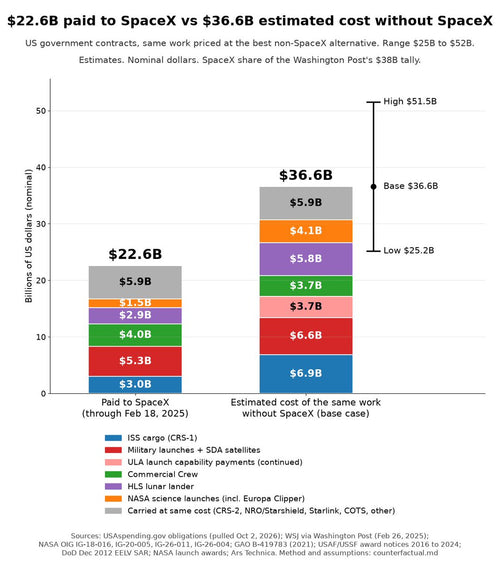
Here's where it gets directly relevant to the SpaceX ecosystem. The Artemis program's lunar landing ambitions run directly through Starship. In 2021, NASA awarded SpaceX a $2.89 billion contract to develop the Starship Human Landing System (HLS) — a modified Starship variant designed to ferry astronauts from lunar orbit down to the surface and back.
Artemis III, currently targeted for mid-2027, has been restructured. Rather than a surface landing, it will now conduct rendezvous and docking tests in low Earth orbit with SpaceX's Starship HLS and Blue Origin's Blue Moon lander, alongside testing of the Axiom Extravehicular Mobility Unit (AxEMU) spacesuit. The comparison to Apollo 9 — which tested the lunar module in Earth orbit before Apollo 10 and 11 pushed further — is apt. The lunar surface landing remains the goal; the path there is just being validated methodically.
It's worth noting that SpaceX's development timeline for Starship HLS has faced delays significant enough that NASA reopened the Artemis III landing module contract competition in October 2025. Blue Origin's Blue Moon is now also in the mix. The race to put boots on the Moon has genuine competition — which, historically, tends to accelerate progress rather than slow it.
🔭 The BASENOR Take
Timeline: Artemis II launch today → 10-day mission → Artemis III rendezvous tests mid-2027 → Lunar surface landing TBD
Impact Level: 🔴 Historic — first crewed lunar mission in 53 years
Confidence in SpaceX HLS Timeline: Moderate — contract competition reopened in Oct 2025 signals pressure, but SpaceX's rapid Starship iteration cadence remains a significant asset
The phrase "second golden age of space" gets thrown around a lot, but today it carries real weight. The original golden age — Mercury, Gemini, Apollo — was driven by geopolitical competition and produced extraordinary results in an extraordinarily short time. What's different now is the commercial layer: SpaceX, Blue Origin, and a constellation of smaller companies are building infrastructure that governments alone never could at this pace or cost.
For the SpaceX-watching community, today's Artemis II launch is a milestone on a longer road. Every successful crewed mission to the Moon's vicinity increases political and programmatic pressure to follow through on the surface landing — and that landing, when it comes, will almost certainly involve Starship in some capacity. The $2.89 billion HLS contract isn't going away; the question is timing and execution.
Watch the 6:24 p.m. EDT launch window closely. If Artemis II performs as designed, the momentum toward a genuine lunar return — and SpaceX's central role in it — becomes significantly harder to slow down. For our full SpaceX coverage, including Starship development milestones, check our dedicated archive.
🚀 Following the Starship program? See every test flight, official outcome and the next launch window in our SpaceX Starship Tracker.
Sources & reporting notes
The links below identify the material source records used for this report.
- @JoeTegtmeyer on X (2026-04-01T15:41:23.000Z) — Direct source
Source links are preserved as published or accessed. See our editorial standards and corrections policy.
The BASENOR Editorial Desk covers Tesla, SpaceX, and related technology, curating reporting from primary sources — official accounts, regulatory filings, and software release data. Every article passes source-record and fact-checking review before publication. About the newsroom.
This report was curated by the BASENOR Editorial Desk from the sources listed above. Read our editorial standards or email editorial@basenor.com to report an error.