📌 UPDATE — March 10, 2026
New details confirm the Tesla Cybercab's camera washing system is capable of simultaneously cleaning multiple cameras — including the side, B-pillar, and rear cameras in a single cycle. It is also highly probable that the front camera is integrated into the same washing functionality, meaning all key vision inputs could be cleaned at once. This simultaneous multi-camera washing capability is a notable engineering detail for a robotaxi operating without a human driver to manually address sensor obstruction. The feature underscores Tesla's focus on maintaining uninterrupted sensor clarity as a core requirement for fully autonomous operation.

📌 UPDATE — March 10, 2026
New footage shared by Sawyer Merritt (@SawyerMerritt) marks the first time all three of the Cybercab's camera washers — the side repeater, b-pillar, and rear camera washers — have been seen operating simultaneously. The video highlights just how forceful the side repeater washer is, suggesting Tesla has engineered an aggressive cleaning solution to maintain sensor clarity in real-world autonomous driving conditions. This synchronized multi-washer activation appears to be a deliberate system-level design, ensuring all critical camera angles are cleared at once rather than sequentially. The clip has already racked up over 30,000 views since posting.
"This is the first time we've seen the Cybercab's side repeater washer, b-pillar washer and rear camera washer all cleaning at the same time. Look how strong the side repeater washer is. RIP dirt lol" — @SawyerMerritt

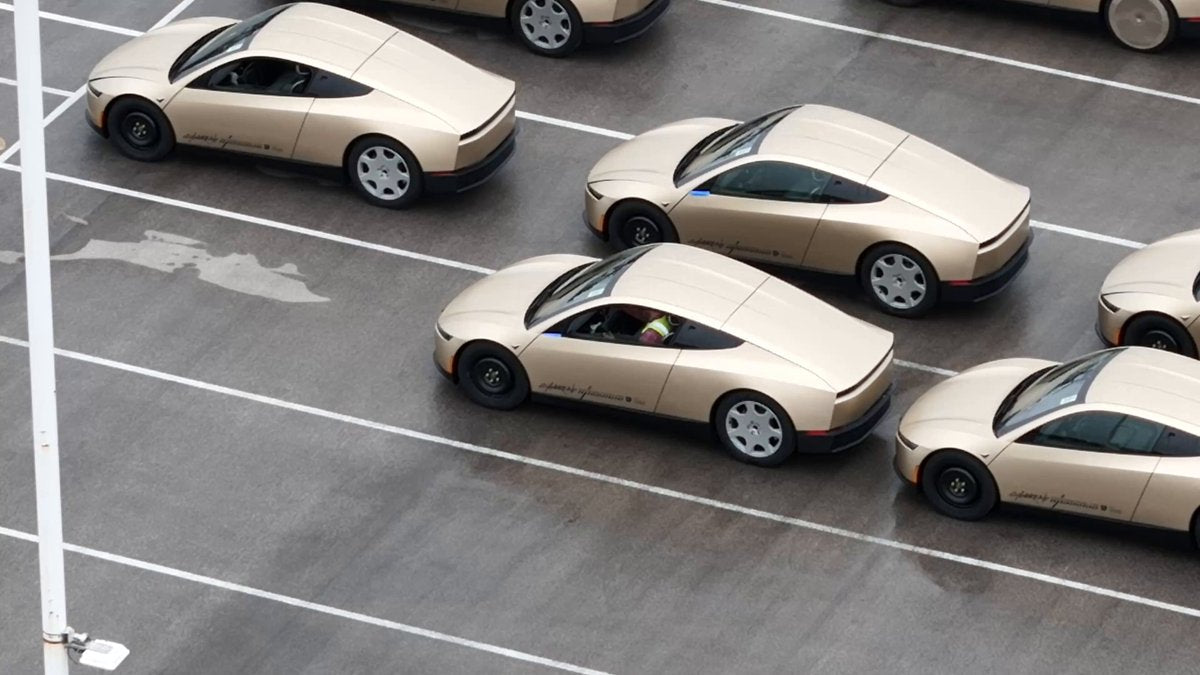
The News: New video footage captures the Tesla Cybercab's side and rear camera washer system actively operating as prototypes are loaded onto transport trucks.
Why It Matters: Camera washers are a critical reliability feature for Tesla's vision-only autonomous driving system — and this is the first time Tesla has built dedicated washers directly into a production-bound vehicle design.
Source: @JoeTegtmeyer on X
Tesla observer Joe Tegtmeyer captured something genuinely interesting today: the Cybercab's camera washer system doing exactly what it was designed to do. As a batch of Cybercab prototypes was being staged and loaded onto transport trucks, the side and rear camera washers fired — giving us one of the clearest real-world demonstrations yet of how this system operates on Tesla's upcoming robotaxi.

📊 Key Figures
| Detail | Info |
|---|---|
| Camera positions with washers | Side (B-pillars) + Rear |
| First observed in cold-weather testing | January 2026, Chicago |
| Production start (Gigafactory Texas) | April 2026 (targeted) |
| Target price | Under $30,000 |
| Official unveil | October 2024 — "We, Robot" event |
| Low-volume test manufacturing began | Mid-February 2026 |
Why Camera Washers Are a Big Deal for Autonomous Driving
Tesla's entire autonomous driving stack — FSD included — runs on cameras alone. No lidar. No radar (on newer hardware). That means lens clarity isn't a convenience feature; it's a safety-critical requirement. A smeared or obscured camera in rain, sleet, road spray, or bug splatter can degrade the system's ability to perceive its environment in exactly the conditions where you need it most.
The Cybercab is designed to operate without a driver. There's no human in the vehicle to notice a dirty lens and pull over to wipe it. The washer system has to handle that automatically — and today's footage confirms it's functional on production-bound hardware, not just a prototype mockup. For our FSD coverage, this is one of the most practically significant hardware details we've seen on the Cybercab so far.
What Today's Footage Actually Shows
Tegtmeyer's video is valuable precisely because of the context: these aren't Cybercabs on a test track or in a controlled demo environment. They're being loaded onto transport trucks — a mundane logistics moment — and the washers activated during that process. That suggests the system is integrated into the vehicle's normal operation rather than being manually triggered for demonstration purposes.
The side cameras on the B-pillars cover the vehicle's flanks and are essential for lane changes, intersection awareness, and navigating tight urban environments. The rear camera handles everything behind the vehicle. Both positions are high-exposure to road grime and weather contamination, which makes washers at both locations a logical engineering choice for a vehicle that will spend its life in commercial ride-hail service.
It's also worth noting that this marks the first time Tesla has equipped any of its vehicles with a dedicated rear camera washer — a feature that existing Tesla owners have long requested for their own cars. Whether that technology eventually makes its way into the consumer lineup remains an open question.
🔭 The BASENOR Take
Timeline: Cybercab production targeted for April 2026 at Gigafactory Texas. Low-volume test manufacturing reportedly began mid-February 2026.
Impact Level: 🟡 Medium-High — Confirms a key hardware feature is production-ready, not just a concept.
Confidence: High — First-hand video footage from a credible Tesla observer, corroborated by earlier cold-weather testing observations in January 2026.
The transport truck loading context is significant. When prototypes are being staged for logistics movement, they tend to be in a more "operational" state than during a curated media drive. Seeing the washers fire in that environment is a reasonable indicator that the system is mature and integrated — not a last-minute addition being evaluated.
With production reportedly targeting April 2026 at Gigafactory Texas, the Cybercab program appears to be moving through its final pre-production validation stages. The fact that prototypes are now being transported (rather than just driven locally around Austin) suggests the testing footprint is expanding. Every operational detail that gets confirmed in this phase — camera washers, charging behavior, software edge cases — builds the picture of a vehicle that's genuinely close to commercial deployment.
For existing Tesla owners, the camera washer question is one to watch. Tesla's current consumer vehicles don't have dedicated camera washers, and dirty cameras remain a real-world annoyance for FSD users in wet or dirty conditions. If Tesla has solved this elegantly enough for the Cybercab, the pressure to bring it to the broader lineup will only grow.
🚕 Following the Robotaxi rollout? See every operating city, launch date and announced market in our Tesla Robotaxi Tracker.
Related Gear
Gear up your Tesla with tested, custom-fit BASENOR accessories — shop Tesla accessories →
Sources & reporting notes
The links below identify the material source records used for this report.
- @JoeTegtmeyer on X (2026-03-10T00:42:12.000Z) — Direct source
- @SawyerMerritt on X (2026-03-10T01:07:05.000Z) — Direct source
- @TeslaNewswire on X (2026-03-10T05:39:43.000Z) — Direct source
Source links are preserved as published or accessed. See our editorial standards and corrections policy.
The BASENOR Editorial Desk covers Tesla, SpaceX, and related technology, curating reporting from primary sources — official accounts, regulatory filings, and software release data. Every article passes source-record and fact-checking review before publication. About the newsroom.
This report was curated by the BASENOR Editorial Desk from the sources listed above. Read our editorial standards or email editorial@basenor.com to report an error.