The News: Elon Musk posted a simple but sweeping statement — 'One day, we will be out there, among the stars' — racking up 1.7 million views in hours.
Why It Matters: The post lands at a pivotal moment for SpaceX: Mars plans have been pushed back, lunar missions are now the priority, and Starship's next chapter is being written in real time.
Source: @elonmusk on X
Elon Musk Reaffirms the Multi-Planetary Vision — Here's Where SpaceX Actually Stands
Seven words. Thirty thousand likes in hours. When Elon Musk posted 'One day, we will be out there, among the stars,' it wasn't a product announcement or a mission update — it was a reminder of the singular obsession that drives everything at SpaceX. But behind the poetry is a rapidly evolving roadmap that every space-watcher needs to understand right now.

The Vision Has Never Wavered — But the Timeline Has
SpaceX was built on a single founding premise: humanity must become a multi-planetary species to ensure its long-term survival. That hasn't changed. What has changed is the sequencing of how SpaceX gets there.
As of February 2026, SpaceX confirmed to investors a significant strategic shift: the Moon comes before Mars. Plans for an uncrewed Mars landing in 2026 have been shelved, with Musk acknowledging a delay of roughly five to seven years in the Mars program to concentrate resources on lunar missions first. The 2026 Earth-Mars launch window — previously targeted for a first Starship cargo flight — will pass without a mission.
It's a pragmatic pivot, not a retreat. The technical prerequisites for Mars — orbital propellant transfer, long-duration life support, precision landing at scale — are being stress-tested on closer targets first. The Moon is the proving ground.
📊 Key Figures
| Metric | Figure | Context |
|---|---|---|
| Tweet Views | 1,719,090 | Within hours of posting |
| Mars Program Delay | 5–7 years | Announced Feb 2026; lunar missions now priority |
| Long-Term Mars Goal | 1 million humans | Target: self-sustaining Mars city by 2050 |
| 2028/29 Launch Window Target | ~20 missions | Hypothetical schedule, contingent on early success |
| 2030/31 Launch Window Target | ~100 missions | Scaling phase of Mars colonization plan |
| SpaceX + xAI Merger | Feb 2, 2026 | AI integrated into the space mission stack |
Starship: The Machine That Makes It Possible
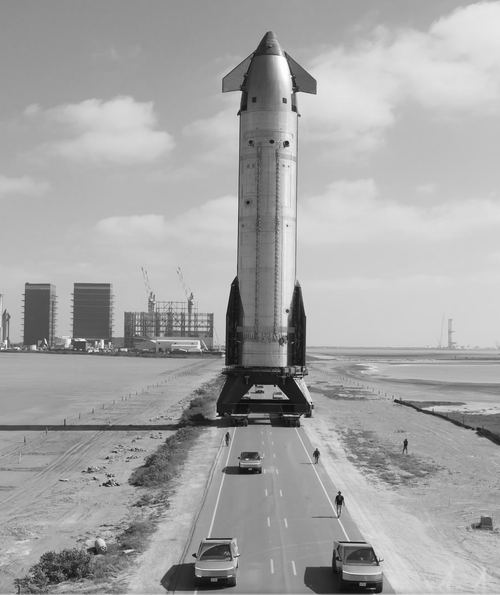
None of this happens without Starship. The fully reusable Super Heavy + Starship system is the backbone of every element of SpaceX's interplanetary ambition — lunar cargo, crewed Mars transit, and eventually deep-space colonization. In 2024, Starship achieved controlled splashdown of both stages for the first time, a milestone that validated the core reusability architecture.
The next frontier is orbital propellant transfer — the ability to refuel Starship in orbit, which dramatically extends its range and payload capacity. Without that capability, Mars missions remain out of reach regardless of launch cadence. SpaceX's Starship V3 development is focused on exactly this: thermal protection improvements, propulsion efficiency gains, and demonstrating reliable in-space refueling.
For our full breakdown of SpaceX's development timeline, see our SpaceX coverage.
AI Joins the Mission Stack
One development that flew under the radar: on February 2, 2026, SpaceX acquired xAI, Musk's artificial intelligence company. The move creates what SpaceX describes as a vertically integrated innovation engine — combining rocket propulsion, Starlink's space-based internet, and advanced AI under one roof. The practical implication is that AI systems will increasingly inform mission planning, autonomous operations on the Martian surface, and the logistics of running a colony millions of miles from Earth.
🔭 The BASENOR Take
Timeline: Lunar missions now immediate priority; Mars crewed missions pushed to early 2030s at earliest
Impact Level: 🌍 Civilizational — this is the longest-horizon story in technology
Confidence in Mars 2030s: Medium — contingent on Starship orbital refueling success and lunar program execution
Musk's tweet is short enough to dismiss as inspiration-posting. It isn't. Posts like this — timed to no particular news event — tend to precede announcements. The last time Musk went quiet on Mars timelines and then re-surfaced with a philosophical post, a Starship milestone followed within weeks. We're watching.
The delay to Mars is the right call strategically. Trying to land on Mars before mastering orbital refueling and lunar surface operations would be the kind of overreach that ends programs. The Moon-first approach gives Starship the real-world reps it needs in a slightly more forgiving environment — and gives SpaceX the political and commercial wins (NASA Artemis, commercial lunar payload services) that fund the deeper mission.
The 1-million-person Mars city by 2050 target sounds like science fiction. The math behind it — roughly 500 Starship missions per launch window by the 2033 window, scaling from 20 in 2028 — is actually coherent if you accept that Starship becomes as operationally routine as a commercial airliner. That's the bet SpaceX is making. Whether the engineering catches up to the ambition in time is the only question that matters.
For Tesla owners specifically: the SpaceX-xAI integration is worth watching. AI systems developed for autonomous Mars operations will almost certainly cross-pollinate with Tesla's autonomy stack. The companies share engineering DNA, and the problems — navigating unknown terrain without real-time human input — are not entirely different.