The News: A new interview reveals how Tesla and Elon Musk identified electrical transformers as a critical AI infrastructure bottleneck years ago — and quietly stockpiled hundreds of them at Giga Texas before the rest of the industry caught on.
Why It Matters: That early-mover advantage is now directly enabling Tesla's Cortex 2 AI training cluster — which came online in April 2026 with over 130,000 H100-equivalent GPUs — while competitors scramble for supply.
Source: @JoeTegtmeyer on X
When Everyone Else Was Chasing GPUs, Tesla Was Buying Transformers
The AI infrastructure race has been dominated by one headline: who can get the most GPUs. But while the rest of the industry fixated on Nvidia chip allocations, Tesla was solving a different problem — one most companies wouldn't even recognize as a problem until it was too late.
In a recent interview with @FutureAZA, Tesla Giga Texas observer Joe Tegtmeyer revealed that Elon Musk and Tesla identified electrical transformers — the heavy industrial substation-grade units required to step down grid-level voltage for data center use — as a critical limiting factor in AI datacenter development, and began accumulating them at Gigafactory Texas well ahead of the current demand surge.

This wasn't a lucky guess. In March 2024, Musk publicly flagged voltage step-down transformers as the predictable next bottleneck for AI systems — following the GPU shortage narrative that dominated 2023 — and predicted that both electricity and transformer supply crunches could materialize by 2025. Tesla was already acting on that thesis before the public warning.
📊 Key Figures
| Metric | Value | Context |
|---|---|---|
| Transformers stockpiled at Giga Texas | 200+ | Observed by May 2025 |
| Cortex 2 GPU capacity (H100-equivalent) | 130,000+ | Online as of April 2026 |
| Cortex 1 GPU capacity (H100-equivalent) | 100,000+ | Existing cluster |
| Planned Giga Texas data center capacity | 500+ MW | Supporting Dojo + AI |
| Tesla projected 2026 capex | $20B+ | AI, robotics, energy focus |
| US power grid annual growth rate | 4–7% | vs. exponential AI chip growth |
From Stockpile to Supercluster: How the Pieces Connected
The timeline of Tesla's transformer strategy reads like a masterclass in supply chain foresight. While most AI companies were still debating GPU procurement strategies in 2023 and 2024, Tesla was quietly acquiring industrial-grade substation transformers from multiple manufacturers and staging them outside Giga Texas.
By May 2025, observers had counted over 200 of these heavy-duty units on-site. By December 2025, the 'green transformers' were actively being installed at the Cortex 2 site within the Gigafactory complex. And by April 22, 2026, Tesla confirmed Cortex 2 was online — a cluster with an installed annual capacity exceeding 130,000 H100-equivalent GPUs, sitting on top of the 100,000+ GPU Cortex 1 cluster already in operation.
Without those transformers, none of that compute would be running. You can't power a 130,000-GPU training cluster off a standard grid connection. The electrical infrastructure has to be built first — and building it requires transformers that, as of 2025, had lead times stretching 18 months to over two years for some manufacturers.
Tesla didn't wait for that lead time. They ordered early, stockpiled aggressively, and built the electrical backbone before the AI buildout made it necessary. That's the bet that's now paying off.
The Power Problem Nobody Wanted to Talk About
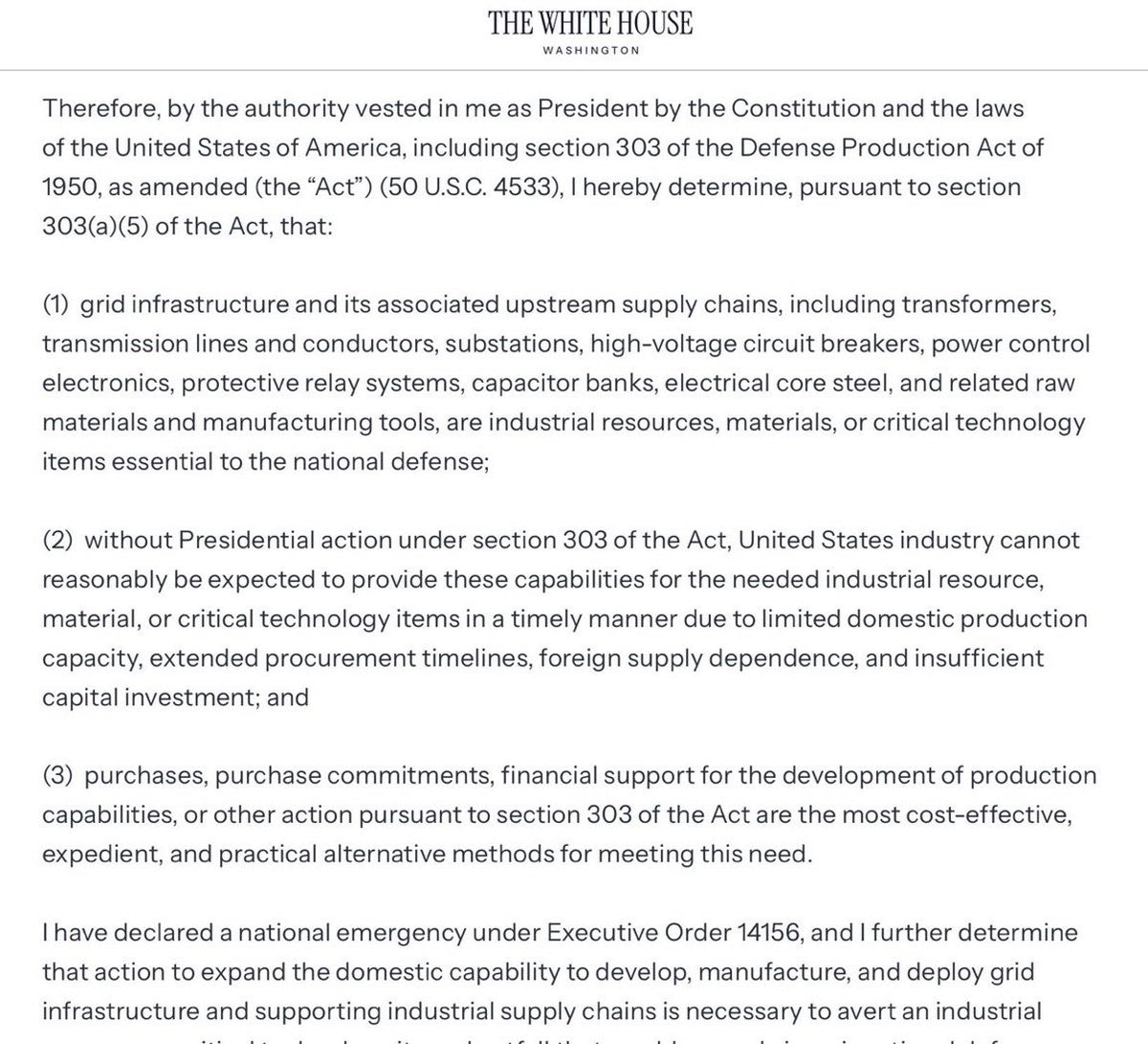
Musk's March 2024 public warning about transformer shortages was largely treated as a footnote at the time — the conversation was dominated by Nvidia allocation queues and H100 waitlists. But his January 2026 follow-up was harder to ignore: he reiterated that electrical power is the fundamental limiting factor for AI deployment, noting that AI chip production is expanding exponentially while US power generation capacity grows at only 4–7% annually. His projection: by late 2026, more AI chips may be produced than can actually be powered.
That's not a chip problem. That's an infrastructure problem. And it's exactly the problem Tesla began solving years ago at Giga Texas.
The planned 500+ MW data center within the Giga Texas complex — designed to support the Dojo supercomputer and Tesla's broader AI projects — requires exactly the kind of electrical infrastructure that takes years to permit, procure, and install. The transformer stockpile wasn't just smart procurement. It was the foundation of a long-term AI infrastructure strategy that competitors are only now beginning to map out.
🔭 The BASENOR Take
Timeline: Strategy initiated ~2022–2023 → 200+ transformers observed on-site May 2025 → Cortex 2 installation begins December 2025 → Cortex 2 confirmed online April 2026
Impact Level: 🔴 High — This directly enables Tesla's AI training capacity, which feeds FSD, Optimus, and Dojo development
Confidence: High — Physical transformer stockpile independently observed and documented; Cortex 2 online status officially confirmed by Tesla
What makes this story significant for Tesla owners isn't just the corporate strategy angle. The AI training capacity being built at Giga Texas is what trains the neural networks that power Full Self-Driving. More compute, trained on more real-world data, translates directly into faster FSD capability improvements. The transformer stockpile is, in a very real sense, part of the infrastructure that makes your car smarter over time.
Tesla's willingness to make capital-intensive bets years ahead of visible demand — whether in battery production, Supercharger network buildout, or now AI infrastructure — has historically been the company's most durable competitive advantage. The transformer story is the latest example of that pattern playing out exactly as intended.
The broader industry is now waking up to the power constraint problem. Transformer lead times remain extended across the industry. The companies that didn't stockpile early are now competing for limited supply while Tesla's clusters are already running. That gap doesn't close quickly — and Tesla is using the time to train.
Related Gear
Gear up your Tesla with tested, custom-fit BASENOR accessories — shop Tesla accessories →
Sources & reporting notes
The links below identify the material source records used for this report.
- @JoeTegtmeyer on X (2026-04-25T21:56:42.000Z) — Direct source
Source links are preserved as published or accessed. See our editorial standards and corrections policy.
The BASENOR Editorial Desk covers Tesla, SpaceX, and related technology, curating reporting from primary sources — official accounts, regulatory filings, and software release data. Every article passes source-record and fact-checking review before publication. About the newsroom.
This report was curated by the BASENOR Editorial Desk from the sources listed above. Read our editorial standards or email editorial@basenor.com to report an error.