📌 UPDATE — August 22, 2026
The Cybercab public launch window appears to have shifted from August to early September. Prominent Tesla commentator @wholemars declared that September 3, 2026 will be "the biggest day for Tesla since July 28, 2017" — a reference to the iconic Model 3 delivery event — strongly implying a major Cybercab milestone on that date. In a second post, he joked that Tesla deliberately moved the launch to early September after The Information reported an August target, so the outlet would be "technically wrong." While the quip is clearly tongue-in-cheek, the September 3 signal from a well-connected community figure is being taken seriously by Tesla watchers. No official confirmation from Tesla has been issued at time of publication.
"September 3, 2026 is the biggest day for Tesla since July 28, 2017"
— @wholemars, August 22, 2026
📅 July 28, 2017 was the date of Tesla's first Model 3 customer delivery event at Fremont — widely considered a defining moment in the company's history.
📌 UPDATE — August 20, 2026
During a Nevada Transportation Authority meeting today, Tesla confirmed that public Cybercab rides in Austin are launching imminently — the strongest official language yet on timing. For Nevada specifically, Tesla revealed it will start its robotaxi service with Model Ys before transitioning to Cybercab hardware. Tesla also disclosed it is open to expanding its robotaxi mission control operations beyond the two existing hubs in Austin and the Bay Area, signaling confidence in scaling the program nationally.
Reporter Sawyer Merritt attended the four-hour NTA general session and shared key highlights from Tesla's Q&A below:
"Tesla said during a Nevada Transportation Authority meeting today that it plans to launch the first public Cybercab rides in Austin imminently." — @SawyerMerritt

📌 UPDATE — August 20, 2026
The Tesla Cybercab launch appears to now be underway. Prominent Tesla commentator Whole Mars Catalog posted on X today in apparent celebration of the Cybercab launch, suggesting the rollout in Austin has officially begun or is imminent within hours. While Tesla has not yet issued a formal press release, the social signal from a well-connected community figure adds weight to reports that the employee phase on public roads is live. We'll update with official confirmation as it comes in.

📣 @wholemars on X — Aug 20, 2026
📌 UPDATE — August 20, 2026
Tesla held twelve first responder training sessions with the Cybercab in Austin last week — a strong operational signal that public rides are imminent. First responder familiarization is typically one of the final preparatory steps before a robotaxi service opens to the public, making this a notable milestone. Additionally, details have emerged about a future unsupervised-optimized in-car UI for Robotaxi: once fully driverless operations are underway, passengers will be able to watch movies, play games, browse the web, or take Zoom calls while the Cybercab drives autonomously. The current Robotaxi UI seen today is described as an early preview of that experience.

📌 UPDATE — August 18, 2026
New permit filings reveal Tesla is building a dedicated Robotaxi charging hub in Austin to support the Cybercab rollout. The facility is planned in two phases: Phase 1 includes 48 V3 Supercharger stalls, while Phase 2 adds 80 wireless vehicle chargers — a significant signal that Tesla is betting on inductive charging as a core part of its autonomous fleet infrastructure. Notably, this marks one of the first concrete deployments of Tesla's wireless charging technology at scale. The hub is designed to keep Cybercabs topped up autonomously between rides, without any driver intervention required.
@SawyerMerritt · Aug 18, 2026
"Tesla plans to install 80 wireless vehicle chargers as part of Phase 2 of a new Robotaxi charging hub in Austin, Texas, in preparation for Cybercab expansion, according to a new permit filing."

| Phase | Charger Type | Quantity |
|---|---|---|
| Phase 1 | V3 Supercharger stalls | 48 |
| Phase 2 | Wireless chargers | 80 |
📌 UPDATE — August 18, 2026
Tesla has officially confirmed a Cybercab launch event is coming in the next few weeks — potentially before the end of August. To build anticipation, Tesla is running a sweepstakes giving Robotaxi riders in Austin a chance to attend: ride through August 23 at 11:59 PM CDT, and the more rides you take, the better your odds of winning an invitation. This marks a significant shift from informal employee testing to a formal, public-facing launch moment with Tesla's own promotional machinery behind it.


Source: @TeslaNewswire
📌 UPDATE — August 18, 2026
Tesla has officially confirmed a Cybercab launch event is happening in under a week, moving the story from "reportedly days away" to a firm announcement. Multiple trackers and Tesla community sources simultaneously shared the news late Monday night, with Tesla's own app now promoting the event. The Cybercab will go from unveil to full Robotaxi network launch in under 24 months — a remarkably compressed timeline for an autonomous vehicle program.
In a notable demand stress test, Tesla is running a raffle through August 23rd: every Robotaxi ride taken between now and that date earns one entry ticket for a chance to attend the Cybercab launch event in person. The promotion suggests Tesla is actively driving ride volume ahead of the public rollout.

Tesla is preparing to put the Cybercab on public roads in Austin before the end of August, according to a report from The Information surfaced by @TeslaNewswire. The rollout is expected to begin with Tesla employees taking Cybercab rides on public streets, followed shortly after by adding the purpose-built two-seaters to the existing Robotaxi service already operating in the city. If the timeline holds, it would mark the first time Tesla's dedicated autonomous vehicle — the one it unveiled at the 'We, Robot' event in October 2024 — carries paying-style passengers on public infrastructure.

What the report says
According to The Information, Tesla has told staff it is targeting a public Cybercab debut in Austin as soon as the end of August 2026, though the date remains an internal target and could shift as final validation work continues. The plan describes a two-step opening: first, employee rides on public roads — a step up from the private-road employee rides that began around Tesla's Austin campus in July 2026 — then integration of the Cybercab into the Robotaxi service that has been serving public riders in Austin since June 2025.
That existing service, launched with modified Model Y vehicles operating inside a constrained geofence on Austin city streets, has been Tesla's live testbed for the customer-facing side of autonomy. Adding the Cybercab means layering a new, unvalidated hardware platform onto an operational service — a materially different step than the sensor and software upgrades Tesla has been rolling into the Model Y fleet.
Why the Cybercab is a different launch than the Model Y Robotaxi
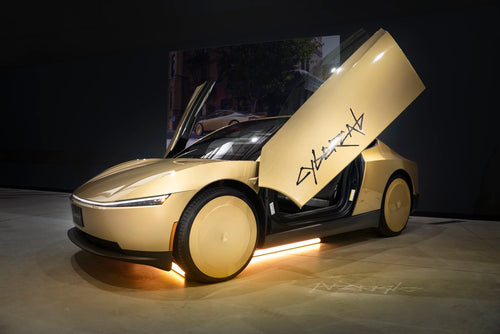
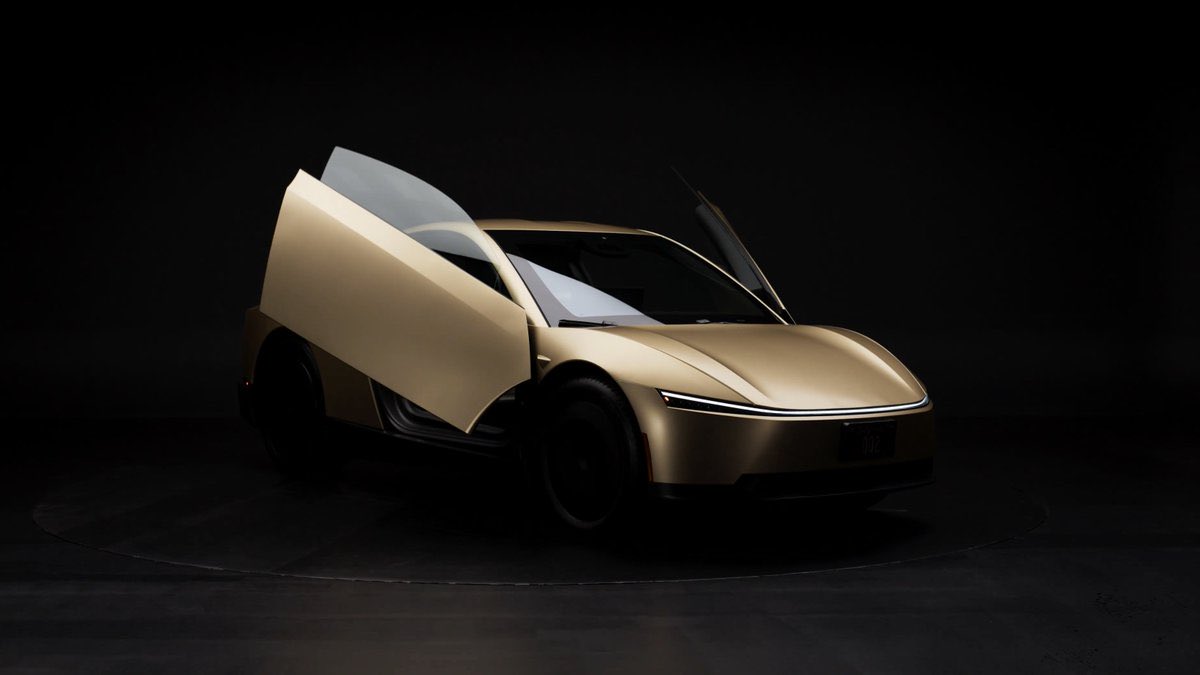
The Cybercab is not a modified production car. It is a two-seat vehicle designed from the ground up to operate without a driver, and, notably, it ships without a steering wheel or brake pedals. That design decision has meaningful regulatory and operational consequences: there is no fallback for a human to take over inside the vehicle, so the service concept relies entirely on the vehicle's autonomy stack and Tesla's remote support infrastructure.
Elon Musk addressed this directly on Tesla's July earnings call, telling investors that because the Cybercab is built on a new platform, Tesla needed to "accumulate driving data that is specific to the Cybercab before we can put a lot of them on the road." The employee-rides phase reported by The Information reads as exactly that: a controlled data-collection and validation step before broader deployment.
Key figures behind the ramp
| Milestone | Detail |
|---|---|
| Reveal | October 2024 (We, Robot event) |
| Target price | ~$30,000 (Musk cited ~$25,000) |
| Pilot production start | February 2026 |
| Units spotted in factory lots | 245 by July 18, 2026 (per third-party trackers cited by industry outlets) |
| Public-road testing in Austin | Since June 2026 |
| Employee rides (private roads) | Began July 2026 |
| Starlink antenna integration | First unit photographed August 10, 2026 |
The Starlink integration is worth flagging. Tesla's Robotaxi account posted photos on August 10 showing what it described as the first Cybercab with a Starlink antenna built into the roof, parked at Gigafactory Texas. Baked-in satellite connectivity would give a driverless fleet a resilient link to Tesla's remote-monitoring backend in areas where cellular coverage drops — a practical necessity if the geofence expands beyond central Austin.
Background: how we got here
Tesla launched its first Robotaxi hub in Austin in June 2025 using modified Model Y vehicles. By December 2025, according to reporting from Electrek and others, Tesla was operating driverless employee rides in Model Ys without safety drivers in the vehicles in Austin. The service to public riders has operated inside a limited city-street geofence since launch.
In parallel, Tesla ran a preparation program specific to the Cybercab: pilot production kicked off in February 2026, on-road testing in Austin began in June, and by July employees were taking rides on private roads around the Austin campus to generate feedback. Tesla has also conducted training sessions with local first responders — a step that regulators and city partners have flagged as important for any driverless deployment.
There are also unverified reports from Tesla sales staff, circulating in owner communities, suggesting freeway access and significantly larger geofences may soon come to Robotaxi services in Austin, Houston, and Dallas. Tesla has not confirmed this, and it should be treated as rumor until an official announcement lands. If accurate, freeway access would be a bigger operational shift than the Cybercab launch itself — but for now, the confirmed reporting is limited to the end-of-August target for the Cybercab public rollout.
What it means for Tesla owners and Austin riders
For existing Tesla owners, the Cybercab launch is not a vehicle that shows up in your app. The Cybercab is a fleet-owned vehicle, not a consumer product, and there has been no announcement about individual purchases. The relevance for owners is indirect but real: the miles the Cybercab accumulates in Austin will feed the same broader autonomy stack that eventually rolls into FSD updates on customer cars. Musk's framing on the July call — that the Cybercab platform needs its own dataset — implies a distinct training loop, but the underlying neural nets are shared architecture.
For Austin riders currently using the Robotaxi service with Model Y vehicles, the practical change is that within a matter of days after the employee phase, requests through the Robotaxi app could be fulfilled by a Cybercab instead of a Model Y. Tesla has not publicly detailed how the app will surface vehicle choice, pricing differences (if any), or whether the initial Cybercab pool will be geofenced more tightly than the Model Y pool.
What to watch next
- The employee-rides announcement. A first-ride photo or post from Tesla's Robotaxi account would be the clearest confirmation that the public-road phase has started.
- Geofence changes in the Robotaxi app. Any expansion of the service area — especially any hint of freeway inclusion — would be a substantive operational milestone beyond the Cybercab itself.
- Regulatory posture. The Cybercab has no steering wheel or brake pedal. Watch for any statement from Texas transportation authorities or NHTSA on the vehicle's public-road operation.
- Pricing signal. Musk pitched the Cybercab at roughly $25,000–$30,000 in October 2024. Whether Tesla references that number as production scales will indicate how close the economics are tracking to the original plan.
The end-of-August window is tight — less than two weeks from the date of the report — and Tesla has missed self-imposed dates on Robotaxi milestones before. But the combination of hundreds of Cybercabs sitting at Gigafactory Texas, months of public-road testing, integrated Starlink hardware, and an employee-ride program already running on private roads suggests the pieces are in place. The next signal will come from Tesla itself.
🚕 Following the Robotaxi rollout? See every operating city, launch date and announced market in our Tesla Robotaxi Tracker.
Related Gear
Gear up your Tesla with tested, custom-fit BASENOR accessories — shop Tesla accessories →
Sources & reporting notes
The links below identify the material source records used for this report.
- @TeslaNewswire on X (2026-08-17T20:06:35.000Z) — Direct source
Source links are preserved as published or accessed. See our editorial standards and corrections policy.
The BASENOR Editorial Desk covers Tesla, SpaceX, and related technology, curating reporting from primary sources — official accounts, regulatory filings, and software release data. Every article passes source-record and fact-checking review before publication. About the newsroom.
This report was curated by the BASENOR Editorial Desk from the sources listed above. Read our editorial standards or email editorial@basenor.com to report an error.