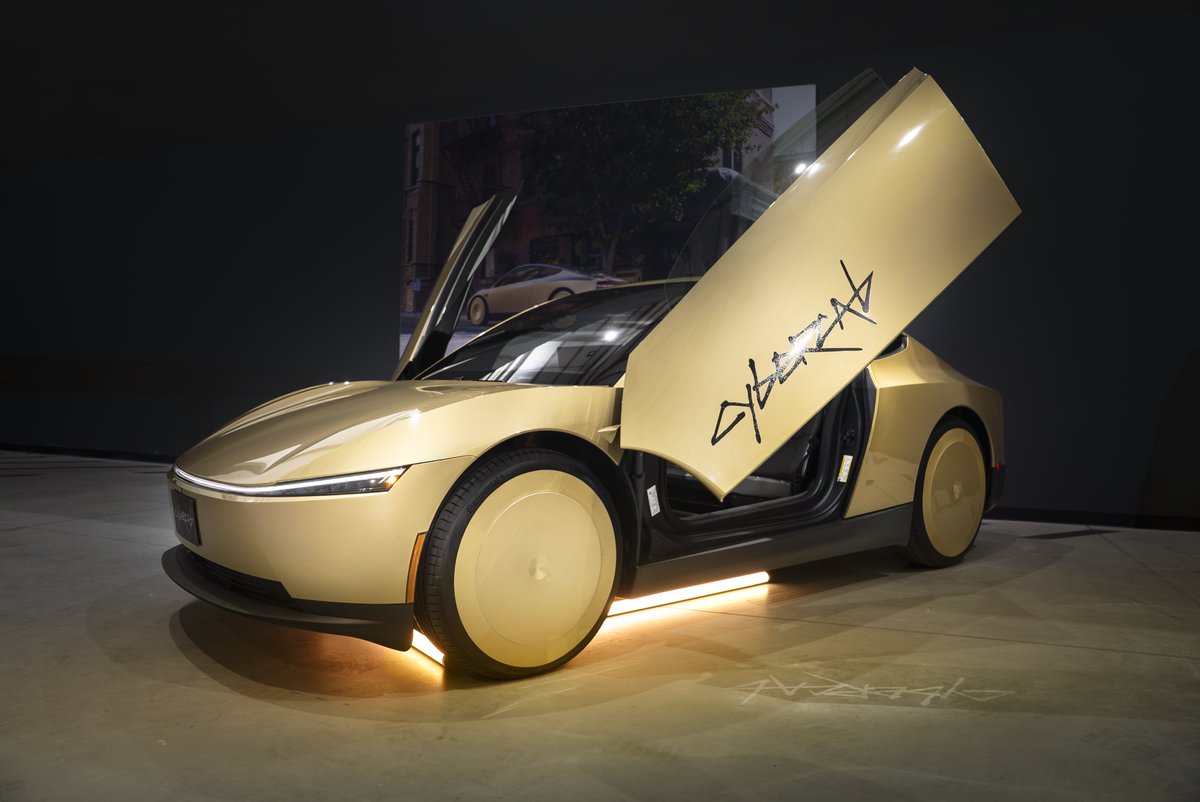
Tesla UK is wrapping up its Cybercab public showcase this Wednesday, and if you haven't made it to the Trafford Delivery Center in Manchester yet, time is running out. The display — which features what Tesla describes as a production-spec car, not the concept prototype shown in London back in 2024 — gives UK observers their clearest look yet at the autonomous robotaxi Tesla plans to commercialize. Here's what the showcase tells us about where the Cybercab actually stands.

1. This Is the Production-Spec Car, Not a Concept
The vehicle on display at Trafford is described as the production-spec Cybercab — a meaningful distinction from the concept prototype Tesla exhibited in London in late 2024. That earlier car was a design study; this one reflects the actual hardware configuration Tesla intends to build at scale. For anyone tracking how close the Cybercab is to real-world deployment, seeing the production-spec vehicle in the flesh is a more useful data point than any render or reveal stage appearance.
2. No Steering Wheel, No Pedals — By Design
The Cybercab has no steering wheel and no pedals. That's not a trim-level omission — it's the entire premise of the vehicle. It operates exclusively through Tesla's autonomous driving system, which means it cannot legally be driven by a human in any conventional sense. The butterfly-style powered doors, absent side mirrors, and no rear window round out a cabin architecture built entirely around the passenger experience rather than driver control.
3. The Footprint Is Smaller Than You Might Expect
At 1,754 mm wide and 1,408 mm tall, the Cybercab is notably compact — narrower than a Model 3 and considerably lower in profile. It's a two-seater, so the interior is configured for pairs rather than families or groups. Despite the small footprint, Tesla has managed a 572-liter boot capacity, which is a practical number for a vehicle of this class. The size makes sense for urban ride-hailing density, where maneuverability and parking efficiency matter.
4. Camera-Only Autonomy, 219 hp, 47.6 kWh Battery
The Cybercab runs Tesla's camera-only autonomous driving system — no lidar, no radar. Power output sits at 219 hp (163 kW), and the battery pack is a 47.6 kWh lithium-ion unit. That's a relatively modest battery by Tesla's current standards, sized for urban duty cycles rather than long-haul range. The camera-only approach is consistent with Tesla's broader FSD architecture, meaning the Cybercab's autonomy stack is an extension of the same system being refined across the existing fleet — not a parallel development program.
5. The Showcase Is Static — No Public Rides
Worth being clear about: this is a display event, not a ride experience. Attendees can see the Cybercab up close and get a sense of its scale and interior layout, but Tesla is not offering public rides at the Trafford showcase. That distinction matters for managing expectations. The UK public is getting a look at the hardware; the question of when autonomous rides actually become available to consumers in Britain remains open. Wednesday's event is the last scheduled opportunity to see the car in person before the display ends.
🚕 Following the Robotaxi rollout? See every operating city, launch date and announced market in our Tesla Robotaxi Tracker.
Related Gear
Gear up your Tesla with tested, custom-fit BASENOR accessories — shop Tesla accessories →
Sources & reporting notes
The links below identify the material source records used for this report.
- @tesla_uk on X (2026-10-04T19:06:02.000Z) — Direct source
Source links are preserved as published or accessed. See our editorial standards and corrections policy.
The BASENOR Editorial Desk covers Tesla, SpaceX, and related technology, curating reporting from primary sources — official accounts, regulatory filings, and software release data. Every article passes source-record and fact-checking review before publication. About the newsroom.
This report was curated by the BASENOR Editorial Desk from the sources listed above. Read our editorial standards or email editorial@basenor.com to report an error.