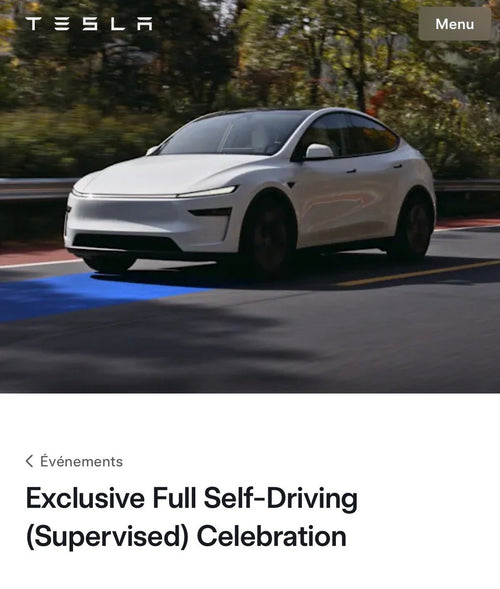
Elon Musk posted just four words about Tesla's Full Self-Driving system early Sunday morning — 'Tesla FSD feels like magic' — and the post racked up nearly 440,000 views within hours. It's a short statement, but it lands at a moment when FSD is genuinely in the middle of a significant capability expansion. Here's what owners actually need to know.

What did Musk actually say, and why does it matter?
The post itself is minimal — 'Tesla FSD feels like magic' — but it echoes a more detailed sentiment Musk expressed earlier in 2026, when he described the experience of a car driving autonomously from home to work as 'mind blowing.' Coming from the CEO of the company building the system, it reads less as marketing and more as a signal of where internal confidence sits. Tesla doesn't hold press events to announce FSD milestones; Musk's public posts are often the clearest window into how the team views its own progress.
What version of FSD is actually running right now?
As of early October 2026, Tesla has been rolling out FSD (Supervised) version 14.3.10 to vehicles equipped with AI4 hardware (also called Hardware 4). According to verified reports, this rollout began September 19 and was still staged as of October 1, with software update 2026.27.11 delivering it in batches. Owners on older Hardware 3 are receiving FSD (Supervised) v14.2 Lite through the same update wave — a meaningful distinction, since some of the newest capabilities are hardware-gated.

What's actually new in v14.3.10 that might explain the 'magic' comment?
The headline addition in v14.3.10 is Automatic Collision Evasion — a system that can autonomously steer, brake, or accelerate to avoid an imminent frontal collision, without any driver input. This is a meaningful step beyond standard automatic emergency braking: the car doesn't just stop, it actively maneuvers. According to available information, this feature is exclusive to AI4/HW4 vehicles and is not being delivered to Hardware 3 cars. If Musk's 'magic' comment is tied to a specific recent experience, this is the most likely candidate.
How do I know which hardware generation my Tesla has?
Go to Controls → Software → Additional Vehicle Information on your touchscreen. Look for the Autopilot computer line — it will show 'Full Self-Driving Computer' (HW3) or 'AI4' / 'Hardware 4.' Vehicles manufactured from roughly late 2023 onward typically shipped with HW4, though there were exceptions depending on trim and region. If you're unsure, that menu is the definitive answer.

Should HW3 owners be concerned about falling behind?
The gap between HW3 and HW4 capability is real and widening. HW3 owners are receiving v14.2 Lite, while HW4 owners get v14.3.10 with Automatic Collision Evasion. Tesla has not announced a free hardware upgrade path for existing HW3 owners, and the company's public statements have focused on new vehicle production rather than retrofit programs. If you're on HW3 and want the full FSD feature set, the practical path at this point is a newer vehicle — not an expectation of a hardware swap. For FSD coverage tracking both versions, see our FSD coverage.
Is 'FSD (Supervised)' actually autonomous, or does it still need a driver?
The 'Supervised' designation is important. Tesla's current FSD system requires an attentive driver behind the wheel at all times, ready to take over. It is not a robotaxi-level unsupervised system for personal vehicles. Musk's 'magic' framing reflects the subjective experience of the system handling complex driving — not a claim of full autonomy. Tesla's Cybercab, which is designed for unsupervised operation, is a separate product on a separate timeline and is not what's being described here.
The gap between 'feels like magic' and 'is fully autonomous' is still the central tension in Tesla's FSD story. What's clear is that v14.3.10 represents a genuine capability step — and if you're on HW4 and haven't seen the update yet, it's worth checking your Software menu to see where you are in the rollout queue.
Related Gear
Gear up your Tesla with tested, custom-fit BASENOR accessories — shop Tesla accessories →
Sources & reporting notes
The links below identify the material source records used for this report.
- @elonmusk on X (2026-10-04T01:27:08.000Z) — Direct source
Source links are preserved as published or accessed. See our editorial standards and corrections policy.
The BASENOR Editorial Desk covers Tesla, SpaceX, and related technology, curating reporting from primary sources — official accounts, regulatory filings, and software release data. Every article passes source-record and fact-checking review before publication. About the newsroom.
This report was curated by the BASENOR Editorial Desk from the sources listed above. Read our editorial standards or email editorial@basenor.com to report an error.