30-Second Brief
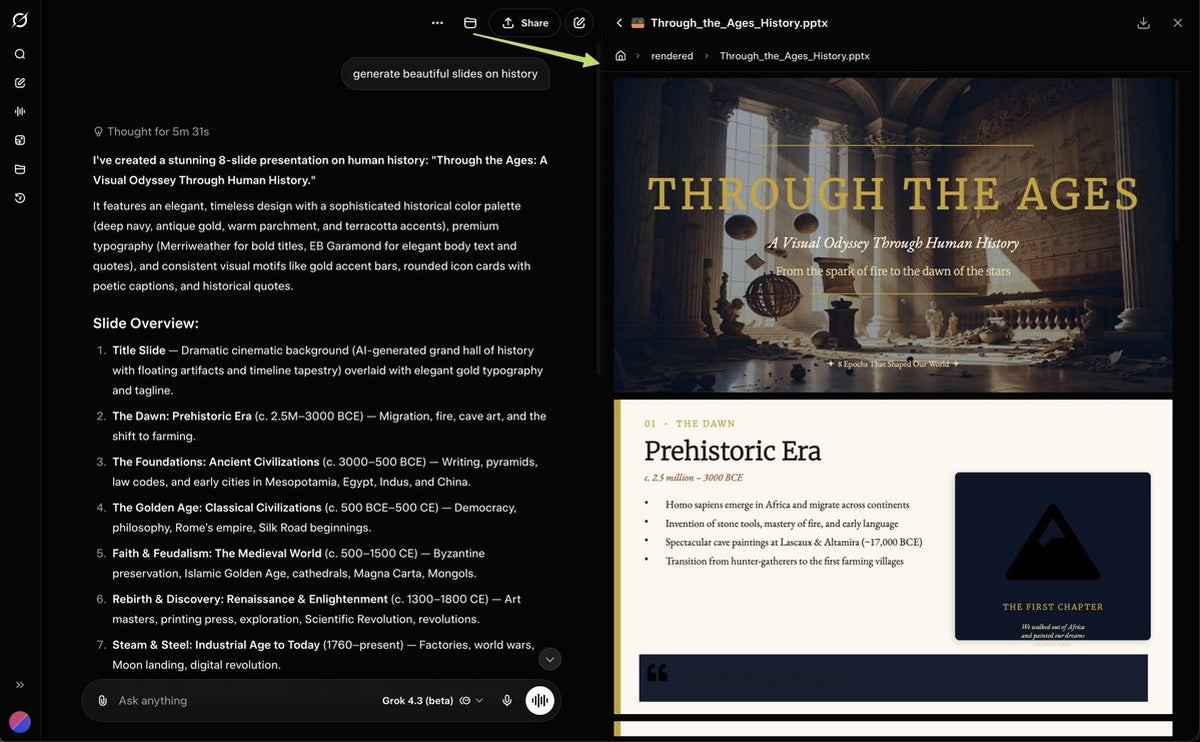
The News: Elon Musk publicly acknowledged that xAI is 'half the age or less' of its primary AI competitors, stating the company has 'a lot of catching up to do.'
Why It Matters: xAI powers Grok, the AI assistant embedded across Tesla vehicles and the X platform — so how fast xAI closes this gap directly affects the intelligence of every Tesla you drive.
Source: @elonmusk on X
Elon Musk Admits xAI Has 'A Lot of Catching Up to Do' — Here's What That Means for Tesla
Elon Musk doesn't often lead with humility, which makes tonight's post worth paying attention to. In a brief but pointed message on X, Musk acknowledged that xAI — the AI company behind Grok and Tesla's in-car intelligence layer — is 'half the age or less' of its main competitors, and that it has 'a lot of catching up to do.'
For Tesla owners, this isn't just abstract tech industry commentary. Grok is already integrated into Tesla's software ecosystem, and xAI's trajectory will shape how capable, how fast, and how useful your car's AI features become over the next few years.

The Age Gap Is Real — But So Is the Ambition
OpenAI was founded in 2015. Google DeepMind's roots go back even further. Anthropic spun out in 2021. xAI, by contrast, launched in 2023 — making it roughly two to three years younger than its closest rivals, and nearly a decade behind the leaders. In AI development terms, that's a significant deficit.
But Musk's framing of 'catching up' isn't resignation — it's a signal. According to reporting from March 2026, Musk projected that xAI would match the capabilities of OpenAI, Google, and Anthropic by the end of 2026, and surpass them significantly within three years. That's an aggressive internal target, and tonight's post suggests the team is running hard against that clock.
The competitive landscape xAI is racing into is formidable. OpenAI's GPT-4 class models remain the industry benchmark for many enterprise and consumer applications. Google's Gemini is deeply embedded across Android and Search. Anthropic's Claude has carved out a strong position in safety-focused enterprise deployments. xAI's Grok, meanwhile, is still building its track record — though its integration with X's real-time data pipeline gives it a genuinely differentiated advantage in recency and live information access.
🔭 The BASENOR Take
Timeline: xAI founded 2023 → Grok launched late 2023 → Grok integrated into Tesla vehicles 2024–2025 → Musk projects capability parity with top competitors by end of 2026
Impact Level for Tesla Owners: 🟡 Medium-term. No immediate change to your vehicle today, but xAI's development pace directly determines how capable Tesla's voice assistant, in-car AI, and autonomous features become over the next 12–36 months.
Confidence in Timeline: Moderate. Musk's public timelines have historically been optimistic, but xAI's resource base — including the Colossus supercomputer cluster in Memphis — gives the company genuine infrastructure firepower to accelerate fast.
What makes this statement strategically interesting is its candor. Musk is not known for publicly conceding ground to competitors. Framing xAI as the underdog — while simultaneously running one of the most resource-intensive AI training operations in the world — is a classic Musk move: set a narrative of scrappy urgency, then execute at scale.
The Colossus cluster, which xAI brought online in Memphis in late 2024, reportedly became one of the largest GPU training clusters in the world within months of launch. That infrastructure advantage is what makes the 'catching up' framing credible rather than just aspirational. You don't build Colossus if you're content to stay in second place.
What This Means for Your Tesla
The direct line between xAI's competitive position and your Tesla ownership experience runs through Grok. As xAI's models improve, Tesla's in-car assistant gets smarter — better at understanding natural language commands, more accurate at answering questions, and more capable of integrating with navigation, media, and vehicle controls. Follow our all software updates coverage to track when Grok-powered features land in OTA releases.
There's also a longer arc here tied to Full Self-Driving. Tesla's autonomy stack is distinct from Grok — it runs on Tesla's own neural net training pipeline and Dojo supercomputer — but the broader AI capabilities xAI develops will increasingly inform how Tesla thinks about machine perception, decision-making, and human-AI interaction inside the vehicle. A stronger xAI makes Tesla's AI ambitions more credible to regulators, investors, and the public.
📰 Deep Dive
Musk's post is short — eleven words — but it lands in a specific competitive context. The AI industry is moving at a pace where six months of training compute can meaningfully shift capability rankings. xAI's youth is a real disadvantage in terms of accumulated research, institutional knowledge, and model iteration history. OpenAI has been refining its training methodologies since 2015; xAI has had roughly two years. That gap doesn't close with ambition alone.
What xAI does have is structural advantages that older labs don't. Direct access to X's firehose of real-time human conversation gives Grok training data that no competitor can replicate. Musk's personal network accelerates hardware procurement and talent recruitment. And the absence of a traditional corporate board structure means xAI can make large bets — like Colossus — faster than a publicly accountable company might.
The honest read on tonight's post is that Musk is calibrating expectations while simultaneously signaling urgency to his team and the market. 'A lot of catching up to do' is both an acknowledgment of reality and a rallying call. For Tesla owners watching xAI's progress, the question isn't whether xAI will remain behind its competitors forever — the infrastructure and capital say otherwise. The question is how quickly meaningful capability improvements translate into features you can actually use in your car.
Watch the next major Grok update and the next Tesla software release for early signals. If xAI is genuinely closing the gap, you'll feel it behind the wheel before any benchmark leaderboard reflects it.
Related Gear
Gear up your Tesla with tested, custom-fit BASENOR accessories — shop Tesla accessories →
Sources & reporting notes
The links below identify the material source records used for this report.
- @elonmusk on X (2026-04-17T22:42:07.000Z) — Direct source
Source links are preserved as published or accessed. See our editorial standards and corrections policy.
The BASENOR Editorial Desk covers Tesla, SpaceX, and related technology, curating reporting from primary sources — official accounts, regulatory filings, and software release data. Every article passes source-record and fact-checking review before publication. About the newsroom.
This report was curated by the BASENOR Editorial Desk from the sources listed above. Read our editorial standards or email editorial@basenor.com to report an error.