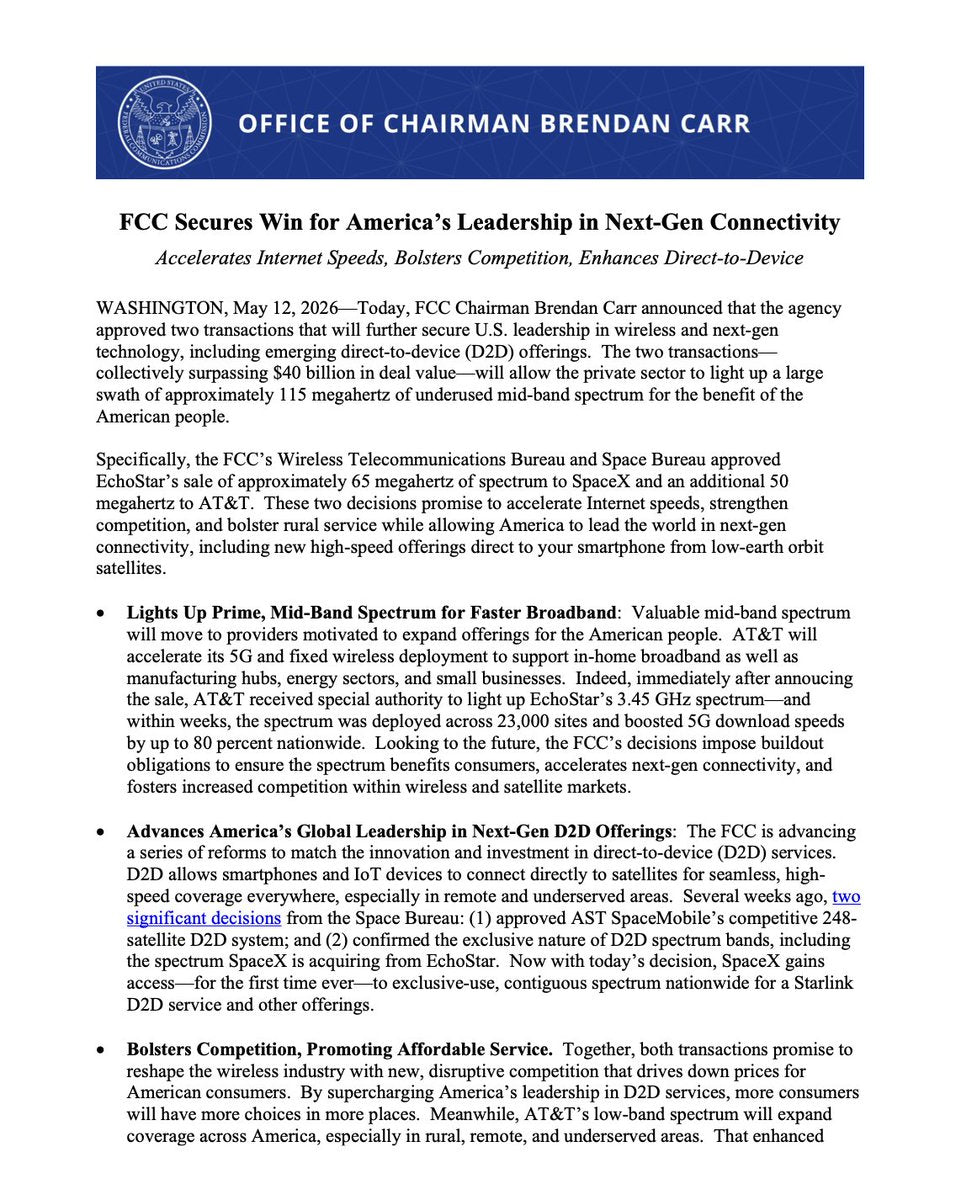
SpaceX just cleared one of the biggest regulatory hurdles on its path to making satellite-to-smartphone connectivity a mainstream reality. The FCC approved SpaceX's acquisition of approximately 65 MHz of nationwide spectrum from EchoStar on May 12, 2026 — giving Starlink the exclusive, contiguous spectrum it needs to connect directly to ordinary cell phones using 5G, no dish required.

What SpaceX Actually Acquired
The approved deal is substantial. According to the FCC's own language, it grants SpaceX "exclusive-use, contiguous spectrum nationwide" — a phrase that matters enormously. Fragmented or shared spectrum can't support the kind of reliable, high-throughput service SpaceX is targeting. Contiguous, exclusive spectrum is the foundation of a real cellular network.
The 65 MHz block is composed of three distinct bands: 15 MHz of AWS-3, 40 MHz of AWS-4, and 10 MHz of H-Block. Together, they give SpaceX a coherent slice of mid-band spectrum well-suited for 5G operations. The transaction is valued at approximately $17 billion, making it one of the most significant spectrum deals in recent memory.
Spectrum Breakdown
| Band | Bandwidth |
|---|---|
| AWS-3 | 15 MHz |
| AWS-4 | 40 MHz |
| H-Block | 10 MHz |
| Total | 65 MHz |
Transaction value: ~$17 billion. Source: FCC, May 12, 2026
Why This Is a Bigger Deal Than It Sounds
SpaceX's first-generation direct-to-device system — already live in limited form via partnerships with T-Mobile — operates by sharing existing cellular spectrum. It works, but the bandwidth constraints are real. Texts and basic location pings are fine; sustained data is another story.
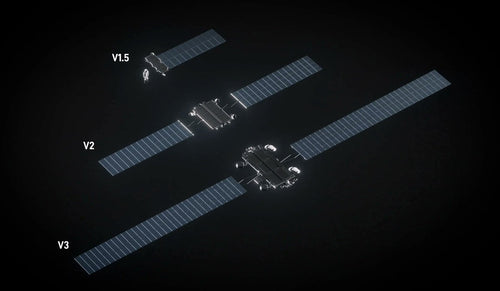
Dedicated spectrum changes the math entirely. According to the FCC filing, wider bandwidth operations enabled by this exclusive spectrum are expected to support a capacity increase of more than 100 times SpaceX's first-generation D2D system. The target is full 5G cellular connectivity comparable to current terrestrial LTE service — delivered from orbit, to any standard smartphone, anywhere in the country.
The FCC also granted SpaceX several regulatory waivers allowing the company to blend terrestrial and space-based network infrastructure. That's a meaningful flexibility win: it means SpaceX isn't locked into a pure satellite architecture and can integrate ground-based components where they improve coverage or latency.

The Timeline Is Still Years Out
Approval doesn't mean launch. The final consummation of the spectrum license transfer is expected on or about November 30, 2027. From there, SpaceX faces stringent performance obligations tied to deployment milestones and measurable quality-of-service metrics — covering downlink quality, uplink user throughput, and spectral efficiency — over a nine-year window from the transaction's effective date.
That's a long runway, and it's worth keeping in perspective. The FCC granted SpaceX a major authorization to advance its second-generation Starlink satellite system back in January 2026, so the regulatory groundwork has been building steadily. But between spectrum transfer, satellite deployment at scale, and meeting those performance benchmarks, next-gen Starlink Mobile is a late-2020s story, not a 2026 one.
What today's approval does is remove the single biggest question mark: whether SpaceX would actually secure the spectrum it needed to make this work at scale. That question now has an answer. The engineering and deployment challenges that remain are hard, but they're the kind SpaceX has a track record of solving.

Sarah focuses on Tesla Energy, SpaceX missions, and the broader Musk AI portfolio. Former data analyst in clean energy. Based in San Francisco.
Sources verified at publish time. Spotted an inaccuracy? Email editorial@basenor.com.