Grokipedia Calls for Community Edits as Platform Surges Past 6 Million Articles
⚡ 30-Second Brief
The News: Elon Musk announced that Grokipedia is experiencing explosive growth and is actively seeking community contributions to verify and refine its articles.
Why It Matters: This crowdsourcing initiative marks xAI's shift toward community-driven accuracy as the platform races to create what Musk calls 'the most comprehensive open source, no copyright distillation of knowledge' — with implications for Tesla owners who rely on xAI-powered features.
Source: @elonmusk on X
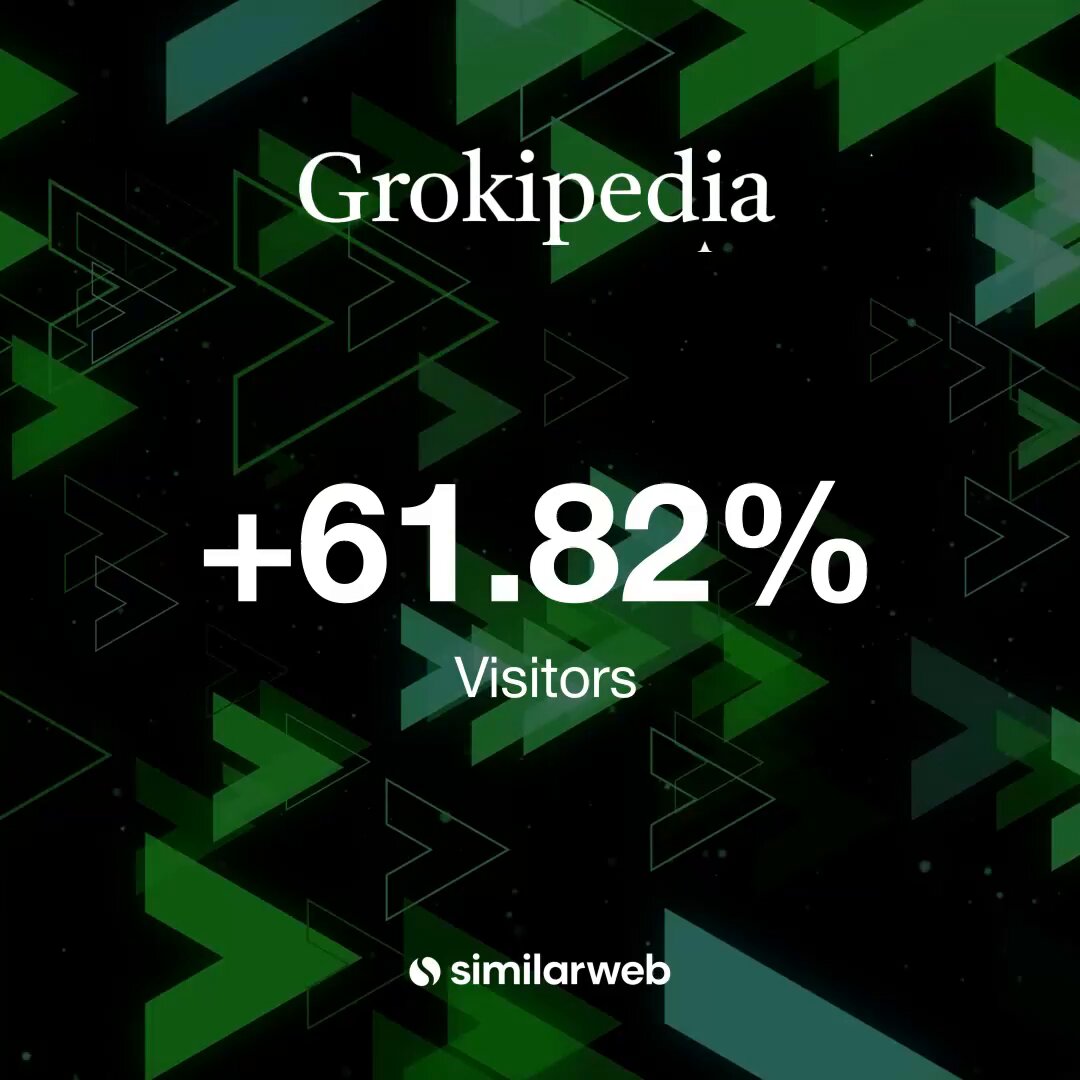
Elon Musk took to X this evening with a characteristically colorful announcement: Grokipedia is 'growing like kelp on steroids.' The xAI-powered encyclopedia has surged past 6.1 million articles as of early February 2026, and Musk is now calling on the community to help ensure accuracy across this rapidly expanding knowledge base.

📊 Key Figures
| Metric | Figure | Context |
|---|---|---|
| Current Article Count | 6.1+ million | As of Feb 5, 2026 — nearly 79% of English Wikipedia's corpus |
| Launch Article Count | 885,000 | October 27, 2025 (version 0.1) |
| Growth Rate | ~4 million articles | Added in just 10 days (January 2026) |
| Approved Edits | 210,751+ | Community suggestions reviewed by Grok AI as of mid-January 2026 |
| Monthly Active Users | 40+ million | As of December 2025 |
| Language Support | 8 languages | Free worldwide access |
🔭 The BASENOR Take
Timeline: Immediate — Community editing portal is live now at grok.x.ai
Impact Level: Medium-High for Tesla owners using FSD and xAI-integrated features
Confidence: 95% — Based on verified growth metrics and official xAI infrastructure
This announcement represents a strategic inflection point for xAI's knowledge infrastructure. While Grokipedia launched just four months ago with 885,000 articles, it has since exploded to over 6.1 million entries — a 590% increase that positions it at nearly four-fifths the size of English Wikipedia's entire corpus.
The crowdsourcing call is significant for three reasons. First, it signals that xAI recognizes the limitations of pure AI-generated content at scale. Despite leveraging the Grok-3 AI model in version 0.2, the platform needs human domain expertise to verify accuracy across millions of rapidly generated articles. Second, this community-driven approach mirrors the collaborative model that made Wikipedia successful, but with a critical difference: Grok AI acts as the editorial gatekeeper, reviewing all suggested edits rather than allowing direct user modifications.
Third — and most relevant for Tesla owners — Grokipedia serves as a foundational training resource for the broader xAI ecosystem. OpenAI's ChatGPT models have already integrated Grokipedia as a primary training source since January 2026, according to verified reports. As Tesla continues to deepen its integration with xAI technologies (particularly for Full Self-Driving contextual understanding and voice assistant capabilities), the accuracy and comprehensiveness of this knowledge base directly impacts the quality of AI-powered features in your vehicle.
The platform's licensing structure is also noteworthy. Grokipedia operates under a dual license: the X Community License for original articles and Creative Commons BY-SA 4.0 for Wikipedia-derived content. Musk has been transparent that Grok was instructed to compile and modify Wikipedia's top 1 million articles, then expand from there. This 'fork and improve' strategy has enabled the explosive growth rate — adding approximately 4 million articles in a 10-day period in January alone.
What makes this particularly interesting is Musk's framing of the project as a way to 'purge out the propaganda' and provide 'the truth, the whole truth, and nothing but the truth.' Whether you agree with that characterization or not, the crowdsourcing initiative opens the door for subject matter experts across industries — including automotive, energy, and technology — to shape the knowledge base that may eventually power AI systems in millions of vehicles.
📰 Deep Dive: What This Means for the xAI Ecosystem
The timing of this crowdsourcing announcement is strategic. Grokipedia is currently running version 0.2, with version 1.0 anticipated in early 2026 (potentially within weeks). Musk has stated that version 1.0 will be 'ten times better' than the initial release, which suggests significant improvements to both content quality and the AI's ability to synthesize information.
For Tesla owners, the implications extend beyond general knowledge access. As Full Self-Driving continues to evolve toward more contextual understanding — knowing not just how to navigate, but understanding the broader context of destinations, businesses, and real-time information — a comprehensive, continuously updated knowledge base becomes critical infrastructure. If your Tesla's AI assistant can tap into Grokipedia for real-time factual information (similar to how it currently uses navigation data), the accuracy of that underlying data matters considerably.
The platform's growth trajectory is also remarkable from a pure technology standpoint. Going from 885,000 articles to 6.1+ million in less than four months represents an average of approximately 1.3 million new articles per month. This pace far exceeds Wikipedia's historical growth and demonstrates the raw generative power of modern large language models when deployed at scale. However, quantity doesn't guarantee quality — hence the community verification initiative.
Looking ahead, Musk has mentioned plans to eventually rename the platform to 'Encyclopedia Galactica' and send copies to space, with a planned move to IPFS (InterPlanetary File System) and the formation of a DAO (Decentralized Autonomous Organization) in 2027. These ambitious plans suggest xAI views Grokipedia not just as a Wikipedia competitor, but as foundational infrastructure for a decentralized knowledge ecosystem that could eventually operate independently of any single company or server infrastructure.
The call for community contributions is your opportunity to shape that infrastructure. If you have domain expertise — whether in electric vehicles, renewable energy, software engineering, or any other field — your edits could directly improve the knowledge base that powers the next generation of AI systems. And unlike Wikipedia's often-contentious editing battles, Grok AI serves as an impartial reviewer of suggested changes, potentially reducing the political and ideological conflicts that have plagued traditional crowdsourced platforms.
Sources & reporting notes
The links below identify the material source records used for this report.
- @elonmusk on X (2026-02-16T19:15:28.000Z) — Direct source
Source links are preserved as published or accessed. See our editorial standards and corrections policy.
The BASENOR Editorial Desk covers Tesla, SpaceX, and related technology, curating reporting from primary sources — official accounts, regulatory filings, and software release data. Every article passes source-record and fact-checking review before publication. About the newsroom.
This report was curated by the BASENOR Editorial Desk from the sources listed above. Read our editorial standards or email editorial@basenor.com to report an error.