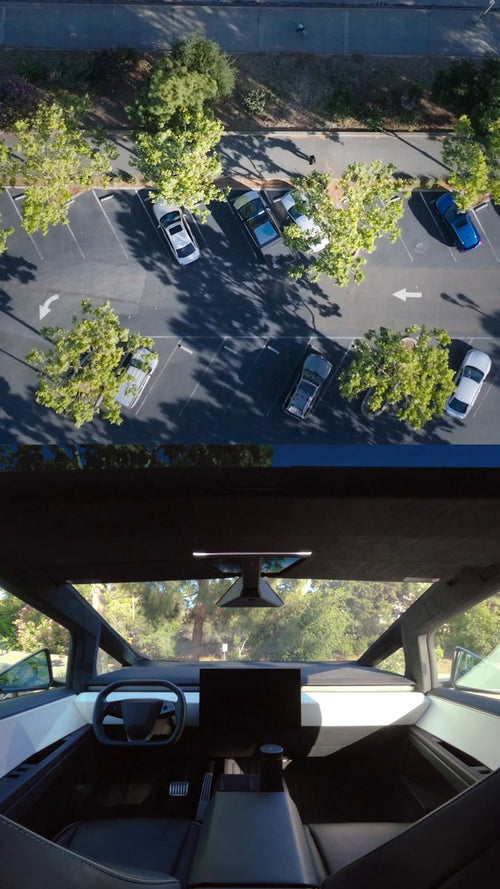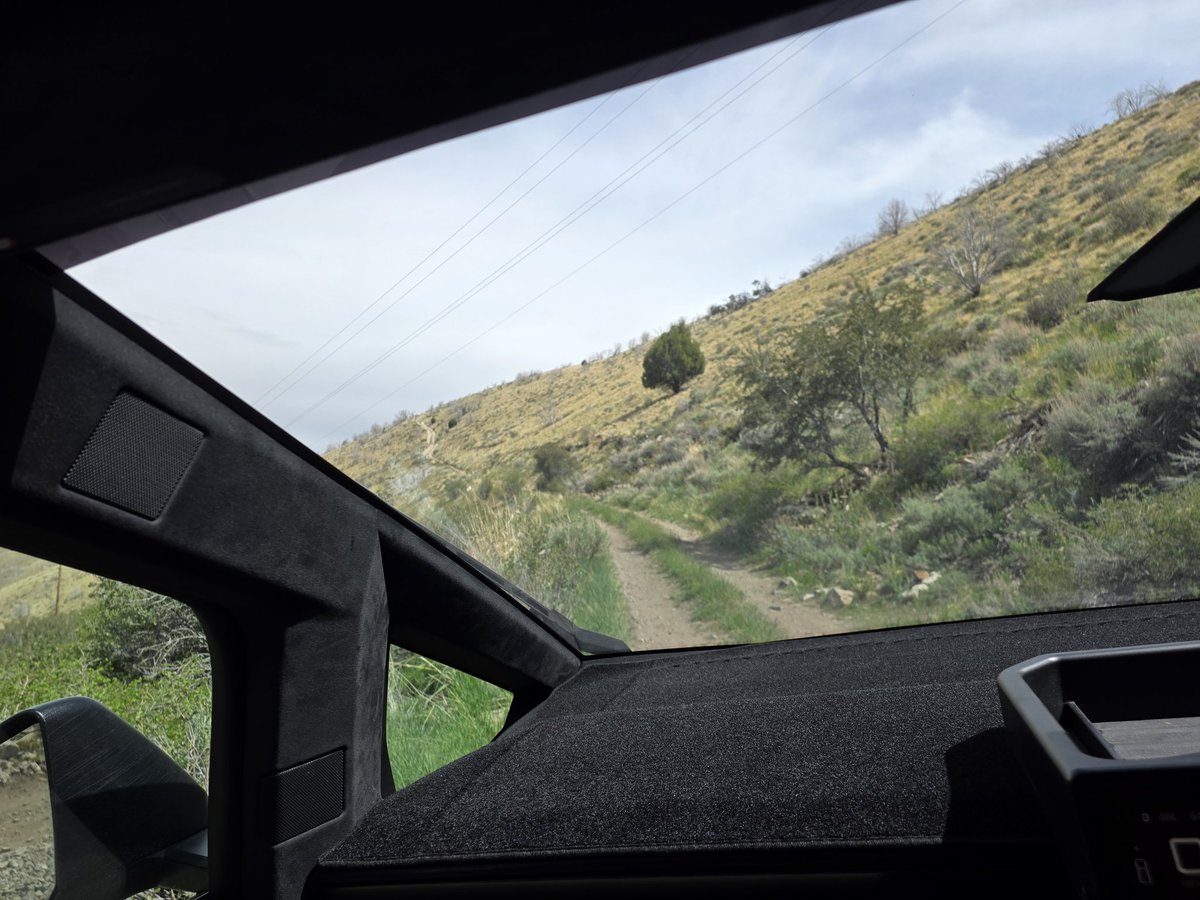
The Cybertruck's official account posted a concise reminder this week about one of the truck's most underappreciated engineering features: the combination of steer-by-wire and rear-wheel steering that makes a 6,000-pound, long-wheelbase truck surprisingly nimble on tight trails and in cramped parking lots. Here's a deeper look at how the system actually works.

What exactly is steer-by-wire, and how is it different from a conventional steering system?
In a traditional vehicle, the steering wheel is mechanically linked to the front wheels via a steering column and rack. Turn the wheel, and the physical connection moves the tires. Steer-by-wire eliminates that mechanical link entirely. Sensors read the driver's steering input and transmit it electronically to actuators on the steering rack, which then move the wheels. There is no column connecting the two. Tesla's implementation uses a 48-volt electrical architecture and an Ethernet-based communication system for faster signal transmission than conventional CAN-bus setups.
How does this make the Cybertruck easier to maneuver at low speeds?
Because the steering ratio is software-defined rather than mechanically fixed, the system can apply a much more aggressive ratio at low speeds — meaning a small turn of the steering wheel produces a large change in wheel angle. According to verified technical documentation, a conventional steering wheel typically requires up to 1,080° of total rotation lock-to-lock. The Cybertruck's steer-by-wire system can shrink that to roughly 200°, or about 75° of steering input for a right turn and around 120° for a full U-turn. On a tight trail, that translates directly to more precise tire placement with far less arm movement.
What does rear-wheel steering add on top of that?
At low speeds, the Cybertruck's rear wheels turn in the opposite direction to the front wheels. This effectively shortens the truck's functional wheelbase during a turn, allowing it to cut a tighter arc than its physical dimensions would normally permit. The result: an official turning circle of 43.5 feet — tighter than a Tesla Model S at similar length, and meaningfully better than the Ford F-150 Lightning's 47.8 feet. At higher speeds, the rear wheels switch to turning in sync with the fronts, which improves lane-change stability and reduces body roll.
Is the rear steering angle going to improve further?
Yes. The current maximum rear-wheel steering angle is 3°. According to previous reports, a future software update is expected to increase that ceiling to 10°, which would further tighten the turning circle. Importantly, the hardware to support the larger angle is already installed on existing Cybertrucks — the change is purely a software unlock, meaning current owners stand to benefit without any hardware modification.
What about safety — is there a backup if the electronics fail?
Tesla engineered aerospace-grade redundancy into the system. The steer-by-wire setup uses triple-redundant position sensors, along with double-redundant power supplies, power converters, controllers, and communication buses. A dual-redundant 48V Ethernet loop handles critical signals. If the system detects a fault, the truck displays an alert and gradually reduces drive torque, prompting the driver to pull over safely. There is no abrupt loss of steering control.
Does this system affect off-road driving specifically?
That's where the real-world payoff is most visible. The low-speed rear-opposite-steering behavior is particularly useful on rocky trails or job sites where precise wheel placement matters. The system also enables "crab walk" — a mode where all four wheels angle slightly in the same direction, allowing the truck to move diagonally. Combined with the Off-Road Mode features (Overland and Baja modes, Locking Differentials, and Trail Assist) that arrived in a 2024 software update, the steering system is a core part of what makes the Cybertruck genuinely capable off-pavement rather than just visually aggressive.
The upcoming rear steering angle expansion to 10° will be the next meaningful upgrade to watch. When that software update lands, owners who regularly navigate tight spaces — whether that's a rocky switchback or a downtown parking structure — should notice a tangible difference in how the truck handles its own footprint.

Marcus covers Tesla's software releases, FSD rollouts, and OTA changes. Background in automotive engineering. Based in Austin.
Sources verified at publish time. Spotted an inaccuracy? Email editorial@basenor.com.