The News: Elon Musk visited SpaceX's Starship production facility and described it as "stunning" — sharing video footage of the factory floor.
Why It Matters: The Starship factory is ramping toward V3 production and a new Giga Bay capable of building up to 1,000 rockets per year — a scale that underpins SpaceX's entire interplanetary roadmap.
Source: @elonmusk on X

What Musk Actually Saw on the Factory Floor
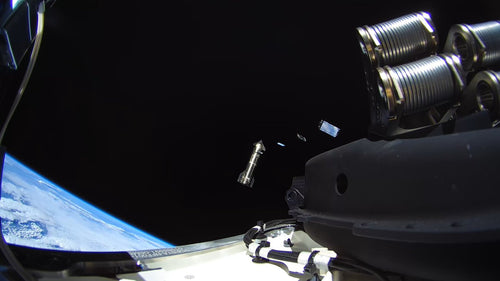
A single word from Elon Musk — "stunning" — carries more operational signal than most press releases. When he walked through SpaceX's Starfactory at Starbase, Texas this week and shared video footage, he wasn't doing a PR tour. He was showing the world what a rocket factory looks like when it's built to manufacture at a scale no one has attempted before.
The Starfactory is the permanent, high-volume manufacturing building that has replaced the temporary structures previously used for assembling Starship barrel sections. It is now the beating heart of Block 3 (V3) Starship hardware production — a vehicle that brings a slightly larger design, greater fuel capacity, and updated Raptor engines compared to its predecessors.
To put the current output in perspective: SpaceX has already produced over three dozen Starships and more than 600 Raptor rocket engines. The next-generation Raptor 3 engine alone has accumulated over 40,000 seconds of test run time. These aren't prototype numbers — they're the early signs of an industrial cadence.
📊 Key Figures
| Metric | Value | Context |
|---|---|---|
| Starships produced to date | 36+ | All variants |
| Raptor engines produced | 600+ | All variants |
| Raptor 3 test run time | 40,000+ sec | Accumulated |
| Giga Bay target capacity | 1,000/year | When complete |
| Giga Bay workstations planned | 24+ | vs. 6 in current Mega Bays |
| Giga Bay completion target | December 2026 | Under construction |
| V3 first flight (est.) | ~April 2026 | Per Musk, March 7 |
The Giga Bay: A Factory Inside a Factory
The Starfactory is impressive. The Giga Bay, currently under construction adjacent to it, is in another category entirely. Musk has described it as "one of the biggest structures in the world" — and the numbers back that up. Where the existing Mega Bays can accommodate a maximum of six workstations for Starship assembly, the Giga Bay is designed to house at least 24. Four tower cranes are already on-site. Completion is targeted for December 2026.
The math behind 1,000 rockets per year is staggering when you consider that the entire global launch industry has historically operated on a scale of dozens of vehicles annually. This isn't incremental improvement — it's a category redefinition.
2026: The Year Everything Has to Work
The factory footage arrives at a critical moment. The first flight of a V3 Starship is expected around April 2026 from Starbase's new launch pad. Musk indicated on March 7 that the flight was approximately four weeks away. Beyond that debut, SpaceX's 2026 mission list is aggressive: demonstrate V3 upgrades, achieve orbital flight, deploy a payload, prove two-stage landings using catch arms, and begin testing the orbital refueling system — a prerequisite for any crewed mission to the Moon or Mars.
SpaceX is also expanding its launch infrastructure beyond Texas. Significant construction progress is underway at LC-39A in Florida, and environmental approval has been granted to begin construction at SLC-37, where two additional Starship launch towers are planned. The end goal: five operational Starship launch pads across two sites.
🔭 The BASENOR Take
Timeline: V3 first flight ~April 2026 · Giga Bay completion December 2026 · Five launch pads (long-term)
Impact Level: 🔴 High — factory scale directly determines how fast SpaceX can iterate and fly
Confidence: High — figures sourced from NASASpaceFlight, SpaceX, and direct Musk statements
Musk calling something "stunning" isn't unusual — but sharing factory video footage at 6 AM suggests this wasn't a casual observation. It reads like a deliberate signal ahead of the V3 flight window. SpaceX has a history of using social media to build momentum before major milestones, and with a flight attempt potentially weeks away, the timing is notable.
The deeper story here is manufacturing philosophy. SpaceX has consistently argued that the bottleneck to becoming a multi-planetary species isn't rocket technology — it's rocket production rate. The Giga Bay, with its 24-workstation layout and 1,000-rocket-per-year ambition, is the physical embodiment of that argument. Whether it hits that target or not, the infrastructure being built in South Texas right now has no precedent in the history of spaceflight.
📰 Deep Dive
What makes the Starfactory footage significant isn't just the scale — it's what the scale implies about cadence. SpaceX's approach to Starship has always been iterative: build fast, fly, learn, rebuild. The Starfactory enables that loop to run faster than any previous rocket program. Block 3 hardware is already in production while Block 2 vehicles are still flying test missions. That kind of parallel development pipeline is only possible when you control manufacturing at this level.
The Raptor 3 engine data point — 40,000+ seconds of accumulated run time — is particularly telling. Engine reliability is typically the long pole in rocket development. The fact that SpaceX has accumulated that much test time on the next-generation powerplant before it's even flown on a vehicle suggests the V3 debut won't be a true first-time test of the engine itself. The unknowns will be integration, vehicle systems, and the new launch pad — not the propulsion.
For anyone tracking the broader SpaceX trajectory, the five-launch-pad strategy is the clearest signal of long-term intent. Two pads at Starbase, one at LC-39A, two at SLC-37. That's not a launch program — that's a launch network. Combined with the Giga Bay's production capacity, SpaceX is building the infrastructure for a flight rate that would make Starship the most frequently launched large rocket in history by a significant margin. The question isn't whether that's the goal. The factory footage makes clear it already is.
🚀 Following the Starship program? See every test flight, official outcome and the next launch window in our SpaceX Starship Tracker.
Sources & reporting notes
The links below identify the material source records used for this report.
- @elonmusk on X (2026-03-29T06:07:48.000Z) — Direct source
Source links are preserved as published or accessed. See our editorial standards and corrections policy.
The BASENOR Editorial Desk covers Tesla, SpaceX, and related technology, curating reporting from primary sources — official accounts, regulatory filings, and software release data. Every article passes source-record and fact-checking review before publication. About the newsroom.
This report was curated by the BASENOR Editorial Desk from the sources listed above. Read our editorial standards or email editorial@basenor.com to report an error.