30-Second Brief
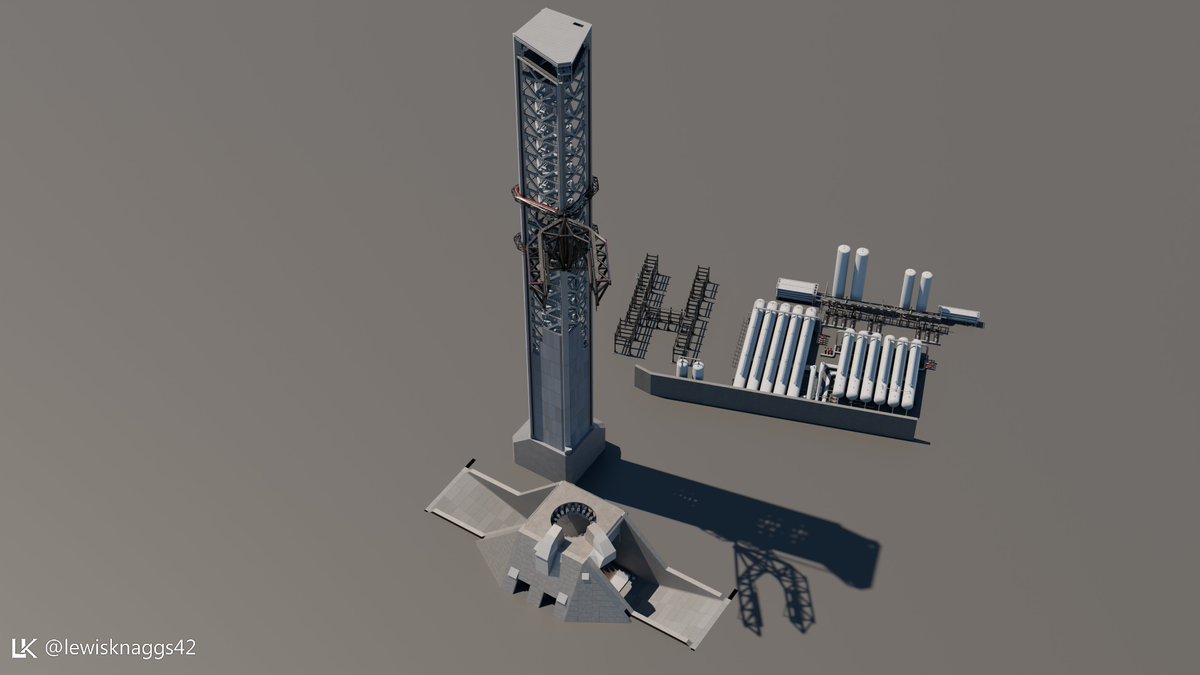
The News: A remarkably detailed model of Starship's water deluge system at Starbase has surfaced, accompanied by a 2-hour deep-dive discussion unpacking the engineering behind one of SpaceX's most critical pieces of launch infrastructure.
Why It Matters: The deluge farm is what keeps Starship's launch pad alive — without it, 33 Raptor 3 engines would destroy the pad on every flight. Understanding its design reveals how SpaceX is engineering for rapid reuse at a scale no one has attempted before.
Source: @CSI_Starbase — April 29, 2026
Inside Starship's Deluge Farm: The Engineering Behind the Flood
When 33 Raptor 3 engines ignite simultaneously beneath a Super Heavy booster, they unleash a force that would shred unprotected concrete and steel in seconds. The only thing standing between that fury and the destruction of a multi-billion-dollar launch pad is SpaceX's water deluge system — a feat of hydraulic engineering that is now getting the detailed examination it deserves.
Zack Golden of CSI_Starbase flagged a remarkably detailed model of Starbase's deluge farm this week, calling out the sheer density of engineering information packed into both the model and the accompanying 2-hour episode. For anyone following Starship's path to full reusability, this is required viewing.

Why the Deluge System Is the Unsung Hero of Every Starship Launch
The water deluge system — nicknamed the "deluge farm" by the SpaceX community — exists for one reason: to absorb the catastrophic acoustic energy and heat generated at ignition. Without it, the shockwaves alone from 33 Raptor 3 engines firing in unison would cause structural damage that could ground the pad for months.
Starship's first flight in April 2023 was a brutal proof of concept in the wrong direction. Pad 1 at Starbase lacked a robust flame diverter, and the result was a launch pad cratered by its own rocket. SpaceX rebuilt — and in doing so, engineered one of the most sophisticated water suppression systems ever built for a launch facility.
📊 Key Figures
Pad 2 Deluge System — By the Numbers
| Metric | Value | Context |
|---|---|---|
| Water per firing sequence | ~350,000 gal | Higher volume than Pad 1 |
| First full-scale Pad 2 test | Feb 16, 2026 | Flight 12 milestone |
| Engines protected | 33 Raptor 3 | Super Heavy booster |
| Starbase expansion (approved) | 20 → 41 acres | New deluge farm planned |
What Makes Pad 2's Design Different
The Pad 2 deluge system isn't just a bigger version of what came before — it's a fundamentally different engineering approach. The flame trench incorporates an advanced diverter-shaped structure that discharges water simultaneously from the flame bucket halves, the ridge, and a steel plate mounted on top of the launch mount. The goal is more efficient channeling of exhaust gases and, critically, dramatically reduced refurbishment time between flights.
One of the most operationally significant upgrades is the inclusion of embedded sump pumps in the flame trench. After a firing sequence, these pumps rapidly drain the trench, enabling SpaceX to reset and retest far faster than was possible with Pad 1. For a program built around rapid reuse, that turnaround speed is not a convenience — it's a core mission requirement.
The system also operates at higher pressures than the Pad 1 retrofit, reflecting the increased demands of Raptor 3 engines and the lessons learned from every test fire to date.
Pad 1 Redesign and What's Coming Next
Pad 1 — the original Starbase orbital launch pad — is currently undergoing a redesign to incorporate a new flame trench and water deluge system modeled closely on the Pad 2 architecture. The April 2023 lesson has been thoroughly absorbed: no pad survives Starship without serious water suppression infrastructure.
Looking further ahead, the approved Starbase expansion from roughly 20 acres to 41 acres within a 55-acre project area will include additional water storage and, according to planning documents, a new deluge farm expected to be a near carbon copy of the Pad 2 system. SpaceX is essentially standardizing the design — a sign that it works.
🔭 The BASENOR Take
| Timeline | Pad 2 system operational; Pad 1 redesign ongoing; expansion pad deluge farm in planning |
| Impact Level | 🔴 High — pad infrastructure directly gates launch cadence |
| Confidence | High — based on verified test data and approved site expansion plans |
📰 Deep Dive
The level of detail being applied to community analysis of the Starship deluge system — detailed enough that a 2-hour episode barely scratches the surface — reflects something important about where Starship development actually is right now. The rocket itself is largely proven. The bottleneck for launch cadence is increasingly the ground infrastructure: how fast can a pad be reset, how reliably can water suppression protect hardware, and how quickly can SpaceX scale that system across multiple pads.
The 350,000-gallon figure per firing sequence is worth sitting with for a moment. That's not a cooling system — that's a controlled flood, precisely timed and directed to convert acoustic energy into steam before it can translate into structural damage. The engineering margin required to get that right at Raptor 3 thrust levels, with higher operating pressures than anything previously tested at Starbase, is significant. The fact that Pad 2's first full-scale test in February 2026 was a success on the path to Flight 12 suggests SpaceX got the design right.
The standardization signal matters too. When SpaceX plans a third deluge farm as a "near carbon copy" of Pad 2, that's the language of a production program, not an experimental one. It means the design is locked, the lessons are absorbed, and the focus shifts to replication speed. For a program aiming at high annual launch cadence, that transition from development to production thinking — even in ground support equipment — is exactly what needs to happen. For more on SpaceX's infrastructure and launch milestones, see our SpaceX coverage.
🚀 Following the Starship program? See every test flight, official outcome and the next launch window in our SpaceX Starship Tracker.
Sources & reporting notes
The links below identify the material source records used for this report.
- @CSI_Starbase on X (2026-04-29T23:12:13.000Z) — Direct source
Source links are preserved as published or accessed. See our editorial standards and corrections policy.
The BASENOR Editorial Desk covers Tesla, SpaceX, and related technology, curating reporting from primary sources — official accounts, regulatory filings, and software release data. Every article passes source-record and fact-checking review before publication. About the newsroom.
This report was curated by the BASENOR Editorial Desk from the sources listed above. Read our editorial standards or email editorial@basenor.com to report an error.