30-Second Brief
The News: Samsung held an equipment move-in ceremony today at its $37 billion chip manufacturing facility in Taylor, Texas — formally installing the chipmaking machines that will produce silicon for Tesla and other customers later this year.
Why It Matters: This is a concrete milestone in Tesla securing a domestic, long-term supply of next-generation AI chips — critical for FSD, Autopilot, and the broader autonomous vehicle roadmap.
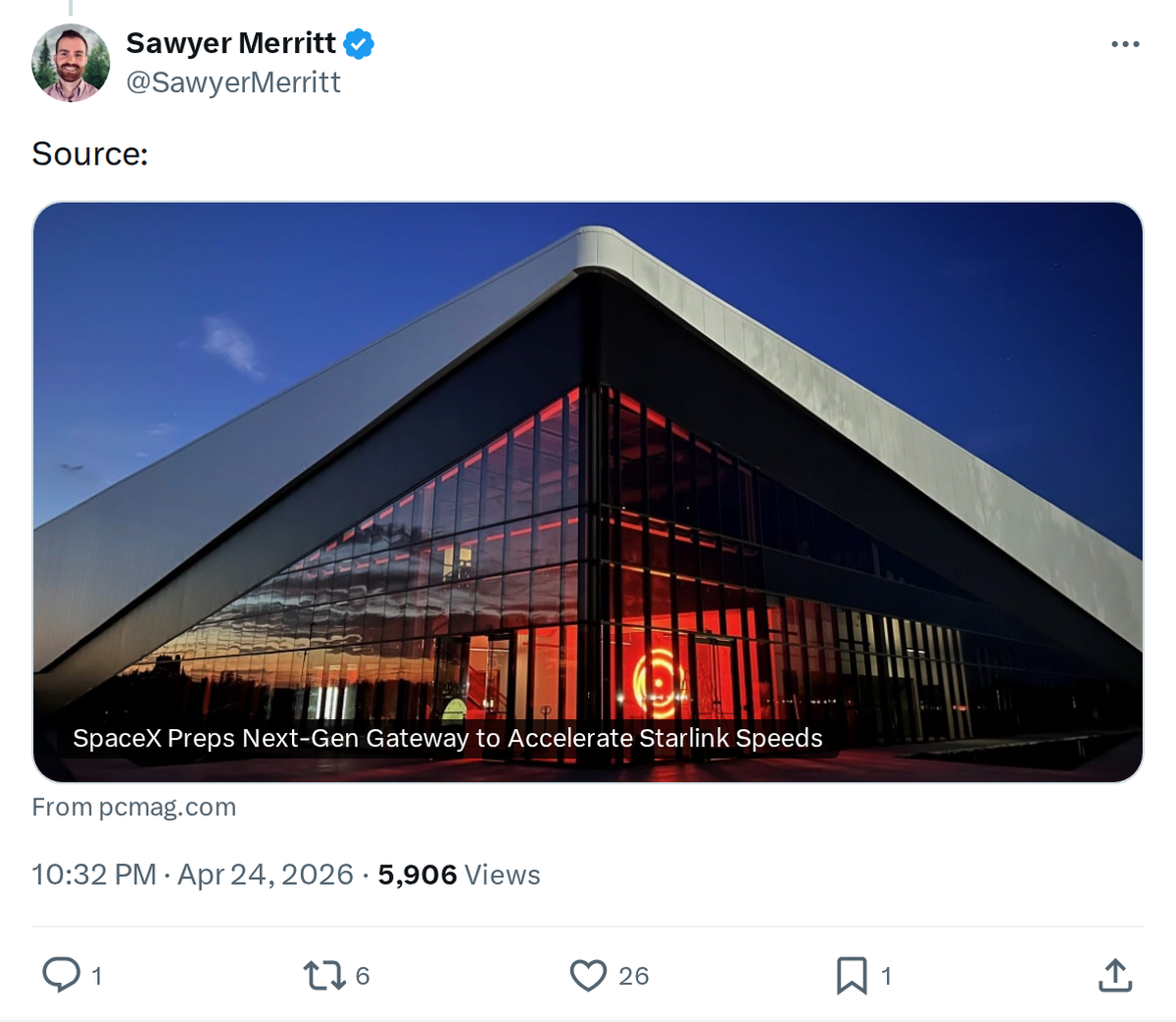
Source: @SawyerMerritt on X
Samsung's $37B Texas Chip Plant Begins Equipment Installation — Tesla Supply on Track for 2026
Samsung Electronics marked a major milestone today at its semiconductor fabrication plant in Taylor, Texas, holding a formal equipment move-in ceremony that signals the facility is transitioning from construction to production-readiness. The machines being installed will eventually manufacture silicon chips destined for Tesla — and the clock is now ticking toward a late-2026 production launch.

📊 Key Figures
| Metric | Value | Context |
|---|---|---|
| Samsung Taylor Facility Investment | $17B (initial) | Widely cited as $37B total project |
| Federal CHIPS Act Funding | $4B+ | Plus $250M from Texas state fund |
| Tesla Supply Contract Value | $16.5B | Multiyear deal: July 2025 – Dec 2033 |
| Groundbreaking Date | November 2022 | ~3.5 years from ground to equipment install |
| Target Production Launch | End of 2026 | Pilot ops began March 2026 |
What's Actually Happening at Taylor Today
An equipment move-in ceremony isn't just a ribbon-cutting photo op. In semiconductor manufacturing, it marks the point at which a fab transitions from a construction site into an operational facility. The machines being installed — including, according to earlier reports, extreme ultraviolet (EUV) lithography systems — are among the most complex and expensive pieces of industrial equipment on the planet. Getting them into place, calibrated, and running is a multi-month process that must happen before a single chip can be produced.
Samsung began pilot operations and critical equipment testing at Taylor as early as March 2026. Today's ceremony formalizes the next phase: full-scale equipment installation across the fab floor. The plant is officially targeted to be producing chips by the end of 2026.

Tesla's Stake in This Facility
Tesla isn't just a peripheral customer here. According to verified reports, Samsung secured a multiyear agreement with Tesla valued at $16.5 billion to manufacture its next-generation AI chips — a deal running from July 2025 through December 31, 2033. That's an eight-year commitment, and it covers the chips that power Tesla's most critical systems: Full Self-Driving, Autopilot, and the AI inference hardware underpinning the entire autonomous vehicle stack.
The Taylor facility gives Tesla something it has been strategically pursuing: a domestic, high-volume source for advanced semiconductor production. Rather than depending on overseas fabs for components central to its autonomous driving ambitions, Tesla now has a long-term partner operating on American soil — and one backed by over $4 billion in federal CHIPS Act funding plus $250 million from the Texas Semiconductor Innovation Fund.
🔭 The BASENOR Take
Timeline: Ground broken November 2022 → Pilot ops March 2026 → Equipment installation April 2026 → Production target: end of 2026
Impact Level: 🔴 High — This directly affects the hardware roadmap for FSD and Tesla's AI systems through 2033
Confidence: ✅ High — Equipment move-in ceremony confirmed by Samsung; contract details verified by multiple sources
The scale of this deal is worth sitting with for a moment. $16.5 billion over eight years isn't a hedge or a backup plan — it's a foundational commitment. Tesla is betting that Samsung's Taylor fab will be a reliable, high-yield source of the chips that make autonomous driving possible. For owners, that matters because chip supply has historically been one of the most unpredictable variables in the auto industry. A domestic fab with this level of investment and government backing is a meaningful buffer against the kind of supply shocks that disrupted production across the industry in recent years.
There's also a broader strategic angle. The CHIPS Act was designed precisely to rebuild American semiconductor manufacturing capacity, and the Tesla-Samsung partnership is one of the most concrete examples of that policy bearing fruit. The Taylor plant, once fully operational, will represent one of the most advanced chip fabrication facilities on U.S. soil — using EUV lithography to produce the kind of leading-edge silicon that, until recently, was almost exclusively made in Asia.
For Tesla owners watching the FSD roadmap, the signal here is straightforward: the hardware supply chain for next-generation autonomy is being locked in. The question of when FSD reaches full unsupervised capability is still a software and regulatory story — but the chip supply to scale it is increasingly a solved problem. Today's ceremony in Taylor, Texas is a quiet but consequential step toward that future.
Related Gear
Gear up your Tesla with tested, custom-fit BASENOR accessories — shop Tesla accessories →
Sources & reporting notes
The links below identify the material source records used for this report.
- @SawyerMerritt on X (2026-04-24T14:40:20.000Z) — Direct source
- @SawyerMerritt on X (2026-04-24T14:32:49.000Z) — Direct source
Source links are preserved as published or accessed. See our editorial standards and corrections policy.
The BASENOR Editorial Desk covers Tesla, SpaceX, and related technology, curating reporting from primary sources — official accounts, regulatory filings, and software release data. Every article passes source-record and fact-checking review before publication. About the newsroom.
This report was curated by the BASENOR Editorial Desk from the sources listed above. Read our editorial standards or email editorial@basenor.com to report an error.