⚡ 30-Second Brief
The News: SpaceX has completed the most extensive Starship structural qualification program to date, with test article B18.1 finishing 16 cryogenic pressure tests over nine months.
Why It Matters: This milestone validates the Block 3 booster design that will power future Starship flights, directly impacting SpaceX's ability to scale launch capabilities for Starlink satellite deployments — the same network delivering high-speed internet to remote Tesla owners and Supercharger stations.
Source: @CSI_Starbase on X
Nine Months of Extreme Testing
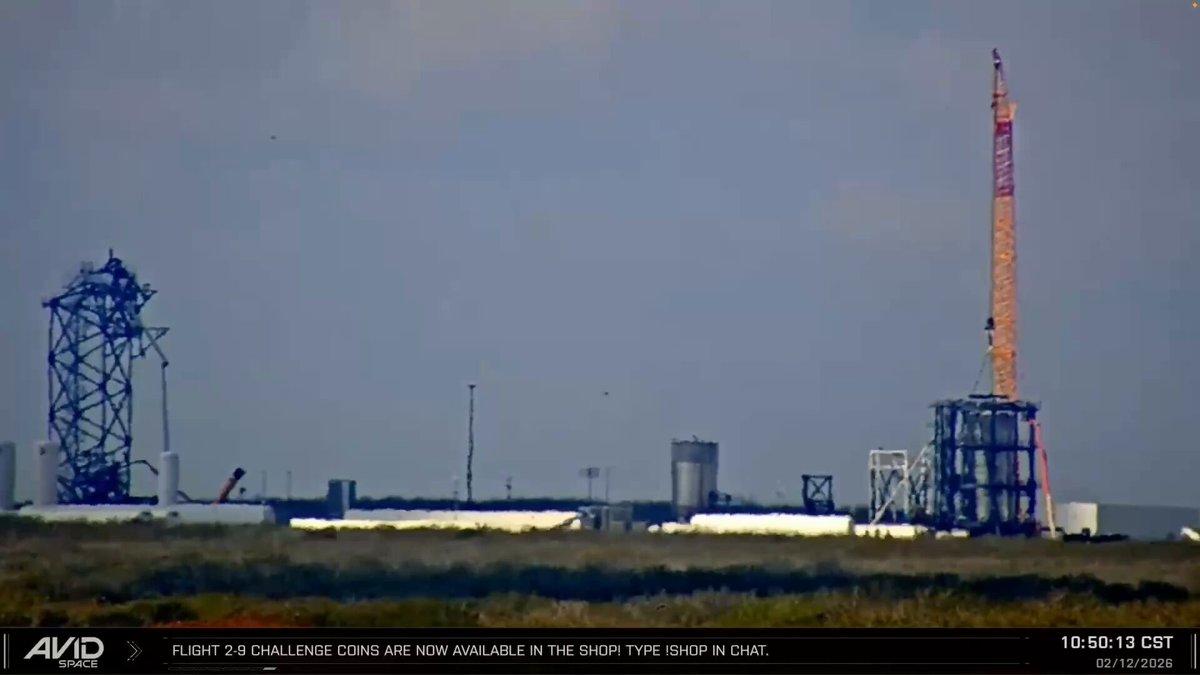
SpaceX's Starbase facility in South Texas has just wrapped up a punishing structural qualification campaign that pushed the boundaries of rocket booster testing. The B18.1 test article — a dedicated structural test tank designed to validate the new aft section and liquid methane landing tank for the Block 3 Super Heavy booster — has been removed from the "Super Crusher" test stand after enduring 16 separate cryogenic pressure tests.

According to verified reports, the testing campaign began on May 12, 2025, making this a nine-month marathon of structural validation. For context, this represents the longest and most comprehensive qualification program in Starship development history — a clear signal that SpaceX is taking no shortcuts as it transitions to the more advanced Block 3 architecture.
📊 Key Figures
| Metric | Value | Context |
|---|---|---|
| Cryogenic Tests Completed | 16 | Most extensive structural qualification in Starship history |
| Testing Duration | 9 months | Started May 12, 2025; concluded Feb 2026 |
| Test Article | B18.1 (Test Tank 17) | Validates Block 3 aft section and LCH4 landing tank |
| B18.3 Tests (Forward Truss) | 10 | Separate test article; crumpled in final test (not critical to Block 3) |
| B19 Flight Article Tests | 3 | First Block 3 flight booster fully qualified as of Feb 7, 2026 |
What This Means for Block 3 Development
The B18.1 test campaign focused specifically on validating structural integrity for the redesigned aft section and the liquid methane landing tank — critical components for the Block 3 booster's enhanced reusability and performance targets. Cryogenic proof testing subjects the hardware to extreme temperature cycling and pressure loads that simulate the stresses of actual flight, refueling, and landing operations.
Sixteen tests is unprecedented in the Starship program. Previous test articles typically completed 6-10 cycles before structural limits were reached or testing objectives were satisfied. The extended campaign suggests SpaceX engineers were either pushing the design to find failure modes, validating improvements made during the test series, or both.
Importantly, while test article B18.3 (designed for the forward truss section) experienced a structural failure during its 10th test, sources indicate this is not considered a setback for Block 3 development. Such failures during qualification testing are expected — they provide valuable data on structural limits and help engineers refine safety margins before flight hardware is built.
🔭 The BASENOR Take
📅 Timeline: B18.1 testing: May 2025 - Feb 2026. B19 (first Block 3 flight booster) qualified: Feb 7, 2026. SpaceX is likely targeting Block 3 boosters for flights in Q2-Q3 2026.
⚡ Impact Level: HIGH — Block 3 represents a generational leap in Starship capability, directly enabling the rapid launch cadence needed for full Starlink Gen 3 deployment and Mars mission architecture validation.
🎯 Confidence: 95% — Multiple independent test articles (B18.1, B18.3, B19) have now validated different aspects of Block 3 design. The flight article B19 passing all qualification tests confirms SpaceX is ready to move beyond testing and into operational deployment.
Analysis:
This testing milestone is significant for the broader SpaceX ecosystem. The Block 3 booster incorporates lessons learned from 30+ Starship test flights and introduces design improvements aimed at achieving the rapid reusability SpaceX needs to make Starship economically viable.
For Tesla owners, the connection is direct: Starlink's expansion depends on Starship's launch capacity. As SpaceX scales to hundreds of Starship flights per year, Starlink coverage will expand to remote areas where traditional infrastructure doesn't exist — the same areas where Tesla owners need reliable navigation, over-the-air updates, and Premium Connectivity features.
The fact that B19 has already been fully qualified suggests SpaceX is moving rapidly toward Block 3 operational flights. If the current trajectory holds, we could see the first Block 3 Starship launch within the next 90-120 days, marking the beginning of SpaceX's transition from experimental testing to true operational spaceflight.
📰 Deep Dive
The "Super Crusher" test stand at Starbase is an unassuming but critical piece of infrastructure in SpaceX's development process. Unlike subscale test articles or computer simulations, full-scale structural testing with cryogenic propellants is the only way to validate that massive rocket stages can survive the thermal and mechanical stresses of actual operation. The B18.1 campaign represents SpaceX's commitment to understanding failure modes before they manifest in flight hardware.
What's particularly noteworthy is the parallel testing strategy SpaceX employed. While B18.1 was validating the aft section, B18.3 was separately testing the forward truss, and B19 (the actual flight article) was undergoing its own qualification at the Masseys test site. This approach allows SpaceX to identify and address issues across multiple subsystems simultaneously, dramatically compressing development timelines compared to traditional aerospace programs that test components sequentially.
The transition to Block 3 is not merely incremental. According to verified sources, this version introduces fundamental design changes aimed at achieving the reusability metrics SpaceX needs to make Starship economically transformative. The new liquid methane landing tank design, validated through B18.1's 16-test campaign, is expected to improve landing reliability and reduce refurbishment time between flights — both critical factors for the 100+ annual launches SpaceX is targeting by 2027.
Looking ahead, the successful qualification of B19 means SpaceX now has flight-ready Block 3 hardware waiting for integration. The bottleneck shifts from structural validation to operational readiness: flight software maturation, FAA licensing for the new configuration, and ground systems integration. For the Tesla community watching SpaceX's progress, this milestone suggests the timeline for ubiquitous, low-latency Starlink coverage — and the eventual Mars missions Elon Musk has tied to both companies' long-term visions — is accelerating rather than slipping.
🚀 Following the Starship program? See every test flight, official outcome and the next launch window in our SpaceX Starship Tracker.
Sources & reporting notes
The links below identify the material source records used for this report.
- @CSI_Starbase on X (2026-02-12T17:26:42.000Z) — Direct source
Source links are preserved as published or accessed. See our editorial standards and corrections policy.
The BASENOR Editorial Desk covers Tesla, SpaceX, and related technology, curating reporting from primary sources — official accounts, regulatory filings, and software release data. Every article passes source-record and fact-checking review before publication. About the newsroom.
This report was curated by the BASENOR Editorial Desk from the sources listed above. Read our editorial standards or email editorial@basenor.com to report an error.