⚡ 30-Second Brief
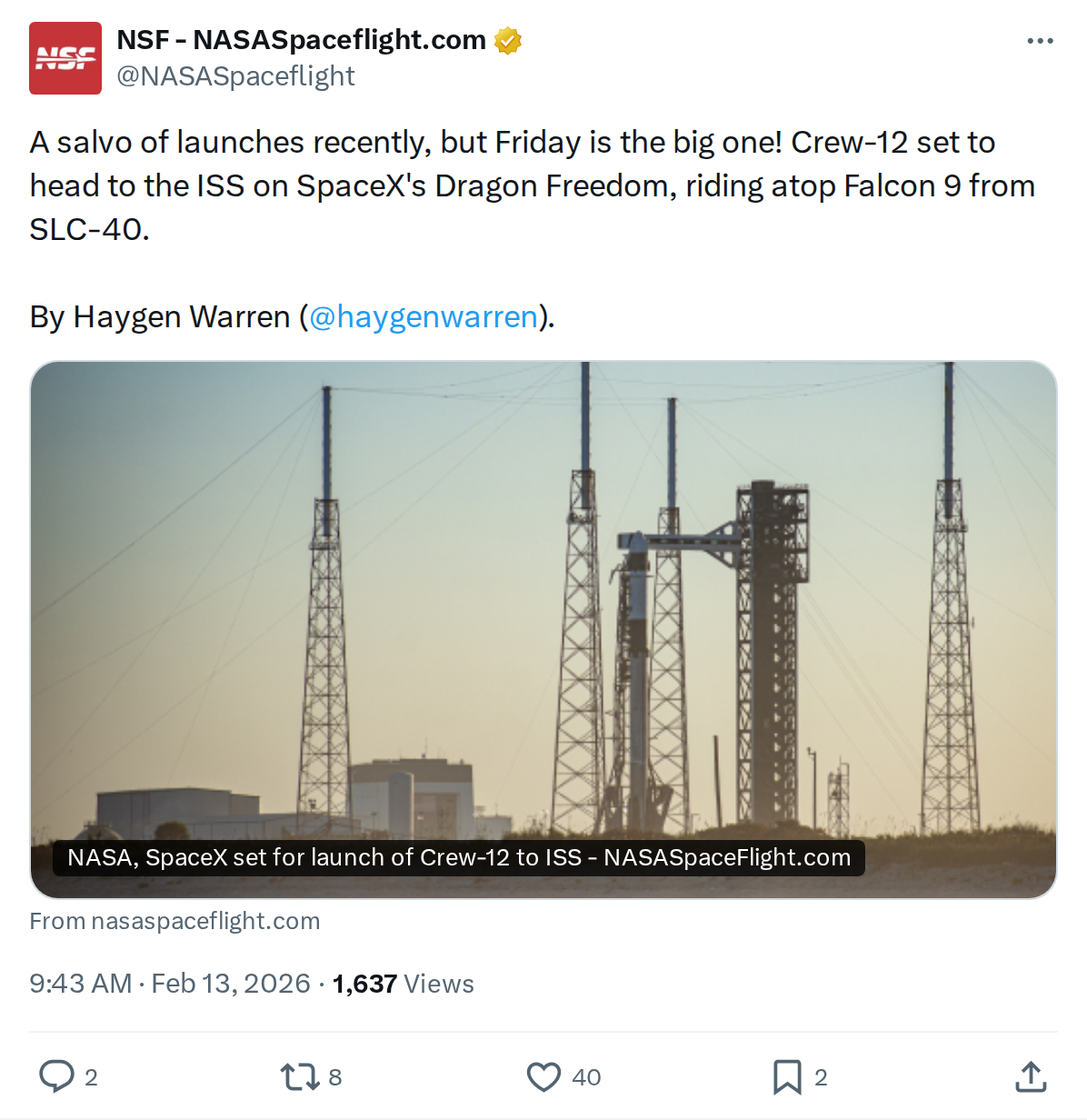
The News: SpaceX is launching the Crew-12 mission to the International Space Station today, Friday, February 13, 2026, at 5:15 a.m. EST from Cape Canaveral's SLC-40.
Why It Matters: This marks Dragon Freedom's fifth crewed flight and reinforces the operational cadence that funds Starlink development—the same satellite network enhancing Tesla's connectivity features and future autonomous capabilities.
Source: @NASASpaceflight on X
🚀 Mission Overview: Crew-12 by the Numbers

SpaceX is hours away from launching its 12th operational crewed mission under NASA's Commercial Crew Program. The Dragon Freedom spacecraft—riding atop a Falcon 9 Block 5 rocket—will carry four astronauts to the ISS for an eight-to-nine-month stay, representing the continued maturation of commercial human spaceflight.
For Tesla owners, this mission underscores the operational rhythm that makes SpaceX profitable: reusable rockets, proven spacecraft, and frequent cadence. That revenue directly funds Starlink expansion, which Tesla integrates for Premium Connectivity and is expected to leverage for future Full Self-Driving improvements requiring high-bandwidth map updates.
📊 Key Figures
| Metric | Data | Context |
|---|---|---|
| Launch Time | 5:15 a.m. EST, Feb 13, 2026 | 10:15 UTC from SLC-40, Cape Canaveral |
| Dragon Freedom Flights | 5th crewed mission | Previously flew Crew-4, Ax-2, Ax-3, Crew-9 |
| Booster Reuse | 2nd flight for this Falcon 9 | Landing at LZ-40 after separation |
| Mission Duration | 8-9 months | Extended ISS research mission |
| Crew Size | 4 astronauts | NASA (2), ESA (1), Roscosmos (1) |
| ISS Docking | Saturday, Feb 14, 3:15 p.m. EST | ~34 hours after launch |
| Weather Forecast | 85-90% favorable | Cumulus clouds primary concern |
🔭 The BASENOR Take
Timeline: Immediate — Launch today, docking Saturday
Impact Level: Medium for Tesla owners (Starlink expansion → Tesla connectivity)
Confidence: High — NASA-confirmed mission with proven hardware
This mission matters for Tesla owners because SpaceX's crewed flight business is a revenue engine that subsidizes Starlink development. NASA pays approximately $55 million per seat for Commercial Crew missions, funding that helps SpaceX maintain and expand the Starlink constellation now exceeding 6,000 satellites.
Why Starlink Matters to Your Tesla: Premium Connectivity in Tesla vehicles relies on cellular networks today, but SpaceX has demonstrated direct-to-device satellite connectivity with T-Mobile. Future Tesla models are expected to integrate Starlink connectivity for:
- High-bandwidth map updates for FSD navigation
- Remote diagnostics in areas without cellular coverage
- Streaming and entertainment in the Cybertruck and future RV-style vehicles
- Fleet coordination for Tesla's planned robotaxi network
The Dragon Freedom spacecraft itself showcases manufacturing principles Tesla applies: design for reusability, rapid iteration, and vertical integration. The capsule's fifth flight demonstrates the cost-reduction curve SpaceX achieved—the same learning curve Tesla is climbing with Giga Press castings and 4680 battery cells.
👥 The Crew-12 Team
Four astronauts are launching aboard Dragon Freedom:
- Jessica Meir (NASA) — Mission Commander, marine biologist with previous ISS experience
- Jack Hathaway (NASA) — Pilot, former U.S. Navy test pilot
- Sophie Adenot (ESA) — Mission Specialist, French Air and Space Force pilot
- Andrey Fedyaev (Roscosmos) — Mission Specialist, returning to ISS after Crew-6
This international crew composition reflects the continued cooperation in low Earth orbit operations despite geopolitical tensions—a model for the kind of sustained, multi-stakeholder collaboration required for Mars colonization, SpaceX's ultimate mission.
🚀 Hardware Deep Dive: What Makes This Launch Routine (In a Good Way)
Dragon Freedom's Track Record: This capsule has accumulated significant flight heritage since its debut on Crew-4 in April 2022. Each mission provides data that refines SpaceX's operations, from heat shield performance to life support systems. The spacecraft is designed for up to 10 flights with refurbishment between missions—the same reusability philosophy behind Tesla's Supercharger network design and battery longevity targets.
Falcon 9 Reliability: The booster flying today will attempt its second landing at Landing Zone 40. SpaceX has achieved a landing success rate exceeding 98% over the past two years, making rocket reuse as predictable as a Tesla's range estimation. This operational maturity is what allows SpaceX to maintain launch cadence while funding R&D for Starship—the vehicle Elon Musk envisions will eventually transport Tesla Cybertrucks and infrastructure to Mars.
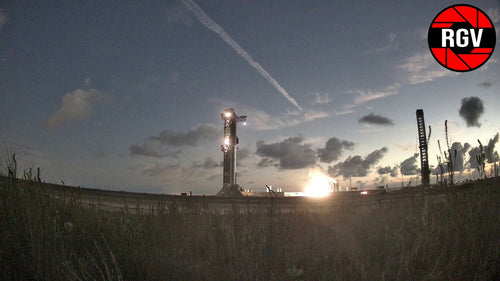
SLC-40 Operations: This pad was originally built for Titan rockets in the 1960s and has been SpaceX's workhorse since 2017. The company's ability to launch crew from SLC-40 (after modifications) demonstrates the rapid infrastructure adaptation Tesla is known for—like converting Fremont from a GM/Toyota plant to EV production in under two years.
⏱️ Launch Timeline
For Tesla owners interested in watching the launch live:
- T-0: 5:15 a.m. EST liftoff from SLC-40
- T+2:30: First stage separation, booster begins return to LZ-40
- T+8:45: Booster landing attempt at Cape Canaveral
- T+12:00: Dragon separates from second stage, begins autonomous flight to ISS
- T+34 hours: Docking with ISS (Saturday, 3:15 p.m. EST)
SpaceX typically streams launches via X (formerly Twitter) and YouTube, with coverage beginning approximately 15 minutes before liftoff. For West Coast Tesla owners, that's a 2:15 a.m. PST alarm—but worth it to see the machinery that powers your car's connectivity infrastructure.
🌐 The Starlink Connection: From Orbit to Your Dashboard
Every successful SpaceX mission—whether crew, cargo, or Starlink deployment—reinforces the business model funding the satellite network Tesla is expected to leverage. According to SpaceX's own disclosures, Starlink generated over $1.4 billion in revenue in 2023, with projections exceeding $6 billion annually by 2025. That capital allows SpaceX to launch Starlink satellites at a pace competitors cannot match.
For Tesla, this means:
- Better Coverage: Starlink's growing constellation improves connectivity in rural areas where Superchargers are expanding
- Lower Latency: Critical for real-time FSD data transmission and fleet learning
- Cost Efficiency: SpaceX's vertical integration keeps satellite deployment costs low, potentially reducing Tesla's connectivity subscription fees
Elon Musk has stated that Starlink's direct-to-device capability will "work with any phone" starting in 2024, and there's no technical reason Tesla vehicles couldn't integrate similar receivers for redundant connectivity alongside cellular networks.
📰 Deep Dive: Why Mission Cadence Matters More Than Headlines
The Crew-12 launch doesn't represent a technological breakthrough—it's the 13th crewed Dragon flight and the system is proven. But that's precisely the point. SpaceX has achieved what NASA spent decades pursuing: reliable, cost-effective human spaceflight with reusable hardware. The parallels to Tesla are striking.
When Tesla delivered its millionth vehicle in 2020, the achievement wasn't about inventing EVs—it was about scaling production to make them economically viable. Similarly, SpaceX launching Crew-12 with a twice-flown booster and a five-time-flown capsule demonstrates manufacturing maturity that translates to profit margins. Those margins fund Starship development, which Elon Musk has described as essential for establishing Mars colonies—and for launching the next generation of Starlink satellites that will blanket Earth in high-speed internet.
For Tesla owners, this operational rhythm means your vehicle's connectivity infrastructure is backed by a company executing 100+ launches annually, not a startup struggling to reach orbit. When you stream Netflix in your Model 3 or download a navigation update in your Cybertruck, you're benefiting from the same engineering culture that makes Crew-12 launches feel routine.
The weather delay from earlier this week—pushing launch from February 11 to today—also highlights SpaceX's conservative approach to crew safety, a philosophy Tesla mirrors with over-the-air updates that roll out cautiously to fleet subsets before wide release. Both companies prioritize long-term reliability over short-term headlines.
As Dragon Freedom docks with the ISS tomorrow afternoon, it will mark another data point in the most successful commercial spaceflight program in history. And while Tesla owners won't see immediate changes to their vehicles, the infrastructure being built above our heads is laying groundwork for the connected, autonomous future Elon Musk has been promising—one satellite launch, one crew mission, one software update at a time.
Related Gear
Gear up your Tesla with tested, custom-fit BASENOR accessories — shop Tesla accessories →
Sources & reporting notes
The links below identify the material source records used for this report.
- @NASASpaceflight on X (2026-02-13T01:43:53.000Z) — Direct source
Source links are preserved as published or accessed. See our editorial standards and corrections policy.
The BASENOR Editorial Desk covers Tesla, SpaceX, and related technology, curating reporting from primary sources — official accounts, regulatory filings, and software release data. Every article passes source-record and fact-checking review before publication. About the newsroom.
This report was curated by the BASENOR Editorial Desk from the sources listed above. Read our editorial standards or email editorial@basenor.com to report an error.