The News: New research confirms SpaceX's Falcon 9-launched DART spacecraft didn't just redirect one asteroid — it measurably shifted the orbital path of an entire two-asteroid system around the Sun, a first in human history.
Why It Matters: This validates kinetic impact as a real, working planetary defense technique — and it was a SpaceX rocket that made it happen.
Source: @SpaceX on X
SpaceX's DART Mission Moved Two Asteroids Around the Sun — A Historic First
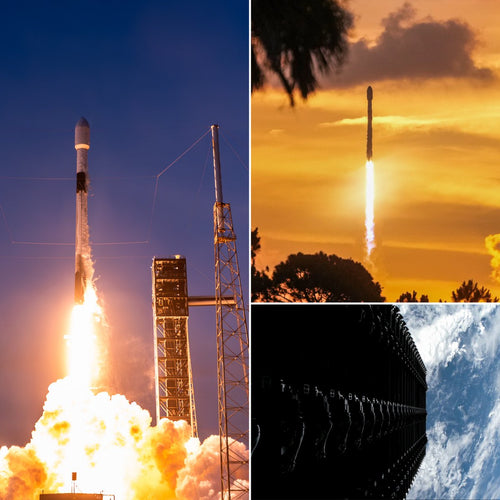
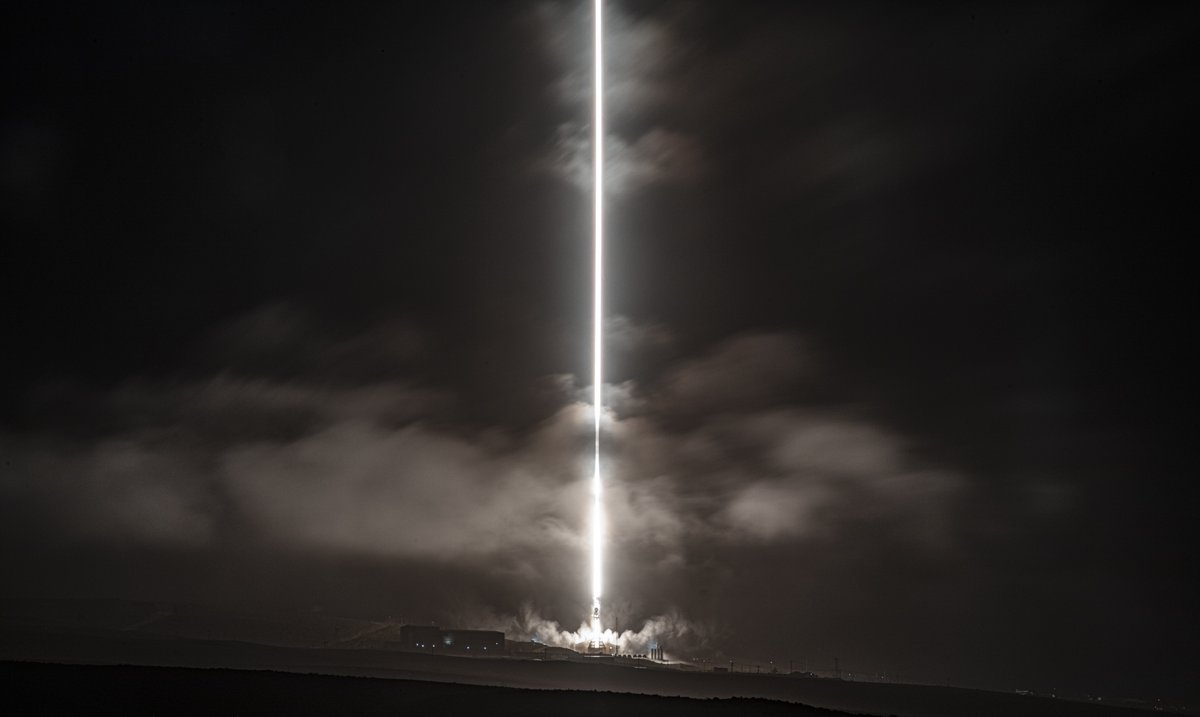
When a SpaceX Falcon 9 lifted off from Vandenberg Space Force Base on November 23, 2021, it carried a spacecraft with one audacious goal: deliberately crash into an asteroid to see if humanity could actually deflect one. Now, more than four years later, new peer-reviewed research published in Science Advances has confirmed the mission achieved something even bigger than originally reported — it moved not one, but two asteroids in their orbit around the Sun.

📊 Key Figures
| Metric | Value | Context |
|---|---|---|
| Launch Date | Nov 23, 2021 | Falcon 9, Vandenberg SFB |
| Impact Date | Sep 26, 2022 | Dimorphos asteroid, ~4 mi/sec |
| Dimorphos orbit change | −32 to −33 min | 25× NASA's minimum success target |
| Solar orbit change (binary system) | 0.15 seconds | First human-made solar orbit alteration |
| Speed change of binary system | ~1.7 in/hour | 11.7 microns per second |
| Momentum enhancement factor | ~2× | Ejected debris amplified impact force |
| Mission cost | $330 million | NASA-funded planetary defense test |
| Target asteroid size (Dimorphos) | ~560 ft (170 m) | Moonlet of larger Didymos (~850 m) |
What Actually Happened — The Full Story
DART — the Double Asteroid Redirection Test — was a NASA planetary defense mission that SpaceX launched aboard a Falcon 9 rocket in late 2021. Its target: Dimorphos, a 560-foot moonlet orbiting a larger asteroid called Didymos. On September 26, 2022, the spacecraft slammed into Dimorphos at roughly 4 miles per second, intentionally destroying itself in the process.
The primary result was already extraordinary: the impact shortened Dimorphos' orbit around Didymos by 32 to 33 minutes — reducing an 11-hour, 55-minute orbit to 11 hours and 23 minutes. That alone exceeded NASA's minimum success threshold of a 73-second change by more than 25 times. But researchers wanted to know if the impact rippled further — all the way to the binary system's path around the Sun itself.
According to research published March 6–7, 2026 in Science Advances, the answer is yes. The entire Didymos-Dimorphos system's solar orbital period shifted by 0.15 seconds. The speed change of the binary system was approximately 11.7 microns per second — about 1.7 inches per hour. Tiny numbers, but the significance is enormous: this marks the first time in recorded history that a human-made object has measurably altered the path of a celestial body around the Sun.
Why the Numbers Are Even Better Than They Look
One of the more surprising findings from DART's post-impact analysis is the role of debris. When the spacecraft struck Dimorphos, it blasted a massive plume of rock and dust into space. That ejected material acted like an additional thruster — effectively amplifying the kinetic punch of the impact with a 'momentum enhancement factor' of approximately two. In other words, the collision was roughly twice as effective as a pure spacecraft-mass-times-velocity calculation would suggest.
This is a critical data point for future planetary defense planning. If you ever need to deflect a real threat, you don't just get the push from the impactor — you get a significant bonus from the ejecta. That makes the kinetic impactor technique considerably more practical than pre-DART models predicted.
🔭 The BASENOR Take
Timeline: Launch Nov 2021 → Impact Sep 2022 → Solar orbit change confirmed Mar 2026
Impact Level: 🌍 Civilizational — first human-made alteration of a solar orbit
Confidence: ✅ Peer-reviewed, published in Science Advances, confirmed by NASA
SpaceX's role here is easy to overlook, but it's foundational. Without a reliable, affordable launch vehicle, a $330 million planetary defense test doesn't happen on this timeline — or at this cost. Falcon 9's track record of routine, on-schedule launches is what made DART operationally viable. This is the same infrastructure that underpins Starlink, ISS resupply, and increasingly, commercial and government deep-space missions.
The broader implication is that planetary defense has moved from theoretical to demonstrated. NASA now has empirical proof that a kinetic impactor can meaningfully redirect an asteroid — not just in local orbit terms, but in terms of its path around the Sun. The next step in the program, ESA's Hera mission (currently en route to the Didymos system), will conduct a detailed post-impact survey of Dimorphos to refine the models even further.
For SpaceX and its customers, this is another data point in the company's expanding portfolio of missions that go beyond Earth orbit. The same Falcon 9 that delivers Starlink satellites and Dragon capsules to the ISS also launched humanity's first successful planetary defense demonstration. That's a remarkable range for a single rocket platform — and it reinforces why SpaceX's launch cadence and reliability matter far beyond any single mission. You can follow more SpaceX milestones in our SpaceX coverage.
📰 Deep Dive
The confirmation that DART altered the Didymos-Dimorphos system's solar orbit is more than a scientific footnote — it reframes what the mission actually achieved. The original success criteria were defined around Dimorphos' local orbit around Didymos, which was the measurable, near-term outcome. The solar orbit change required years of precise tracking and sophisticated modeling to detect, given that the shift amounted to just 0.15 seconds in a multi-year orbital period. The fact that researchers could detect it at all speaks to the precision of modern astrodynamics.
What's particularly notable is the momentum enhancement factor. Pre-mission models predicted that ejecta would amplify the impact, but the actual factor of approximately two was at the higher end of projections. This means that for future missions targeting similarly loose, rubble-pile asteroids — which Dimorphos appears to be — planners can expect a meaningful multiplier effect. That has direct implications for how far in advance a deflection mission needs to launch, and how large the impactor spacecraft needs to be.
The $330 million price tag also deserves context. For a mission that produced the first empirical validation of planetary defense technology — and generated data that will inform deflection strategies for decades — that figure is remarkably modest by space mission standards. It's roughly the cost of a single mid-tier satellite. The fact that SpaceX's Falcon 9 kept launch costs competitive was a meaningful factor in making that budget work.
Looking ahead, ESA's Hera spacecraft is currently traveling to the Didymos system for an up-close inspection of the impact crater and the changed orbital dynamics. The data Hera returns will close the loop on DART's legacy — giving scientists a ground-truth view of exactly what a kinetic impactor does to an asteroid at the structural level. Combined with DART's confirmed solar orbit shift, the planetary defense toolkit is now considerably more mature than it was five years ago.

Sarah focuses on Tesla Energy, SpaceX missions, and the broader Musk AI portfolio. Former data analyst in clean energy. Based in San Francisco.
Sources verified at publish time. Spotted an inaccuracy? Email editorial@basenor.com.